Sep 11, 2026
•8 minutes read
•Author: MINDBODYFACE
WHO AGES FASTER: MEN OR WOMEN? A SCIENTIFIC PERSPECTIVE

Who ages faster, men or women? Science does not support one simple answer. Men, on average, have shorter life expectancy and often show older biological-age markers. Women usually live longer, yet many experience faster visible changes in skin and facial tissues around menopause.
That is why two things can be true at once. A man may be biologically older than a woman of the same chronological age, while the woman may notice sudden changes in skin density, facial volume, and wrinkles after her estrogen levels fall.
Aging is not a race between the sexes. It is a mix of genetics, hormones, medical history, lifestyle, sun exposure, stress, sleep, movement, and the care you give your body over decades.
Do Men or Women Age Faster? What Science Says
Do men age faster than women? On average, some biological measures suggest that men do. Women tend to live longer than men in most populations, and several studies using epigenetic clocks—a way of estimating biological age from DNA methylation patterns—find that men have a higher predicted biological age than women of the same calendar age.
One twin study found that men were biologically older on average by about 1.2–1.3 years in younger adults and 3.2-4.3 years in older adults, depending on the epigenetic clock used. Smoking and body mass index partly explained the difference.
But biological aging by gender is not one measurement. Researchers can look at mortality, physical strength, immune function, brain aging, DNA methylation, disease risk, skin quality, muscle mass, and functional ability. These markers do not always point in the same direction.
Women live longer, yet may spend more years with frailty, disability, or age-related health conditions. This is often called the male-female health-survival paradox: women have a survival advantage, while men may retain stronger physical performance in some later-life measures.
So the scientific perspective on aging is clear: sex influences aging, but it does not determine your personal outcome. A sedentary 40-year-old who smokes, sleeps badly, and rarely sees daylight safely may age differently from a 60-year-old who moves regularly, protects their skin, eats well, and manages chronic stress.
How Men and Women Age Differently
Male vs female aging differs from the start because men and women generally have different hormone patterns, skin structure, muscle mass, fat distribution, and facial proportions. These differences affect how aging becomes visible.
Men usually begin with thicker skin, greater muscle mass, and different patterns of fat storage. Women generally have a higher proportion of subcutaneous fat and may experience more visible changes in facial softness and skin quality when hormonal levels shift.

The face changes from the inside out. Bone remodels, fat compartments lose volume or shift, ligaments and skin become less supportive, and muscles may become tighter, weaker, or less coordinated. These processes happen in everyone, but not at the same pace or in the same pattern.
Hormones, Collagen, and the Aging Process
Hormones influence much more than mood or reproductive health. They affect skin thickness, hydration, collagen, muscle mass, fat distribution, bone density, and how tissues recover after stress.
Estrogen supports skin structure in several ways. It is linked to collagen content, hydration, elasticity, wound healing, vascularity, and protection against oxidative stress. When estrogen falls after menopause, skin can become drier, thinner, and less elastic.pmc.ncbi.nlm.nih+1
Research reviews report that skin collagen can decline rapidly after menopause: nearly one-third may be lost in the first five postmenopausal years, followed by an average decline of about 2.1% per year for the next 15 years. This pattern is more closely linked to years since menopause than to chronological age alone.
That helps explain why a woman may feel that her face changed “all at once” in her late forties or fifties. The issue is not vanity. Skin can become less dense, fine lines may deepen, cheeks and temples can look less full, and the jawline may seem less defined.
Testosterone also matters for men and women. It contributes to muscle maintenance, bone health, body composition, and energy. In men, testosterone often declines more gradually than estrogen does during menopause. People sometimes call this “andropause,” but it is not a direct equivalent of menopause: there is no universal, sudden hormonal event experienced by all men.

Collagen loss with age affects everyone. Sun exposure, smoking, poor nutrition, sleep disruption, inflammation, and repetitive stress can speed up the visible side of this process regardless of sex.
Facial and Skin Aging: Key Differences Between Men and Women
Skin aging in men and women often looks different because the starting structure is different. Men may have thicker skin and stronger facial muscle bulk, which can delay the appearance of some fine lines. But years of unprotected sun exposure, smoking, alcohol, and minimal skincare can lead to deeper wrinkles, uneven pigmentation, and rough texture.
Women may notice earlier changes in skin hydration and facial softness. After menopause, collagen loss and declining estrogen can make the face look less supported. The eye area may appear more hollow, the cheeks less full, and the lower face heavier.pmc.ncbi.nlm.nih+1
Facial aging differences are also shaped by behavior. Many women begin using sunscreen and skincare earlier, while many men are less likely to use daily protection. That can change the outcome more than the basic difference in skin thickness.
Common visible patterns include:
- Men may develop deeper forehead lines, stronger frown lines, and more pronounced sun damage
- Women may notice quicker changes in dryness, fine lines, cheek volume, and lower-face definition after menopause
- Both men and women can develop puffiness, dark circles, jowls, neck changes, and uneven pigmentation
- Both can look older than they feel when stress keeps the jaw, neck, and forehead in a constant brace
The idea that men “age like wine” while women suddenly decline is not biology. It is a cultural story built on unequal pressure, unequal access to care, and different expectations around appearance. The body changes in both sexes. The important question is whether you have a routine that supports your health and helps you feel at home in your face.
Lifestyle and Environmental Factors That Affect Aging
The largest factors affecting aging are often less dramatic than hormones. They are the habits you repeat every day.
Sun exposure
UV exposure is one of the biggest drivers of visible skin aging. It contributes to uneven pigmentation, fine lines, rough texture, and loss of elasticity. Daily broad-spectrum sunscreen is one of the simplest ways to protect skin over time.
Smoking and alcohol
Smoking reduces blood flow to the skin and is strongly linked with premature wrinkling and poorer wound healing. Frequent heavy alcohol use can affect sleep, hydration, inflammation, and facial puffiness. You do not need to be perfect, but reducing these stressors gives the skin and body more room to recover.
Sleep and stress
A short night can show on the face: puffier eyelids, a duller tone, deeper shadows, and a tight jaw. Chronic stress also changes the way you hold your body. The forehead lifts, shoulders rise, breathing becomes shallow, and the face starts looking tired even before skin changes become obvious.
Food and movement
There is no “anti-aging” food that can erase wrinkles. But enough protein, fiber, micronutrients, fluids, and regular movement support muscle mass, circulation, metabolic health, and recovery. Strength training is especially useful as we age because muscle is not only about appearance. It supports balance, bones, mobility, and independence.
Skincare and daily mechanics
Simple, consistent skincare beats a shelf full of products you use twice. Cleanse gently, moisturize if your skin needs it, protect from UV exposure, and avoid aggressive routines that leave the barrier irritated.
Then look at your daily mechanics. Hours with the head pushed toward a screen, teeth clenched, or shoulders raised can make the face and neck look heavier. Your skin is not separate from the body holding it.
Healthy Aging Strategies for Men and Women
Healthy aging science does not promise that you will look 25 at 55. It offers something better: more strength, better recovery, steadier energy, healthier skin, and a face that looks alive rather than exhausted.
Start with what has the strongest impact:
- Use broad-spectrum sunscreen daily
- Do strength and mobility work several times a week
- Eat enough protein and a varied diet
- Sleep consistently and get help for ongoing insomnia
- Avoid smoking and reduce heavy alcohol use
- Get regular medical checkups and discuss new symptoms
- Manage stress through movement, breathing, social support, therapy, or time outdoors
- Care for the neck, posture, jaw, and facial tension—not only the skin surface
For women in perimenopause or menopause, talk with a qualified clinician about symptoms such as hot flashes, sleep disruption, vaginal changes, mood shifts, or rapid skin changes. Hormone therapy is a medical decision with individual risks and benefits; it should not be started purely as a cosmetic treatment.
For men, fatigue, reduced strength, low libido, depressed mood, and unexplained body-composition changes also deserve medical evaluation. Do not self-prescribe hormones based on social-media advice.
MindBodyFace’s Faceplastica Rejuvenation Method can support a consistent body-and-face routine. The 15-day course combines daily 5–15 minute practices for the neck, posture, breathing, face, and self-massage, with more than 40 techniques. It is for people who want to work with tension, movement habits, and facial appearance together.

Men and women may age differently. Yet daily choices still matter. Protect your skin, keep your body moving, get support when hormones or health change, and build routines you can actually maintain.
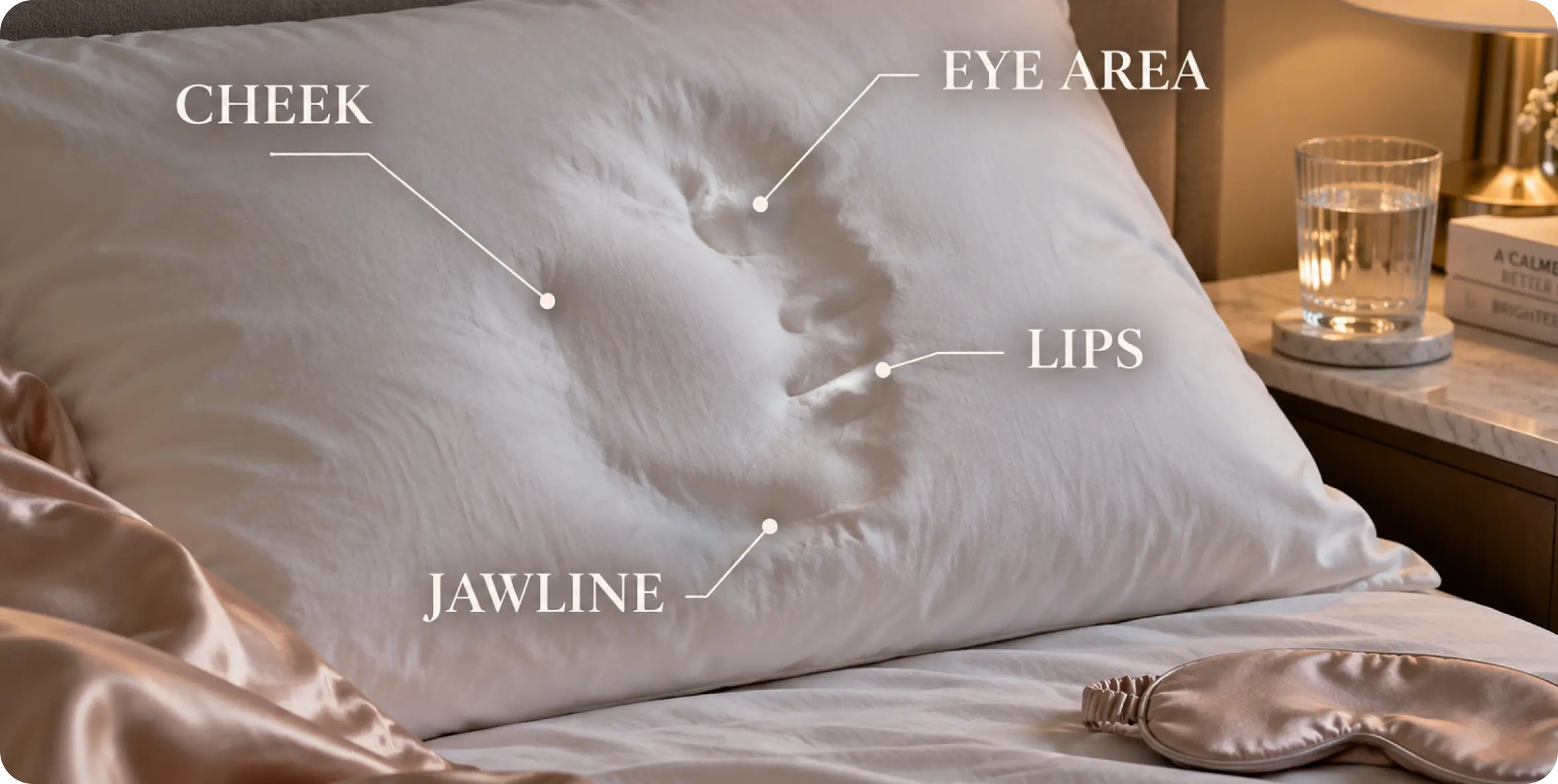
CAN SLEEPING ON ONE SIDE CHANGE YOUR FACE? SLEEP LINES, ASYMMETRY, AND FACIAL COMPRESSION
Can sleeping on one side change your face? It can temporarily change how your face looks in the morning. One cheek may seem puffier, one eye more swollen, and one side may show deeper pillow marks. Over many years, repeated pressure may contribute to sleep lines in aging skin, but side sleeping alone does not […]
Author:MINDBODYFACE
 13
13 0
0

UNEVEN SMILE: WHY ONE SIDE OF THE MOUTH SITS HIGHER AND WHAT FACIAL TENSION HAS TO DO WITH IT
An uneven smile can be one of those details you only notice in photos or videos. One corner of the mouth lifts more. One side of the upper lip looks higher. One cheek seems to move first, while the other appears quieter or tighter. A little facial asymmetry is normal. Almost no one has a […]
Author:MINDBODYFACE
230
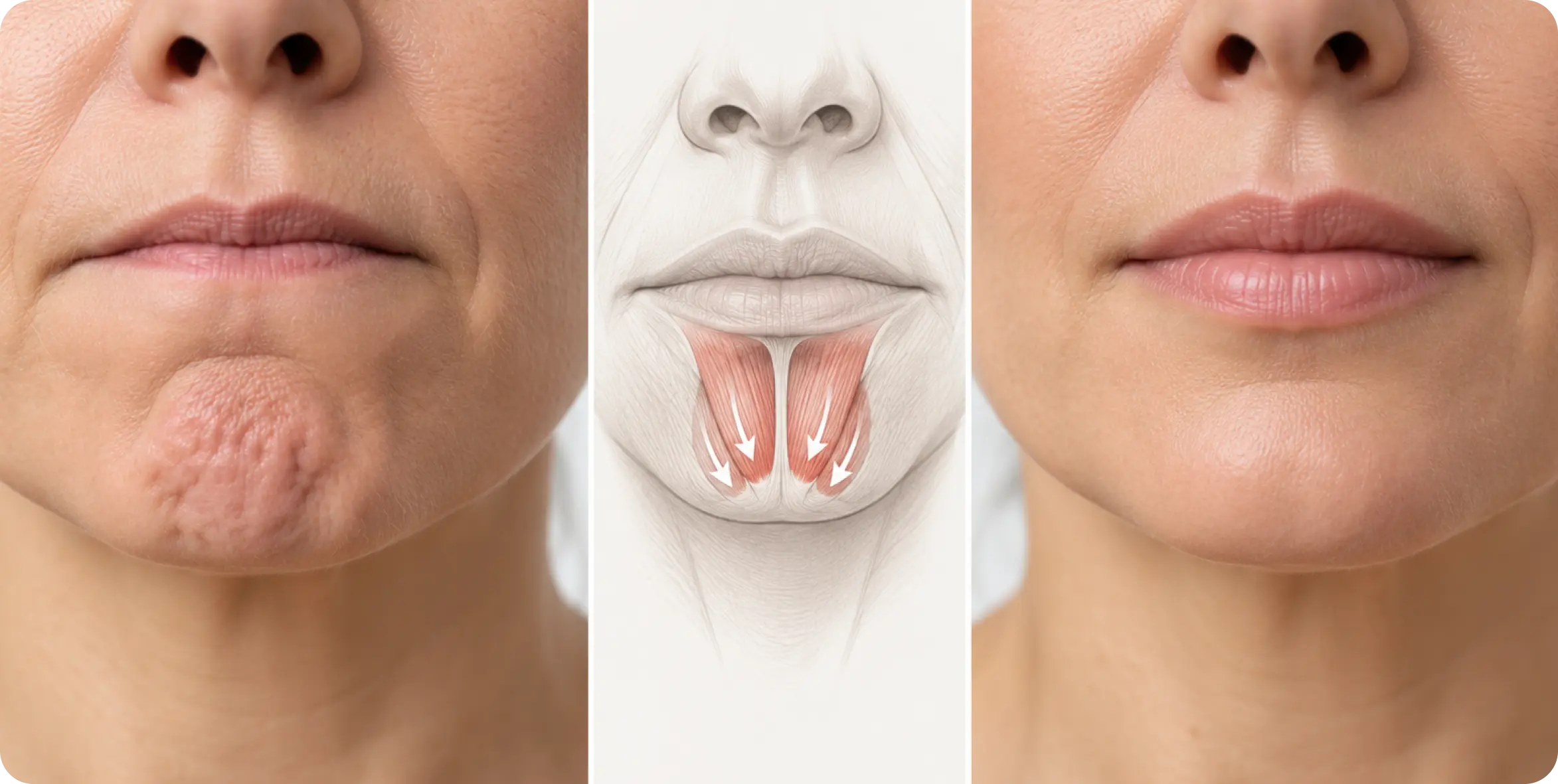
DIMPLED CHIN AND MENTALIS TENSION: WHY THE CHIN LOOKS UNEVEN AND HOW TO RELAX IT
A dimpled chin can make the lower face look tense even when you are not upset. The skin may appear bumpy, gathered, or uneven when you talk, smile, concentrate, swallow, or press your lips together. For some people, this texture appears only during expression. For others, it remains visible at rest. The common reason is […]
Author:MINDBODYFACE
220
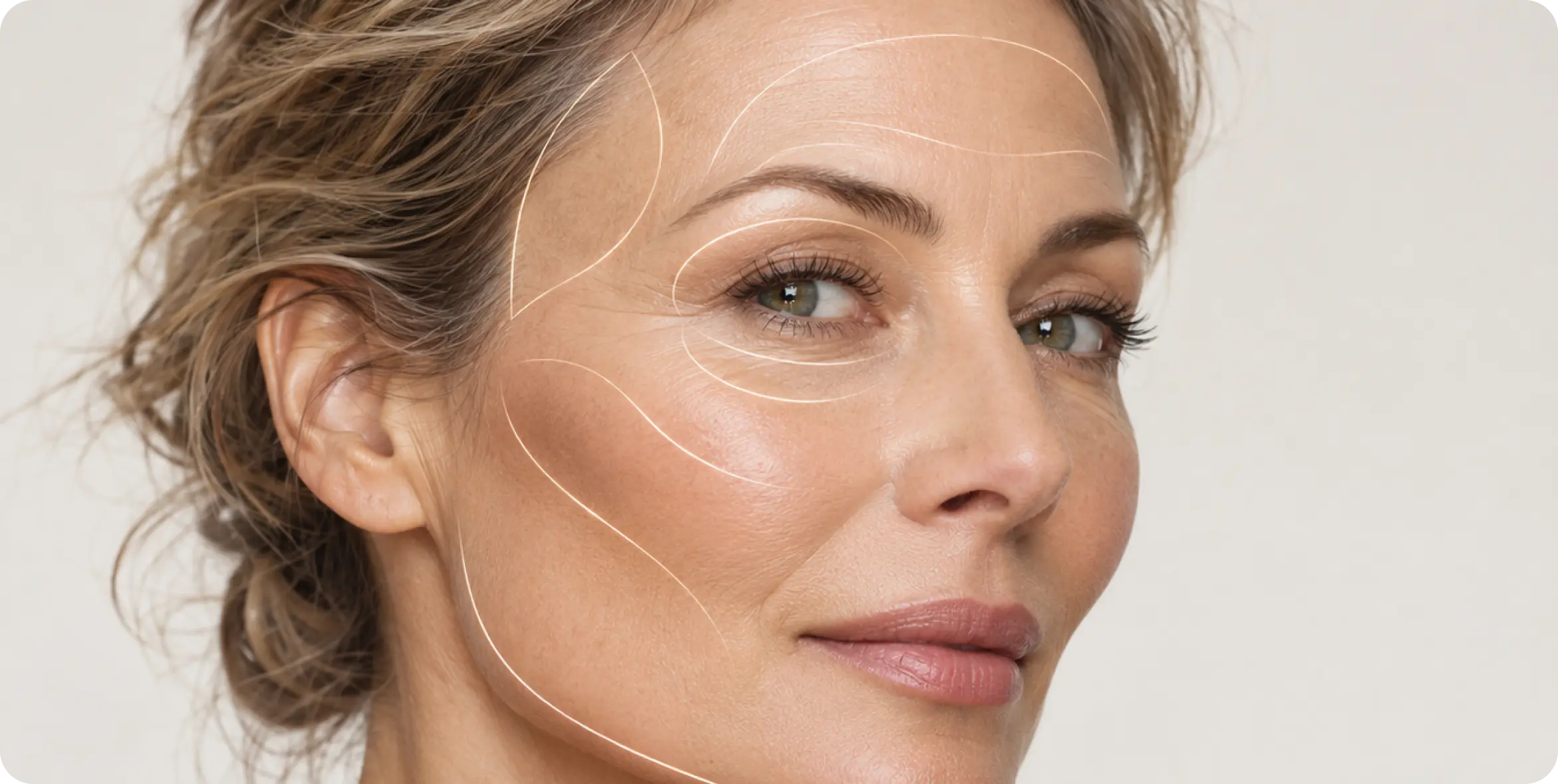
HOLLOW TEMPLES: WHY TEMPLES LOSE VOLUME AND HOW FACIAL AGING CHANGES THIS AREA
Hollow temples are the indentations that can appear at the sides of the forehead, between the outer eyebrow, hairline, and upper cheekbone. Temple hollowing can make the upper face look narrower, more angular, or more tired—even when your skin is smooth and your cheeks still have volume. This area is easy to overlook. People often […]
Author:MINDBODYFACE
280


MINDBODYFACE LLC
1021 E Lincolnway Suite 8342, Cheyenne, WY 82001
+16282892382
All services and information on this website are for educational purposes only and do not constitute medical advice or treatment -