Oct 16, 2026
•9 minutes read
•Author: MINDBODYFACE
DIMPLED CHIN AND MENTALIS TENSION: WHY THE CHIN LOOKS UNEVEN AND HOW TO RELAX IT

A dimpled chin can make the lower face look tense even when you are not upset. The skin may appear bumpy, gathered, or uneven when you talk, smile, concentrate, swallow, or press your lips together. For some people, this texture appears only during expression. For others, it remains visible at rest.
The common reason is often mentalis muscle tension. The mentalis is a small paired muscle in the chin that pulls directly on the skin when it contracts. If it works too strongly or too often, the skin can take on a pebbled, puckered pattern.
You are not doing anything wrong if your chin looks textured. Facial anatomy, lip posture, tooth position, jaw tension, skin quality, and natural aging can all play a role. The goal is not to freeze the chin. It is to understand when it is bracing unnecessarily and learn how to let it rest.
WHAT IS A DIMPLED, PEBBLED, OR ORANGE PEEL CHIN?
A dimpled chin is a textured chin surface with small indentations, wrinkles, or a cobblestone pattern. It is also called a pebbled chin, orange peel chin, or “peau d’orange” chin because the skin can resemble orange peel when the muscle underneath contracts.
If you are asking, “Why does my chin look bumpy?” look at when the texture appears. A chin that is smooth at rest but puckers while speaking, smiling, swallowing, or concentrating is often reacting to normal mentalis muscle contraction.
The mentalis sits in the central chin area. It begins on the front of the lower jaw and inserts into the skin of the chin. When it contracts, it raises and pushes the lower lip forward while wrinkling the chin skin.
That direct connection to the skin explains why even a small muscle can create visible texture. The chin does not need to have “bad skin” for this to happen. It may simply be showing the pull of the underlying muscle.

A pebbled chin can look different from one moment to the next:
- Small dimples or tiny ridges across the chin
- A bumpy or gathered appearance below the lower lip
- A chin that seems to ball up while talking
- A deepening crease between the lower lip and chin
- Lower-lip tension or inward rolling
- Texture that becomes stronger during stress or concentration
The pattern can be completely normal. It becomes worth exploring when it feels newly pronounced, visibly asymmetric, painful, or connected with jaw discomfort and chronic clenching.
WHY DOES THE CHIN BECOME DIMPLED OR WRINKLED?
Chin dimpling causes are often related to mentalis hyperactivity, repeated lower-face tension, skin changes, and the way the lips and jaw rest together. A dimpled chin is rarely caused by one isolated problem.
The mentalis is active when you pucker, make a doubtful expression, raise the lower lip, or try to bring the lips together. It can also work harder when the jaw is tense, the teeth are clenched, or the lips need extra effort to close.
Common factors behind a dimpled or wrinkled chin include:
- Mentalis hyperactivity: the muscle contracts strongly or frequently
- Chin muscle tension: the lower face braces during stress, focus, swallowing, or speaking
- Lip posture: lips may be pressed together or struggle to rest softly
- Jaw clenching: tension in the jaw can recruit the chin and neck
- Forward-head posture: pushing the chin forward can increase lower-face bracing
- Facial expression habits: repeated pursing, pouting, or lip compression
- Skin aging: thinner skin and reduced elasticity can make dimpling more visible
- Natural asymmetry: one side of the mentalis may contract more strongly than the other
A wrinkled chin when talking does not always mean there is a problem. Talking requires many facial muscles. But if your chin looks tense in almost every expression—or you feel it pulling even when the face is at rest – it may be doing more work than necessary.
The texture can become more visible with age because skin has less elasticity and the muscle pull is easier to see. It may also become stronger when the lower face loses some soft-tissue support.
MENTALIS MUSCLE TENSION AND ITS EFFECT ON THE CHIN
Mentalis muscle tension can pull the chin skin into dimples, deepen the crease beneath the lower lip, and make the lower face look contracted or uneven. The mentalis is not a large muscle, yet it has a direct visual effect because its fibers attach to the skin of the chin.
The mentalis is a paired muscle. One part sits on each side of the center of the chin. It begins in the lower jaw and connects with the skin, so contraction raises and wrinkles the chin while helping protrude the lower lip.
When there is mentalis hyperactivity, the muscle may activate during moments that do not require a strong expression. You may notice it when you:
- Concentrate at a screen
- Swallow or sip from a cup
- Close the lips tightly
- Feel anxious or rushed
- Clench your teeth
- Push the lower lip forward
- Try to hold the mouth closed when nasal breathing feels difficult
This can make the chin look shorter, bumpier, or more tightly gathered. The lower lip may roll inward. The crease between the lip and chin can become deeper. In some people, the chin pulls upward so strongly that the lower face looks strained.
Medical literature recognizes the dimpled or cobblestone chin as a sign associated with mentalis hyperactivity. It is one reason clinicians may assess the muscle when planning lower-face aesthetic treatment.

However, a textured chin does not always need treatment. It may be part of your normal expression. The question is whether you want to reduce unnecessary tension, improve comfort, or address a visible change that no longer feels like you.
HOW TO RELAX THE MENTALIS MUSCLE
How to relax mentalis muscle tension begins with awareness, not force. You do not need to stretch the chin aggressively or press hard into the tissue. In fact, strong pulling, repeated grimacing, and hard chin exercises may make the muscle brace more.
Start by checking your resting mouth position. Ideally, your teeth are slightly apart, your jaw is not clenched, and your lips can meet softly without the chin bunching upward. If closing the lips makes the chin wrinkle immediately, use less effort rather than forcing the mouth shut.
A gentle mentalis muscle massage can support relaxation:
- Wash your hands and apply a small amount of moisturizer or facial oil for slip.
- Place two fingertips on the center of the chin, below the lower lip.
- Exhale slowly and let the lower jaw hang slightly open.
- Make very small circles for 15-20 seconds without dragging the skin.
- Glide lightly from the center of the chin outward along the jawline.
- Finish by resting the fingers under the lower lip and allowing the chin to soften.
This chin massage for tension should feel calming, not painful. You are not trying to flatten the skin or “break up” the muscle. The aim is to notice when the chin releases.

You can also use a simple reset during the day:
- Let the tongue rest lightly behind the upper front teeth
- Keep the teeth slightly apart
- Drop the shoulders
- Relax the jaw without opening the mouth wide
- Let the lips meet softly or rest slightly apart
- Take one slow nasal breath if your nose feels clear and comfortable
If you have a severe bite issue, chronic mouth breathing, jaw pain, jaw clicking, recent dental work, or persistent headaches, speak with a dentist, orthodontist, physician, or qualified therapist rather than trying to correct the chin with online exercises alone.
FACE YOGA AND MASSAGE FOR A SMOOTHER CHIN
Face yoga for dimpled chin can be helpful when it teaches the lower face to move without gripping, but it cannot guarantee a permanently smooth chin. A good routine should reduce excessive muscle tension, not turn the chin into another body part you train harder.
Try this gentle sequence once a day:
Chin release
Place one fingertip lightly in the center of the chin. Let the jaw release and breathe out slowly through the nose or mouth.
Hold for five breaths. If the chin wrinkles more, soften your lips and reduce effort.
Soft lower-lip movement
Without pushing the jaw forward, gently raise the lower lip a few millimeters, then release it fully. Keep the chin quiet.
Repeat five times. The movement should feel small and controlled.
Jaw and neck reset
Turn your head gently to one side, return to center, then turn to the other side. Keep the shoulders low and chin level.
Repeat five times on each side. A neck that is constantly shortened or pushed forward can make the lower face work harder.
Gentle chin massage for tension can follow this routine. Use feather-light strokes from the chin center toward the jawline and from the mouth corners toward the cheeks. Avoid deep pressure beneath the lower lip, aggressive scraping, or repeated pinching.
If you want to know how to smooth dimpled chin naturally, remember that natural methods can support comfort, muscle awareness, and a softer expression. They cannot change bone structure, remove deep wrinkles, or reliably eliminate persistent dimpling caused by strong muscle activity.
WHEN TO SEEK PROFESSIONAL FACIAL ASSESSMENT
A dimpled chin that has always been part of your expression may not need professional treatment. But persistent or changing mentalis muscle tension can deserve assessment when it affects comfort, facial balance, or daily function.
Speak with a qualified clinician if you notice:
- Sudden new asymmetry in the lower face
- Facial weakness, numbness, or drooping
- Painful chin muscle tension or jaw pain
- Repeated jaw clicking, locking, or reduced mouth opening
- Trouble swallowing, speaking, or keeping lips closed
- A new lump, swelling, skin change, or injury in the chin area
- Dimpling that appears after surgery, dental work, trauma, or cosmetic injections
- Persistent headaches with jaw clenching or neck pain
A dentist, orthodontist, maxillofacial specialist, physical therapist, speech therapist, dermatologist, or physician may be relevant depending on the cause. A professional can assess bite, jaw movement, oral posture, muscle coordination, skin changes, and whether the issue is cosmetic, functional, or medical.
A bumpy chin is not a personal failure. Sometimes it is simply a small muscle asking for less effort. Learn to recognize the pattern, treat the area gently, and seek professional support when something feels painful, new, or clearly different.
UNEVEN SMILE: WHY ONE SIDE OF THE MOUTH SITS HIGHER AND WHAT FACIAL TENSION HAS TO DO WITH IT
An uneven smile can be one of those details you only notice in photos or videos. One corner of the mouth lifts more. One side of the upper lip looks higher. One cheek seems to move first, while the other appears quieter or tighter. A little facial asymmetry is normal. Almost no one has a […]
Author:MINDBODYFACE
 1
1 0
0
HOLLOW TEMPLES: WHY TEMPLES LOSE VOLUME AND HOW FACIAL AGING CHANGES THIS AREA
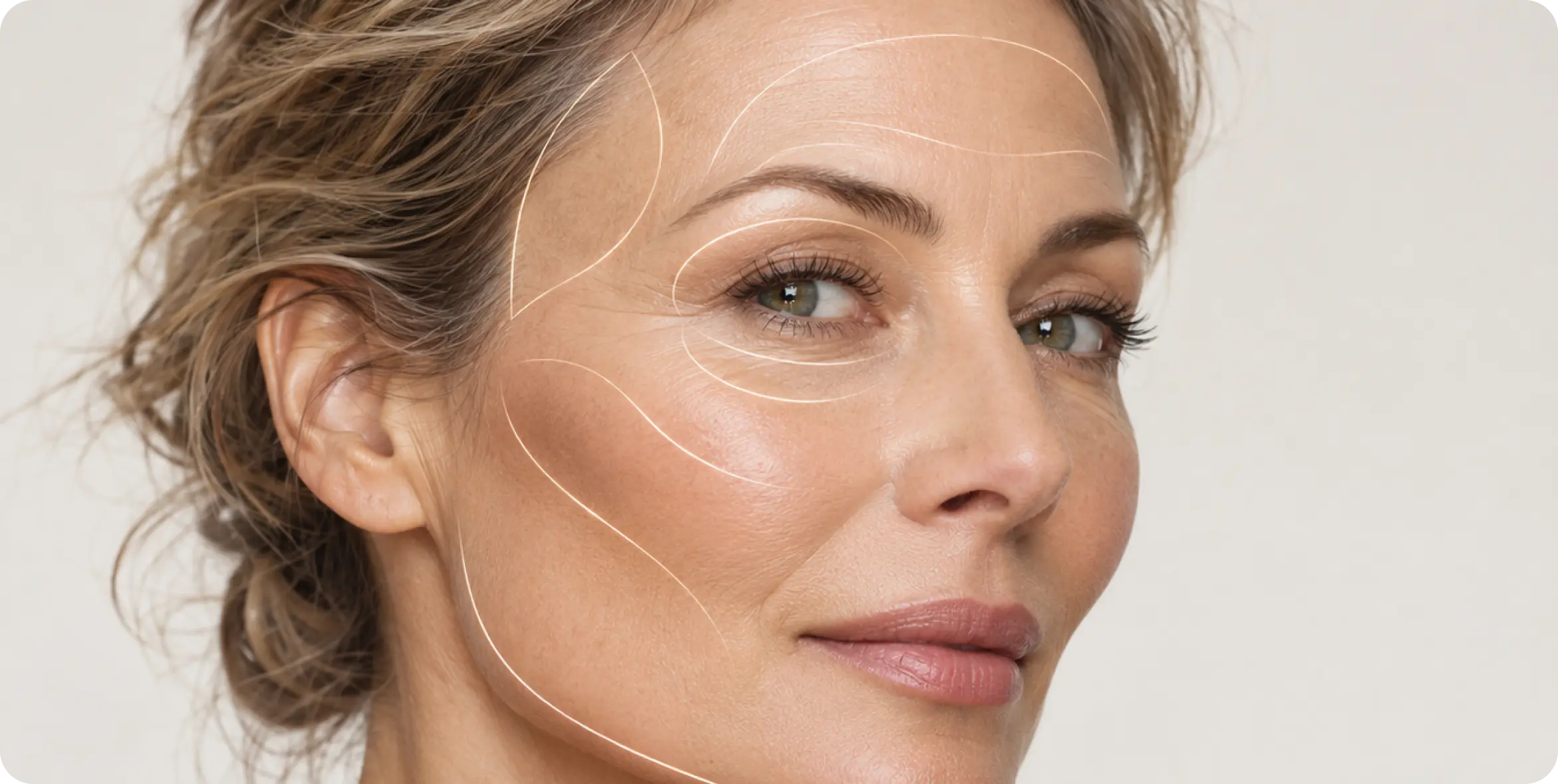
Hollow temples are the indentations that can appear at the sides of the forehead, between the outer eyebrow, hairline, and upper cheekbone. Temple hollowing can make the upper face look narrower, more angular, or more tired—even when your skin is smooth and your cheeks still have volume. This area is easy to overlook. People often […]
Author:MINDBODYFACE
130
LIP LINES AND SMOKER’S LINES: CAUSES AND NATURAL WAYS TO SOFTEN THEM
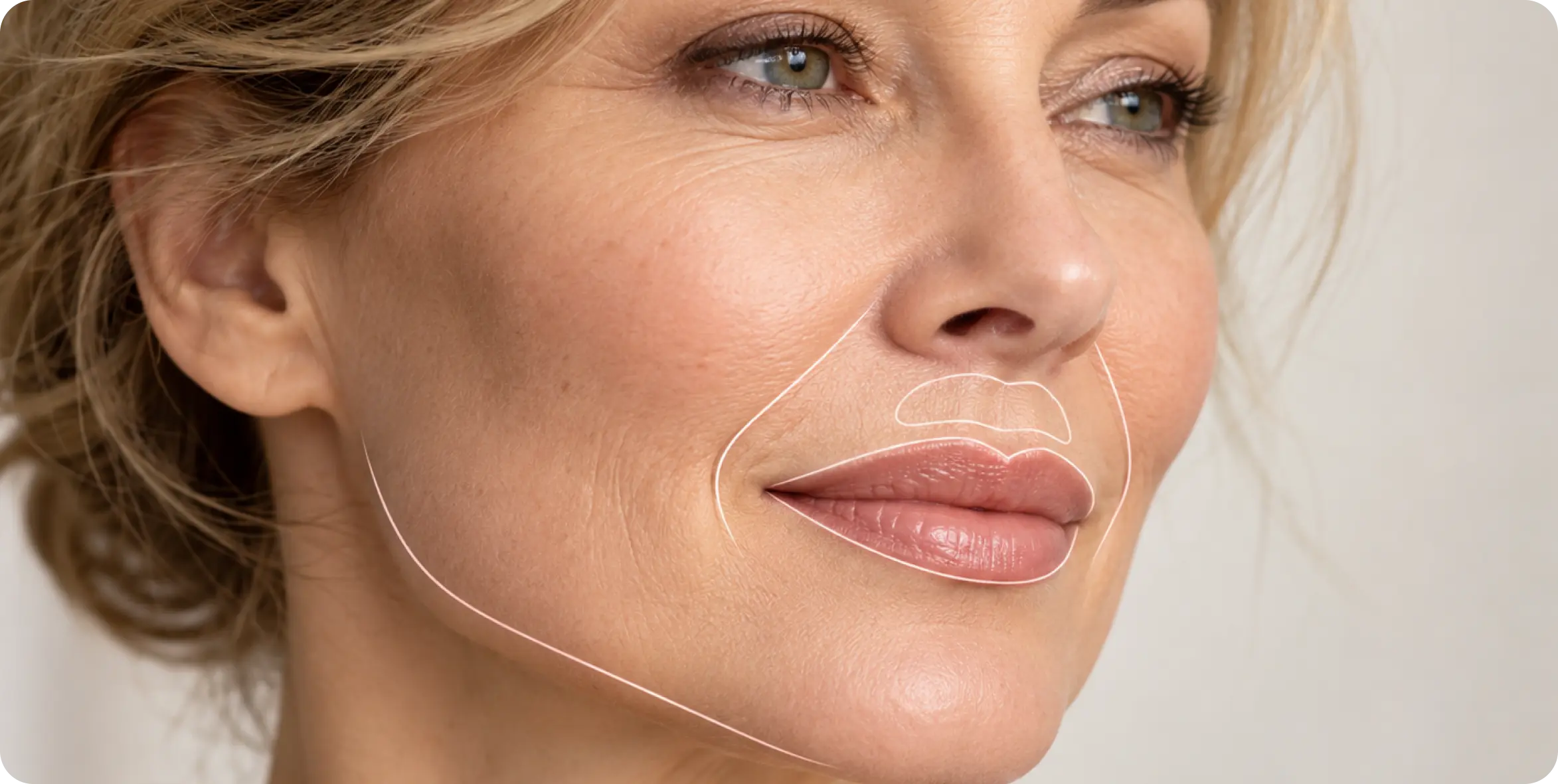
Lip lines are the fine vertical creases that appear on and above the upper lip. They are often called smoker’s lines, but smoking is only one possible cause. Sun exposure, natural skin aging, repeated mouth movements, dryness, genetics, and changes in the tissues around the mouth can all make vertical lip lines more visible. These […]
Author:MINDBODYFACE
90


MINDBODYFACE LLC
1021 E Lincolnway Suite 8342, Cheyenne, WY 82001
+16282892382
All services and information on this website are for educational purposes only and do not constitute medical advice or treatment -