Oct 21, 2026
•9 minutes read
•Author: MINDBODYFACE
CAN SLEEPING ON ONE SIDE CHANGE YOUR FACE? SLEEP LINES, ASYMMETRY, AND FACIAL COMPRESSION

Can sleeping on one side change your face? It can temporarily change how your face looks in the morning. One cheek may seem puffier, one eye more swollen, and one side may show deeper pillow marks. Over many years, repeated pressure may contribute to sleep lines in aging skin, but side sleeping alone does not reshape adult facial bones or explain every facial asymmetry.
The face is soft tissue. It can be compressed, stretched, and folded against a pillow for hours. If you sleep on the same side most nights, you may notice the same cheek, eye area, lip line, or jawline looking different after waking.
Still, there is no need to panic about your favorite sleeping position. Genetics, sun exposure, smoking, skin quality, facial anatomy, age, fluid retention, weight changes, stress, and jaw habits all have a much greater role in long-term facial aging than one night on a pillow.
HOW SLEEPING ON ONE SIDE AFFECTS THE FACE
Side sleeping face asymmetry is usually temporary in the morning, caused by pillow pressure, fluid shifts, and soft-tissue compression. If your face is pressed into the pillow, the skin, cheeks, lips, and eye area can look slightly shifted or flattened until you get up, move, hydrate, and circulation changes.
The pressure is not the same on both sides of the face. The cheek may be pushed upward, the eye area may fold, and the jaw may rest against the pillow. If you also clench your teeth, press your lips together, or sleep with your neck twisted, the difference may be more visible.
Researchers describe compression, tension, and shear forces acting on the face in side and stomach sleeping positions. These forces can distort facial skin during sleep, especially around the cheeks, eye area, forehead, and mouth.
But does sleeping position affect face shape in adulthood? Not in the dramatic way social media often suggests. Sleeping on one side does not move your cheekbones, make one side of the skull grow differently, or permanently change your jawbone.
A side sleeper may notice temporary flattening, puffiness, or deeper creases on the pillow side. Over time, repeated skin compression could contribute to the appearance of certain wrinkles, particularly as skin becomes thinner and less elastic with age. This is a possible contributing factor, not a complete explanation for facial aging.
SLEEP LINES AND WRINKLES FROM SIDE SLEEPING
Sleep wrinkles are lines created by repeated mechanical folding and compression of facial skin against a pillow. Unlike expression lines, which follow repeated muscle movement, sleep lines on the face can appear where the skin is pushed, pulled, or folded during side or stomach sleeping.
Common areas for sleep compression wrinkles include:
- The outer corners of the eyes
- The cheeks
- The nasolabial area between the nose and mouth
- The upper lip and mouth corners
- The chin
- The forehead, especially with stomach sleeping
- The chest and décolletage
In the morning, these creases are often temporary. Younger skin usually rebounds quickly because it has more collagen, elastin, and hydration. With age, repeated folding may become easier to see and may last longer.
A review in the Aesthetic Surgery Journal noted that facial compression, shear, and stress forces during side or stomach sleeping may contribute to sleep wrinkles and facial skin distortion. A small observational study also documented facial deformation during pillow contact, including changes around the eyes, nasolabial folds, cheeks, and forehead.
However, the research is not conclusive. A cross-sectional study of 100 women did not find a significant association between preferred sleep side and the side with more facial wrinkles or tissue descent.

That is the honest answer: sleeping on side wrinkles may be one factor, especially when skin is mature and repeatedly compressed, but it is not a guaranteed cause of permanent lines.
CAN SLEEPING ON ONE SIDE CAUSE FACIAL ASYMMETRY?
Face asymmetry from sleeping is usually a temporary morning effect, not a permanent change in facial structure. If one side of your face looks flatter from sleeping, it may be because that cheek was compressed into the pillow, fluid collected unevenly, or your skin stayed folded in the same position for several hours.
You may wake up with:
- One cheek looking puffier or flatter
- A deeper nasolabial fold on the pillow side
- One eye more swollen or creased
- A temporary line on the cheek or chin
- A jawline that looks less sharp on one side
- A mouth corner that appears lower or more compressed
These changes usually improve after you get up and move around. Try washing your face with cool water, taking a short walk, drinking water, and giving the neck and jaw a few minutes to release. Avoid harsh rubbing or trying to “push” swelling away with strong massage.
Can a habitual sleep side make facial asymmetry more noticeable over time? It may contribute to the way existing asymmetry looks. If one cheek already has less volume, one eye is naturally lower, or you chew on one side, repeated pillow compression could make the difference easier to notice in photos.
But one side of the face flatter from sleeping is not proof that the pillow created the asymmetry. Facial asymmetry is common, and many factors affect it: genetics, bone structure, dental bite, chewing habits, aging, facial expressions, previous injury, body weight, and muscle tension.

If asymmetry appears suddenly or is accompanied by facial weakness, numbness, trouble speaking, severe headache, arm weakness, or vision changes, seek emergency medical care. A sudden drooping smile is not a sleep-position issue.
DOES SLEEPING POSITION AFFECT FACE SHAPE?
Does sleeping position affect face shape? It can affect temporary facial contour and skin compression, but it does not reshape the adult facial skeleton. Your cheekbones, jawbone, and skull are not being molded by a pillow every night.
What can change visually is soft tissue. Side sleeping can create a temporary flattened cheek, puffiness, sleep lines, or a deeper fold where the pillow presses. Over years, repeated compression may add to skin creasing in a person whose skin is already becoming thinner and less elastic.
Here is the realistic comparison:
| Sleeping position | Possible effect on the face | What it cannot do |
| Back sleeping | Reduces direct facial pressure from a pillow | Prevent all wrinkles or facial aging |
| Side sleeping | Can cause temporary creases, puffiness, and cheek compression | Permanently reshape adult bone structure |
| Stomach sleeping | Usually creates the most direct facial pressure and neck rotation | Explain all asymmetry or facial aging |
| Changing sides | Distributes pressure rather than placing it on one area | Eliminate compression completely |
The phrase side sleeper facial changes should be understood as soft-tissue changes, not a diagnosis. If you love sleeping on your side and sleep well there, you do not have to force yourself into an uncomfortable position out of fear of wrinkles.
Sleep quality has its own effect on appearance. Poor sleep can make the eyes look more swollen, the face duller, and tension more visible. A comfortable position that lets you sleep deeply may matter more than trying to stay perfectly still on your back all night.
BEST SLEEPING POSITION FOR FACIAL REJUVENATION
The best sleeping position for face-related concerns is usually the one that supports good sleep while minimizing direct, prolonged pressure on one side of the face. For some people, that is back sleeping. For others, side sleeping is more comfortable or medically preferable.
Does sleeping on your back prevent wrinkles? It can reduce direct pillow compression, which may reduce the chance of waking with sleep lines. But it does not prevent wrinkles caused by sun exposure, aging, smoking, facial expressions, genetics, or skin dehydration.
If you want to try back sleeping, make it easy rather than forcing it:
- Use a pillow that supports the neck without pushing the chin toward the chest
- Place a pillow under the knees to make the lower back more comfortable
- Use small pillows at the sides of the body to reduce rolling
- Start for part of the night rather than demanding a full-night change immediately
- Keep the bedroom dark, cool, and quiet to protect sleep quality
Side sleeping may be more appropriate for people who snore, have reflux, are pregnant, or cannot sleep comfortably on their back. If you have diagnosed sleep apnea or another health condition, follow the advice of your clinician rather than choosing a position for cosmetic reasons.
The goal is not to “train” yourself into bad sleep. It is to reduce unnecessary facial compression where you can, while still waking rested.
HOW TO PREVENT SLEEP WRINKLES AND FACIAL COMPRESSION
How to prevent sleep wrinkles means reducing repeated pillow pressure, protecting skin quality, and avoiding habits that keep the face tense overnight. You cannot remove every crease from sleep, but small changes can make morning compression less noticeable.
Try these practical steps:
- Change sides during the night if you can, rather than sleeping on one side every night
- Use a pillow that supports the neck and does not force the cheek deeply into the surface
- Consider a smooth pillowcase if rough fabric irritates your skin
- Replace very flat or overly high pillows that push the head forward
- Apply a gentle moisturizer before bed if your skin feels dry
- Use sunscreen every day; UV protection matters more for long-term wrinkles than any pillowcase
- Avoid falling asleep with heavy facial pressure from your hand, arm, or phone
- Release the jaw, lips, forehead, and shoulders before sleep
- Address chronic nasal congestion, snoring, or sleep disruption that makes you toss and turn
A short evening reset can help. Sit upright, let your shoulders drop, keep your teeth slightly apart, and take five slow breaths. Massage the temples, jaw, and sides of the neck gently with moisturizer. This will not prevent all sleep compression wrinkles, but it may stop you from taking the day’s tension into bed.

The best approach is calm and realistic. Protect your skin from the sun. Sleep enough. Use a pillow that feels good for your neck. Let your face move and rest. A side-sleeping habit may create temporary pillow marks, but it does not define your face.
UNEVEN SMILE: WHY ONE SIDE OF THE MOUTH SITS HIGHER AND WHAT FACIAL TENSION HAS TO DO WITH IT
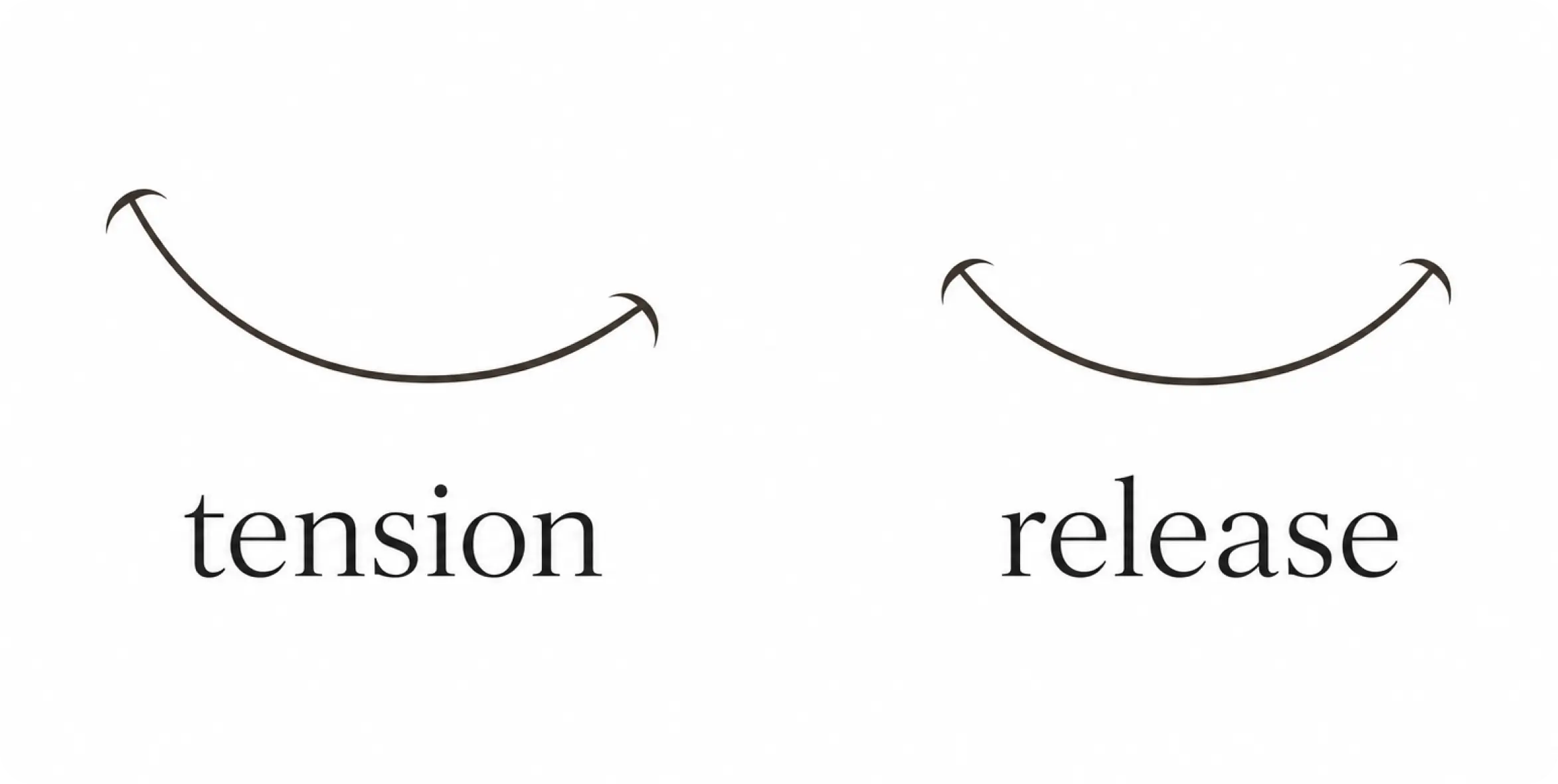
An uneven smile can be one of those details you only notice in photos or videos. One corner of the mouth lifts more. One side of the upper lip looks higher. One cheek seems to move first, while the other appears quieter or tighter. A little facial asymmetry is normal. Almost no one has a […]
Author:MINDBODYFACE
 10
 0
DIMPLED CHIN AND MENTALIS TENSION: WHY THE CHIN LOOKS UNEVEN AND HOW TO RELAX IT
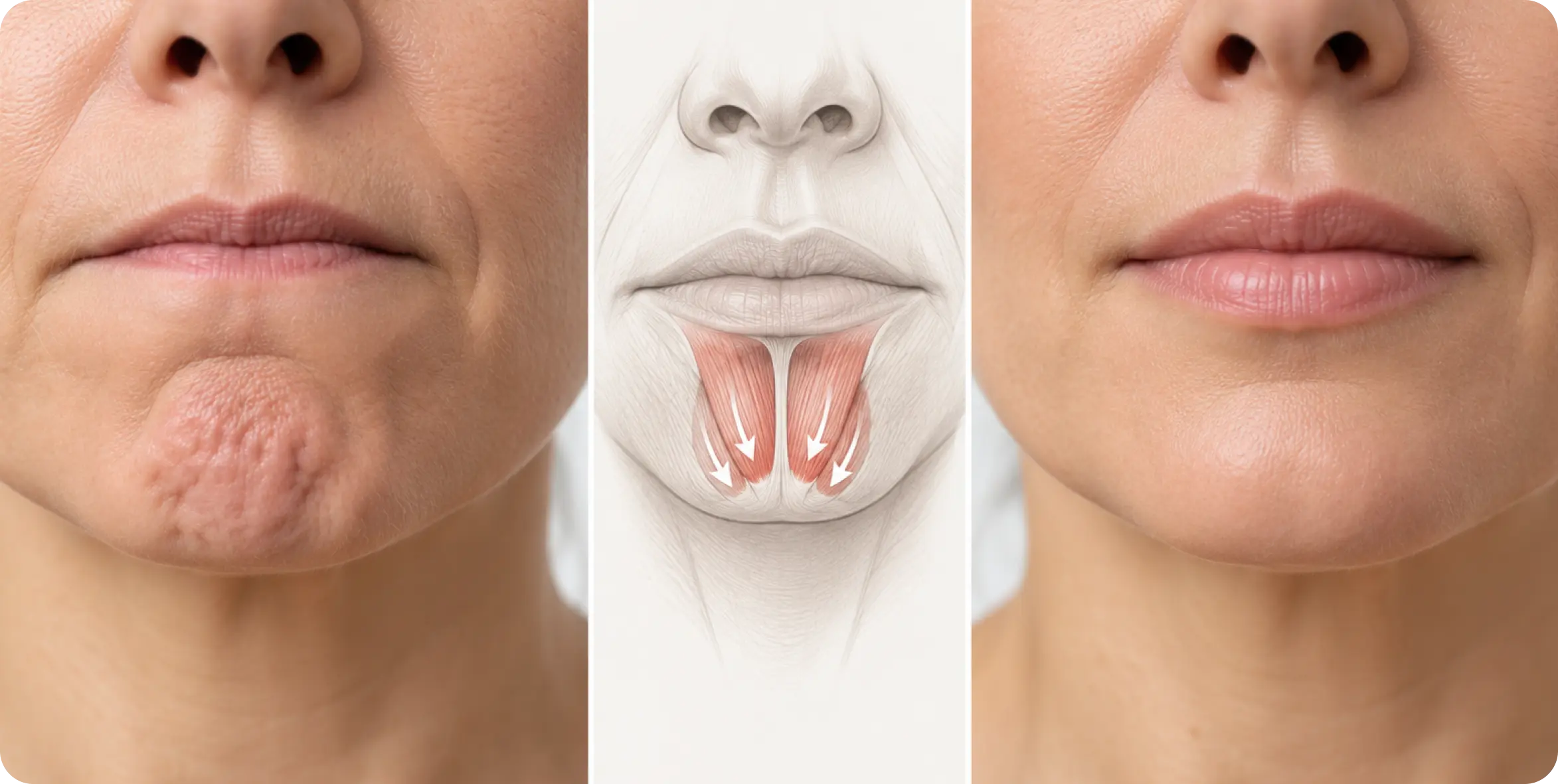
A dimpled chin can make the lower face look tense even when you are not upset. The skin may appear bumpy, gathered, or uneven when you talk, smile, concentrate, swallow, or press your lips together. For some people, this texture appears only during expression. For others, it remains visible at rest. The common reason is […]
Author:MINDBODYFACE
100
HOLLOW TEMPLES: WHY TEMPLES LOSE VOLUME AND HOW FACIAL AGING CHANGES THIS AREA
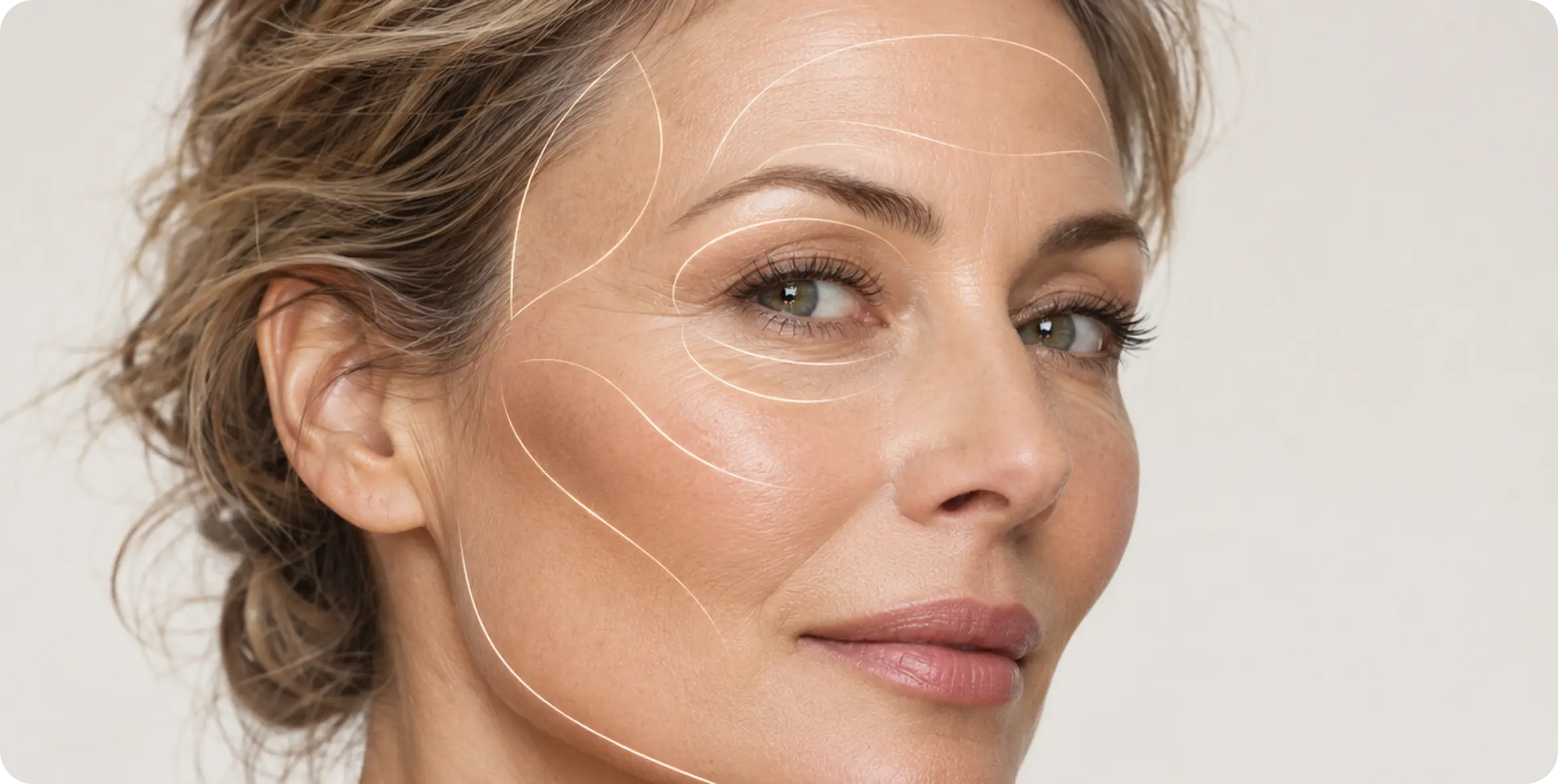
Hollow temples are the indentations that can appear at the sides of the forehead, between the outer eyebrow, hairline, and upper cheekbone. Temple hollowing can make the upper face look narrower, more angular, or more tired—even when your skin is smooth and your cheeks still have volume. This area is easy to overlook. People often […]
Author:MINDBODYFACE
180


MINDBODYFACE LLC
1021 E Lincolnway Suite 8342, Cheyenne, WY 82001
+16282892382
All services and information on this website are for educational purposes only and do not constitute medical advice or treatment -