Oct 16, 2026
•9 minutes read
•Author: MINDBODYFACE
UNEVEN SMILE: WHY ONE SIDE OF THE MOUTH SITS HIGHER AND WHAT FACIAL TENSION HAS TO DO WITH IT

An uneven smile can be one of those details you only notice in photos or videos. One corner of the mouth lifts more. One side of the upper lip looks higher. One cheek seems to move first, while the other appears quieter or tighter.
A little facial asymmetry is normal. Almost no one has a perfectly identical left and right side, and a subtle difference often makes a face look expressive rather than flawed. Research reviews describe mild facial asymmetry as common in the general population and often too subtle to be clinically significant.
Still, if you are asking, “Why is my smile uneven?” it is useful to look beyond the lips. An asymmetrical smile can reflect facial structure, tooth and bite position, habitual expressions, jaw tension, posture, or differences in how the muscles on each side of the face activate.
WHAT CAUSES AN UNEVEN OR ASYMMETRICAL SMILE
An asymmetrical smile can happen because one side of the mouth, cheeks, jaw, or facial muscles moves differently from the other. A one corner of mouth higher pattern does not automatically mean something is wrong. It may be your natural anatomy or a learned expression habit.
Common crooked smile causes include:
- Natural differences in facial bone structure
- Uneven tooth shape, tooth position, or bite
- One cheek or lip lifting more strongly during smiling
- Habitual chewing on one side
- A head tilt or jaw shift that changes the mouth position
- Tension in the jaw, cheeks, neck, or lips
- A history of dental work, injury, or facial nerve problems
- Previous surgery, filler, or other cosmetic treatment
- Natural differences in eyebrow, cheekbone, lip, or jaw height
The face is not perfectly symmetrical by design. One side can have a slightly stronger zygomatic muscle, a fuller cheek, or a different lip shape. This can make one side of the mouth appear higher even when the smile is healthy and functional.
Facial asymmetry smile patterns may also become more visible in photographs because of camera lenses, lighting, a turned head, or the moment the image is captured. A front-facing camera can exaggerate small differences that other people barely notice in real life.

A good first question is whether your uneven smile has always been there. If it has been part of your face for years and you have no pain, weakness, numbness, or changes in function, it is usually not an emergency.
HOW FACIAL TENSION AND MUSCLE IMBALANCE AFFECT YOUR SMILE
Uneven smile muscle imbalance can make one side of the face look more active, higher, tighter, or stronger during expression. This does not necessarily mean one side is weak. Often, the issue is that one side is overworking while the other side has less range, more stiffness, or a different resting pattern.
The muscles of smiling do not work alone. Cheek muscles lift the mouth corners, muscles around the lips shape the mouth, the jaw needs to stay loose, and the neck should not pull downward. If one side is braced, the smile can become uneven.
Facial tension uneven smile patterns often appear when you:
- Clench your teeth or press the lips together
- Chew mainly on one side
- Carry a phone between your ear and shoulder
- Look down at a screen with your head turned
- Sleep with pressure on the same side of the face every night
- Use one side of the mouth more when speaking
- Raise one eyebrow or tighten one eye during smiling
- Hold stress in the jaw and temples
If one side of face smiles more, it may be because that side has learned to lead the expression. The other side may be less mobile, more tense, or simply shaped differently. A mirrored video of your smile can help you see the pattern more clearly than a single still photo.

Do not jump straight to forceful “weak-side” exercises. Repeatedly pulling one mouth corner upward can create more neck tension, chin gripping, or exaggerated asymmetry. The better goal is balanced movement: both sides of the face participating without one side fighting the other.
HOW TO IDENTIFY MUSCLE IMBALANCE AROUND THE MOUTH
How to balance smile muscles begins with observing movement before trying to correct it. You cannot work effectively with a pattern you have never noticed.
Use a mirror or record a short video in natural light. Watch yourself say a few sentences, smile softly, smile broadly, purse the lips, and relax the face. Look for differences without judging them.
Possible signs of uneven muscle engagement include:
- One mouth corner rises earlier or higher than the other
- One cheek lifts more during smiling
- One side of the lips feels tighter when you try to rest
- The chin dimples or pulls more on one side
- The jaw shifts to one side as you close the lips
- One eye narrows more strongly when you smile
- One side of the neck tightens or bands during expression
- The smile looks different depending on head position
An uneven smile muscle imbalance may also be linked to the bite. If teeth do not meet evenly, the jaw may shift slightly during chewing or closing. A dentist or orthodontist can assess this more accurately than a mirror or app.
Try this simple awareness check. Place your fingertips lightly on both cheeks beside the mouth corners. Smile at 30% effort, then release. Notice whether one side jumps quickly, whether the jaw tightens, or whether your chin and neck join the movement.
The aim is not a perfectly mirrored smile. It is a smile that feels free rather than pulled.
NATURAL WAYS TO IMPROVE AN UNEVEN SMILE
How to fix uneven smile naturally means supporting more balanced movement, relaxing overactive areas, and reducing habits that feed facial tension. It does not mean forcing the lower side upward until both sides look identical.
Start with the basics:
- Keep teeth slightly apart at rest instead of clenching
- Let the lips meet softly without pressing
- Take screen breaks and bring devices closer to eye level
- Alternate chewing sides when it is comfortable to do so
- Notice whether you always sleep on one side with pressure on the jaw
- Work on neck posture and shoulder tension
- Use gentle facial massage for tight areas
- Practise smiling at low effort instead of pulling hard
Balanced soft smile
Sit upright with the head centered over the shoulders. Let the jaw hang slightly so the teeth do not touch.
Create a small, closed-mouth smile at about 30% effort. Place fingertips lightly at the mouth corners and check that both sides move without pulling the chin upward.
Hold for three seconds, release fully, and repeat five times.
Cheek awareness exercise
Place fingertips on the fullest part of both cheeks. Make a soft smile and imagine both cheeks moving upward toward the cheekbones at the same speed.
Do not narrow the eyes, push the chin forward, or lift one mouth corner aggressively. Repeat five slow times.
Jaw and neck release
Turn the head slowly to the right, return to center, then turn to the left. Keep the chin level and shoulders relaxed.
Repeat five times on each side. A freer neck can reduce the compensation that makes the mouth and cheeks work unevenly.
These face exercises for uneven smile are not designed to treat facial paralysis, major dental problems, or a sudden facial droop. They are gentle awareness practices for long-standing tension patterns.
FACIAL MASSAGE AND MUSCLE RELEASE FOR SMILE SYMMETRY
Massage for facial asymmetry around mouth can help you notice tightness and improve comfort, but it cannot change bone structure or guarantee a symmetrical smile. Use it as a way to reduce excessive bracing—not as a forceful correction.
Start with clean hands and a little moisturizer or facial oil. The skin should not drag under your fingers.
Try this short routine:
- Rest fingertips beside the corners of the mouth and take three slow breaths.
- Make small, light circles in the cheek on the tighter side for 20 seconds.
- Glide from the mouth corner outward across the cheek toward the ear using light pressure.
- Massage the jaw muscle gently, especially if you clench your teeth.
- Finish with soft downward strokes along the side of the neck.
This kind of muscle release may help when facial tension uneven smile is part of the pattern. It can also make you more aware of which side you tighten during stress, speaking, or concentration.

If you are wondering how to balance smile muscles, avoid hard scraping, deep pressure, intense stretching, or trying to force the lower side of the mouth upward. Pain and bruising are not signs of successful facial work.
WHEN TO SEEK PROFESSIONAL ASSESSMENT FOR FACIAL ASYMMETRY
A long-standing, mild facial asymmetry smile is usually part of normal human variation. But a new crooked smile can need urgent medical assessment, especially when it appears suddenly or comes with other symptoms.
Seek emergency help immediately if one side of the face suddenly droops or becomes weak, especially if you also have trouble speaking, confusion, severe headache, loss of balance, arm weakness, numbness, or vision changes. These can be signs of a stroke.
Sudden facial weakness can also occur with Bell’s palsy, which often causes weakness on one side of the face, a lopsided smile, and difficulty closing the eye on the affected side. It still needs prompt medical evaluation because stroke and other conditions can look similar.
Book a non-emergency assessment with a dentist, orthodontist, physician, facial physical therapist, or another qualified clinician if you have:
- New or worsening asymmetry
- Jaw pain, clicking, locking, or limited mouth opening
- One-sided headaches or facial pain
- A bite that suddenly feels different
- Persistent facial numbness, twitching, or weakness
- Asymmetry after dental work, injury, surgery, or cosmetic injections
- Difficulty chewing, speaking, swallowing, or closing the lips
For facial paralysis or nerve-related weakness, individualized facial exercise therapy may support functional recovery and symmetry under professional guidance. Do not try to diagnose or self-treat sudden changes using face yoga.
A smile does not have to be perfectly even to be beautiful. What matters is that it feels like yours and that you know when a change is simply part of your face versus a reason to seek care.
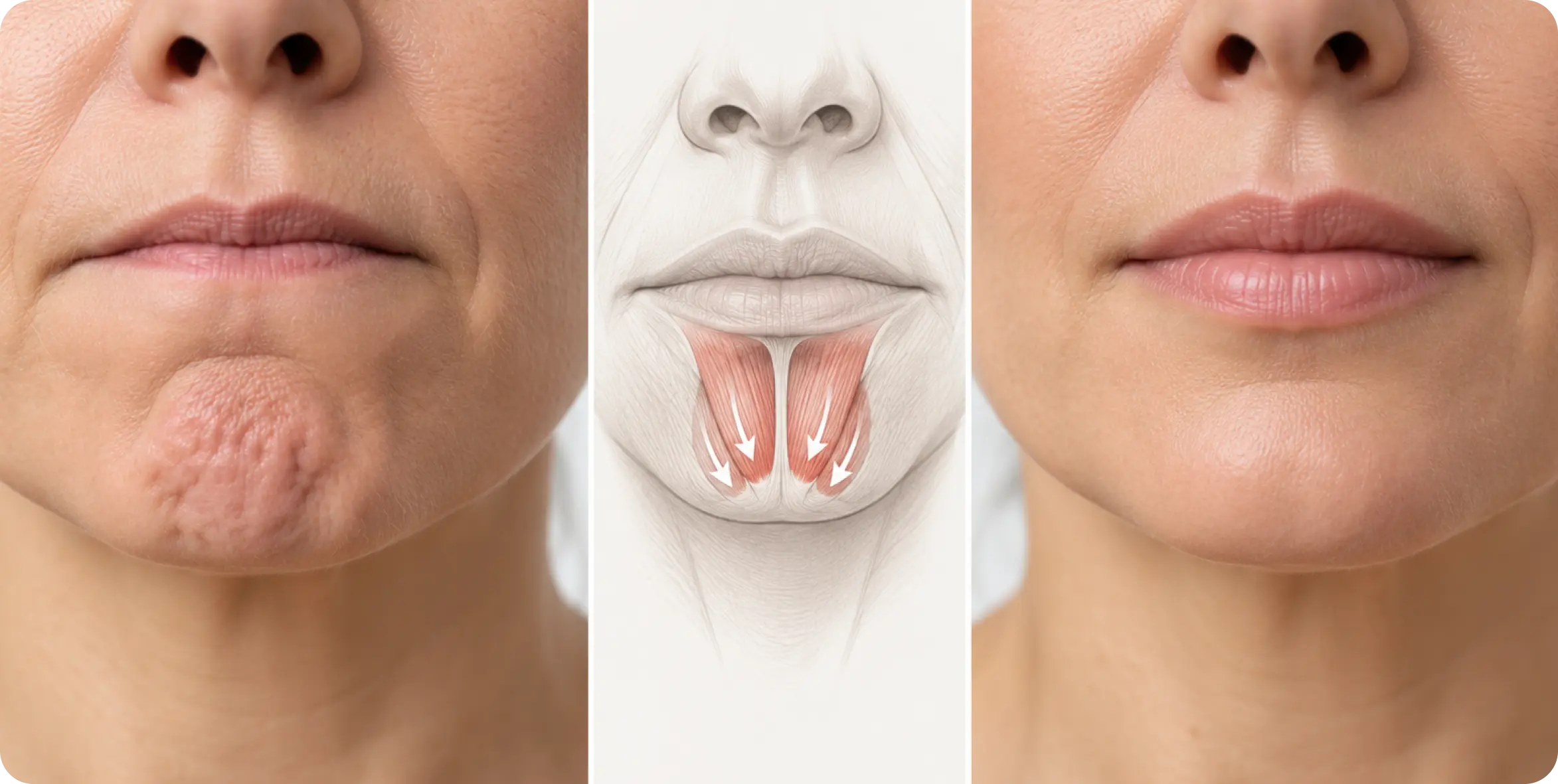
DIMPLED CHIN AND MENTALIS TENSION: WHY THE CHIN LOOKS UNEVEN AND HOW TO RELAX IT
A dimpled chin can make the lower face look tense even when you are not upset. The skin may appear bumpy, gathered, or uneven when you talk, smile, concentrate, swallow, or press your lips together. For some people, this texture appears only during expression. For others, it remains visible at rest. The common reason is […]
Author:MINDBODYFACE
 1
1 0
0
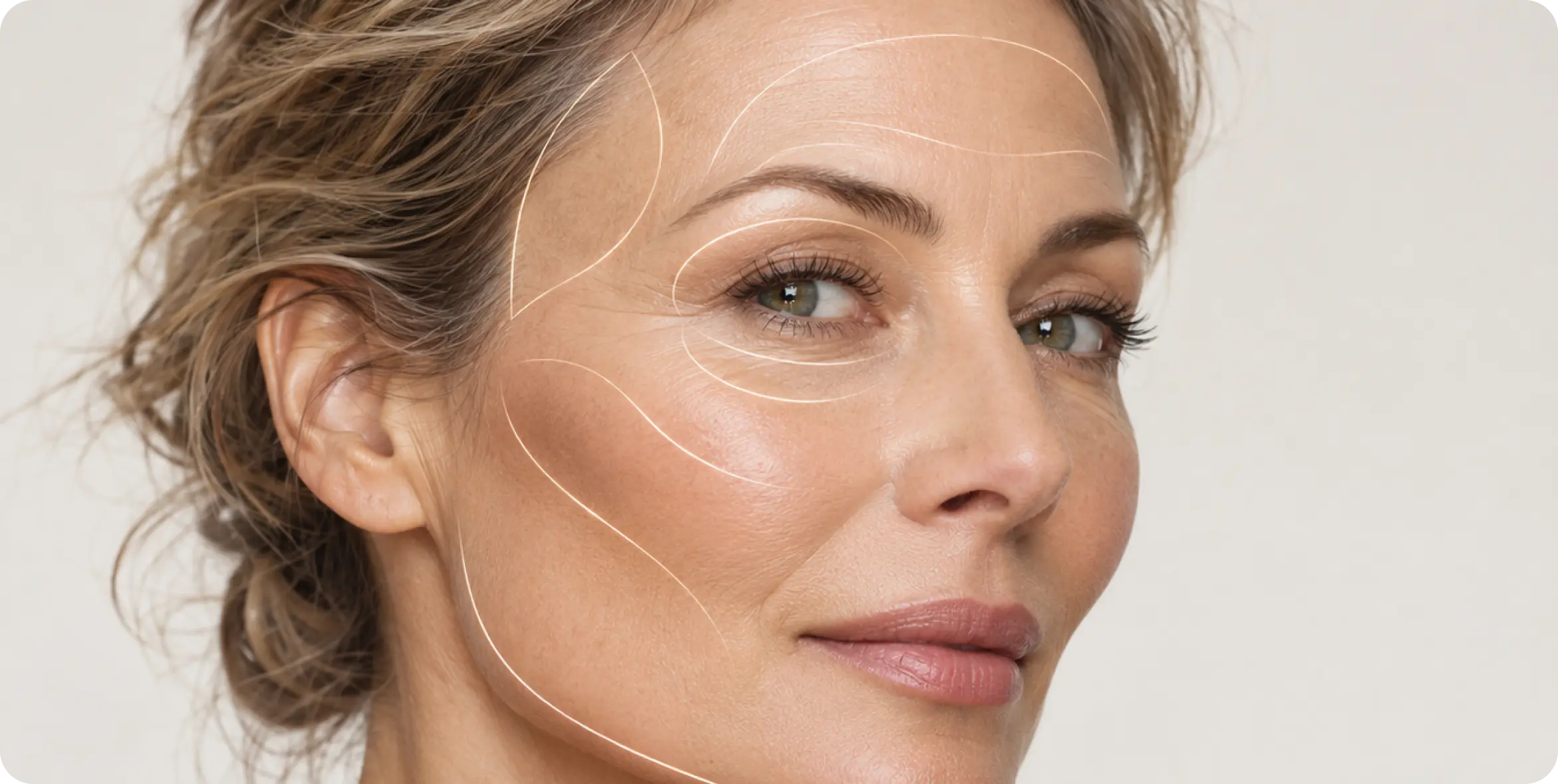
HOLLOW TEMPLES: WHY TEMPLES LOSE VOLUME AND HOW FACIAL AGING CHANGES THIS AREA
Hollow temples are the indentations that can appear at the sides of the forehead, between the outer eyebrow, hairline, and upper cheekbone. Temple hollowing can make the upper face look narrower, more angular, or more tired—even when your skin is smooth and your cheeks still have volume. This area is easy to overlook. People often […]
Author:MINDBODYFACE
130
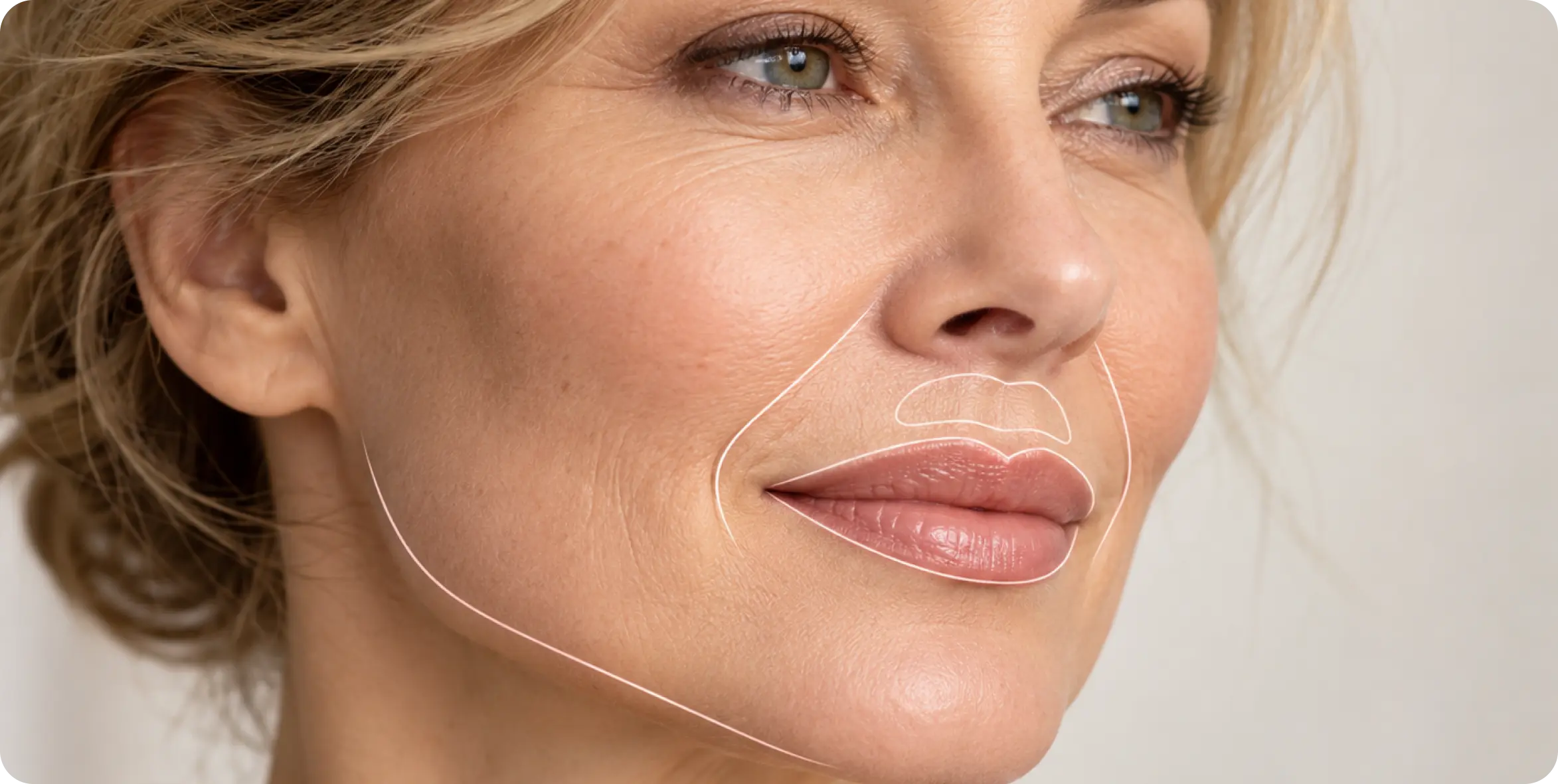
LIP LINES AND SMOKER’S LINES: CAUSES AND NATURAL WAYS TO SOFTEN THEM
Lip lines are the fine vertical creases that appear on and above the upper lip. They are often called smoker’s lines, but smoking is only one possible cause. Sun exposure, natural skin aging, repeated mouth movements, dryness, genetics, and changes in the tissues around the mouth can all make vertical lip lines more visible. These […]
Author:MINDBODYFACE
90


MINDBODYFACE LLC
1021 E Lincolnway Suite 8342, Cheyenne, WY 82001
+16282892382
All services and information on this website are for educational purposes only and do not constitute medical advice or treatment -