Jul 28, 2026
•5 minutes read
•Author: MINDBODYFACE
WHAT IS THE INTERSTITIUM? UNDERSTANDING THE BODY’S HIDDEN TISSUE NETWORK

The interstitium is a network of fluid-filled spaces within and between tissues, and modern imaging has shown that it is far more widespread than older anatomy books suggested. It helps explain how connective tissue, fluid movement, and tissue support work together in the human body.
This is not just a small anatomical curiosity. The interstitium tissue network may help cushion organs, move fluid, and carry signals across tissues, which is why it has become important in both health and disease discussions.
THE INTERSTITIUM EXPLAINED: A NEW PERSPECTIVE ON HUMAN ANATOMY
The interstitium scientific discovery came from live-tissue imaging, not traditional slide preparation. In 2018, researchers reported a previously unrecognized, widespread, macroscopic fluid-filled space within and between tissues.
What changed was the method of observation. Standard histology often drains and flattens tissue, which can hide open spaces that exist in living tissue. Once imaging allowed scientists to observe tissue in its natural state, the hidden organ interstitium appeared as a connected space rather than a solid wall of collagen.

In the human body, the interstitium is now understood as part of a broader connective landscape that may extend through multiple organs and along nerves and vessels. That is why the term interstitium explained is often paired with phrases like “body-wide” or “continuous” network.
INTERSTITIAL TISSUE AND THE BODY’S FLUID NETWORK
Interstitial tissue function centers on fluid transport and tissue support. Interstitial fluid is the fluid that sits between cells, and it is formed by capillary filtration and then drained through lymphatic vessels.
This makes the interstitium part of the body fluid network. It supports nutrient exchange, waste removal, and the movement of molecules through tissue spaces. Because these spaces are fluid-filled, they can also act as a cushion when tissues are compressed or stretched.
A useful way to think about it is this: the interstitium is not a static pocket of fluid. It is a living transport and pressure-balancing environment that sits inside connective tissue and responds to mechanical forces.
STRUCTURE OF THE INTERSTITIAL SPACE AND CONNECTIVE TISSUE
Interstitial space anatomy is built around collagen, elastin, hyaluronic acid, and other extracellular matrix components. These structures form open channels and spaces that sit between denser tissue layers, especially in places that move or compress often.
Connective tissue and interstitium are closely linked because the interstitium is embedded within connective tissue planes, fascia, and perivascular and perineural sheaths. This is why some researchers describe it as a connective tissue network rather than an isolated tissue compartment.

The interstitial system anatomy appears continuous across several regions, including skin, colon, liver, lung, and fascia. That continuity is what makes the interstitium feel less like a local structure and more like a body-wide matrix.
THE ROLE OF THE INTERSTITIUM IN HUMAN HEALTH
The role of the interstitium includes fluid balance, signaling, mechanical support, and possibly immune and disease-related transport. Interstitial fluid helps carry molecules between tissues and lymph nodes, which matters for immune surveillance and tissue maintenance.
The interstitium and health connection becomes more visible in disease. Changes in interstitial fluid pressure and composition are involved in inflammation, edema, fibrosis, and cancer spread. Some studies suggest that interstitial spaces may allow cells, fluid, and signals to move across tissue boundaries more easily than previously assumed.

This does not mean the interstitium is a single “cause” of disease. It means the space where tissues exchange fluid and information may matter much more than we once thought.
FASCIA, CONNECTIVE NETWORKS, AND THE INTERSTITIUM
Fascia and interstitium are often discussed together because both are part of the body’s connective framework. In newer models, the interstitium tissue network is seen as continuous with fascial planes, especially along vessels, nerves, and organ boundaries.
That relationship is important because fascia is not just a wrapper. It is a responsive tissue matrix that helps transmit force, guide fluid movement, and shape how tissues slide against one another. The interstitium fits into that same structural logic: it is a fluid-rich, mechanically active space inside the connective tissue system.
So when people ask whether the interstitium is a hidden organ, the most careful answer is that it is a newly recognized anatomical network with organ-like properties, but its final classification is still being discussed. What is no longer in doubt is that it plays a real structural and physiological role in the body
CAN SLEEPING ON ONE SIDE CHANGE YOUR FACE? SLEEP LINES, ASYMMETRY, AND FACIAL COMPRESSION
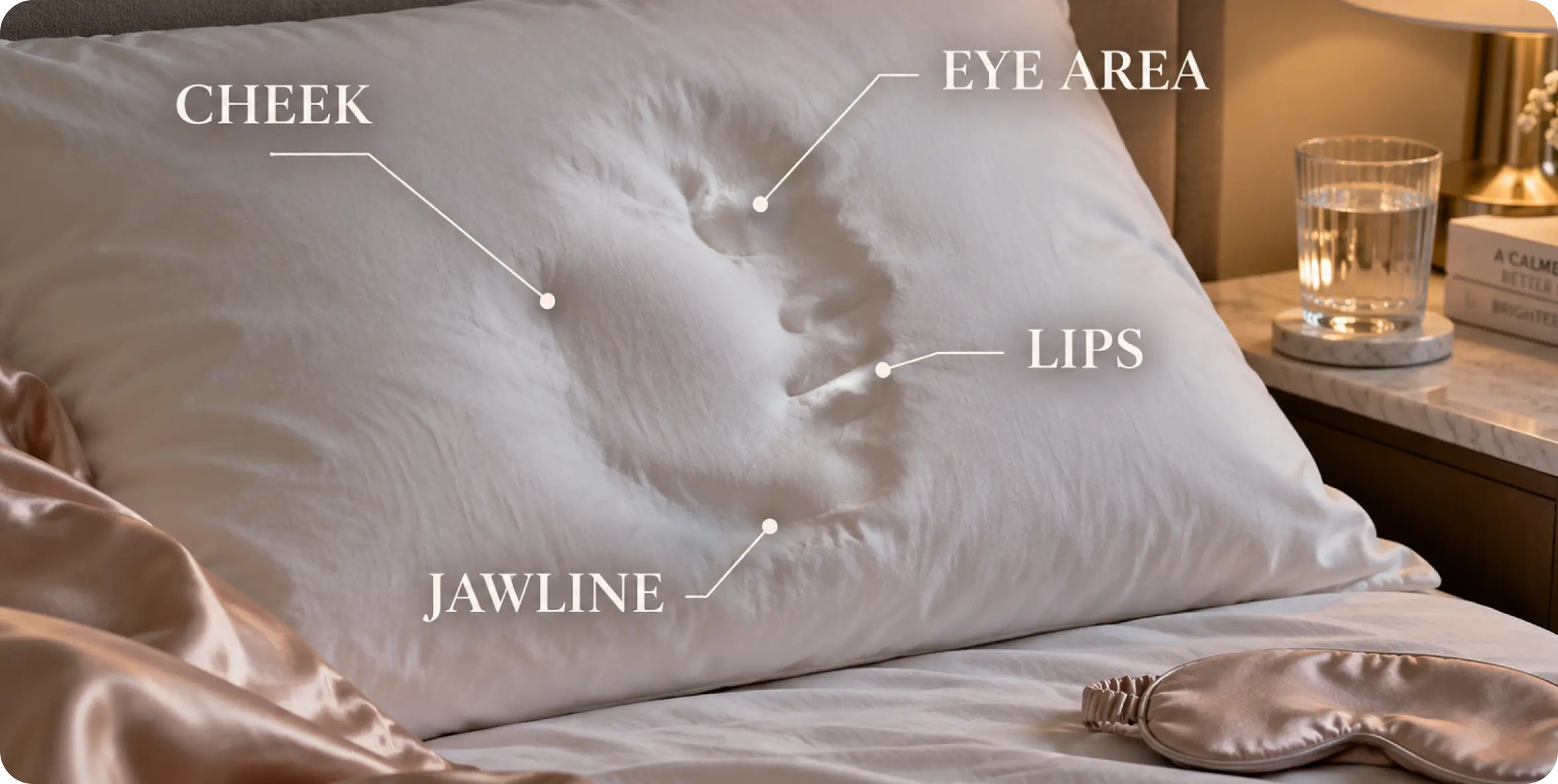
Can sleeping on one side change your face? It can temporarily change how your face looks in the morning. One cheek may seem puffier, one eye more swollen, and one side may show deeper pillow marks. Over many years, repeated pressure may contribute to sleep lines in aging skin, but side sleeping alone does not […]
Author:MINDBODYFACE
 13
13 0
0
UNEVEN SMILE: WHY ONE SIDE OF THE MOUTH SITS HIGHER AND WHAT FACIAL TENSION HAS TO DO WITH IT
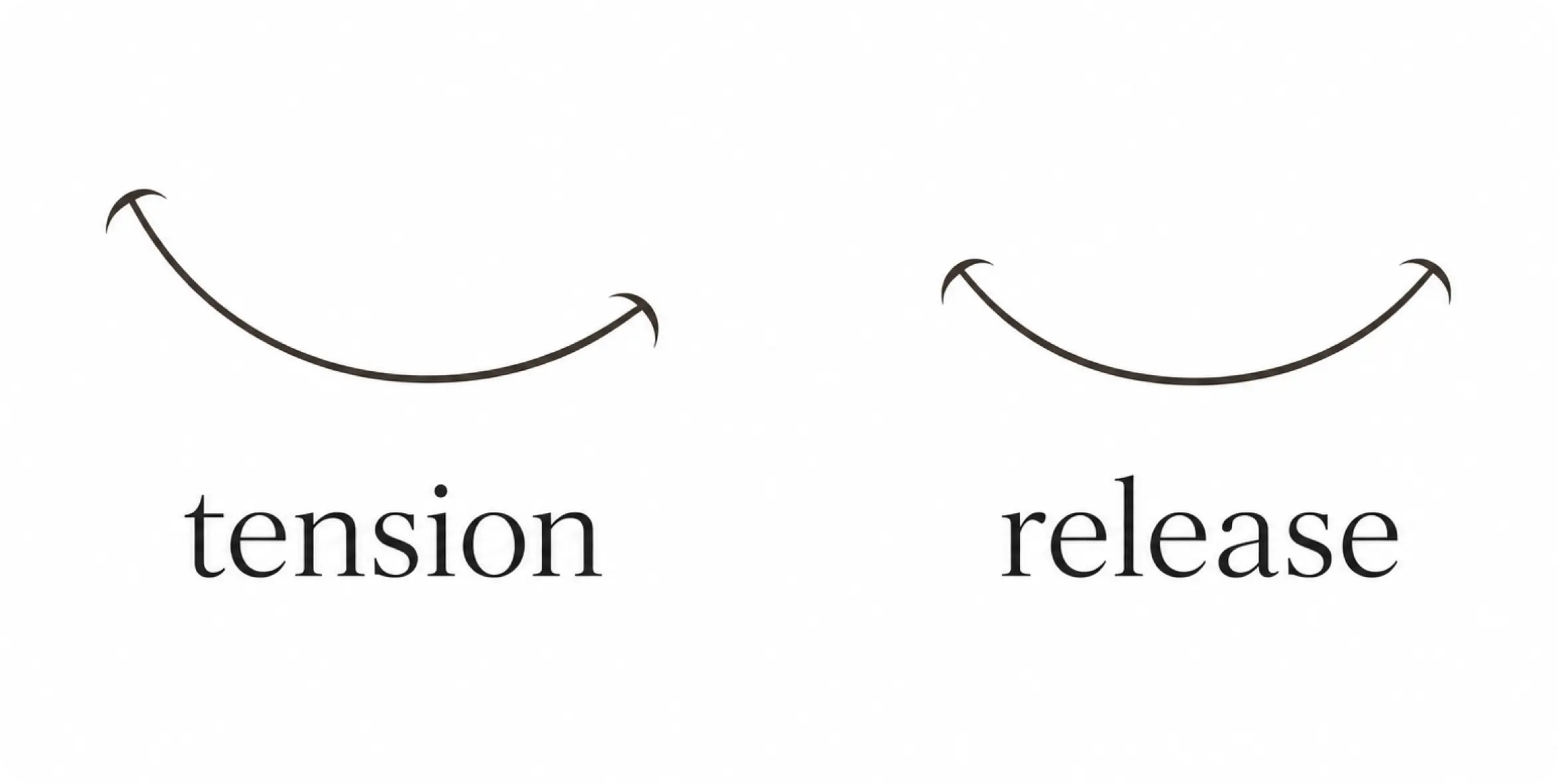
An uneven smile can be one of those details you only notice in photos or videos. One corner of the mouth lifts more. One side of the upper lip looks higher. One cheek seems to move first, while the other appears quieter or tighter. A little facial asymmetry is normal. Almost no one has a […]
Author:MINDBODYFACE
230
DIMPLED CHIN AND MENTALIS TENSION: WHY THE CHIN LOOKS UNEVEN AND HOW TO RELAX IT
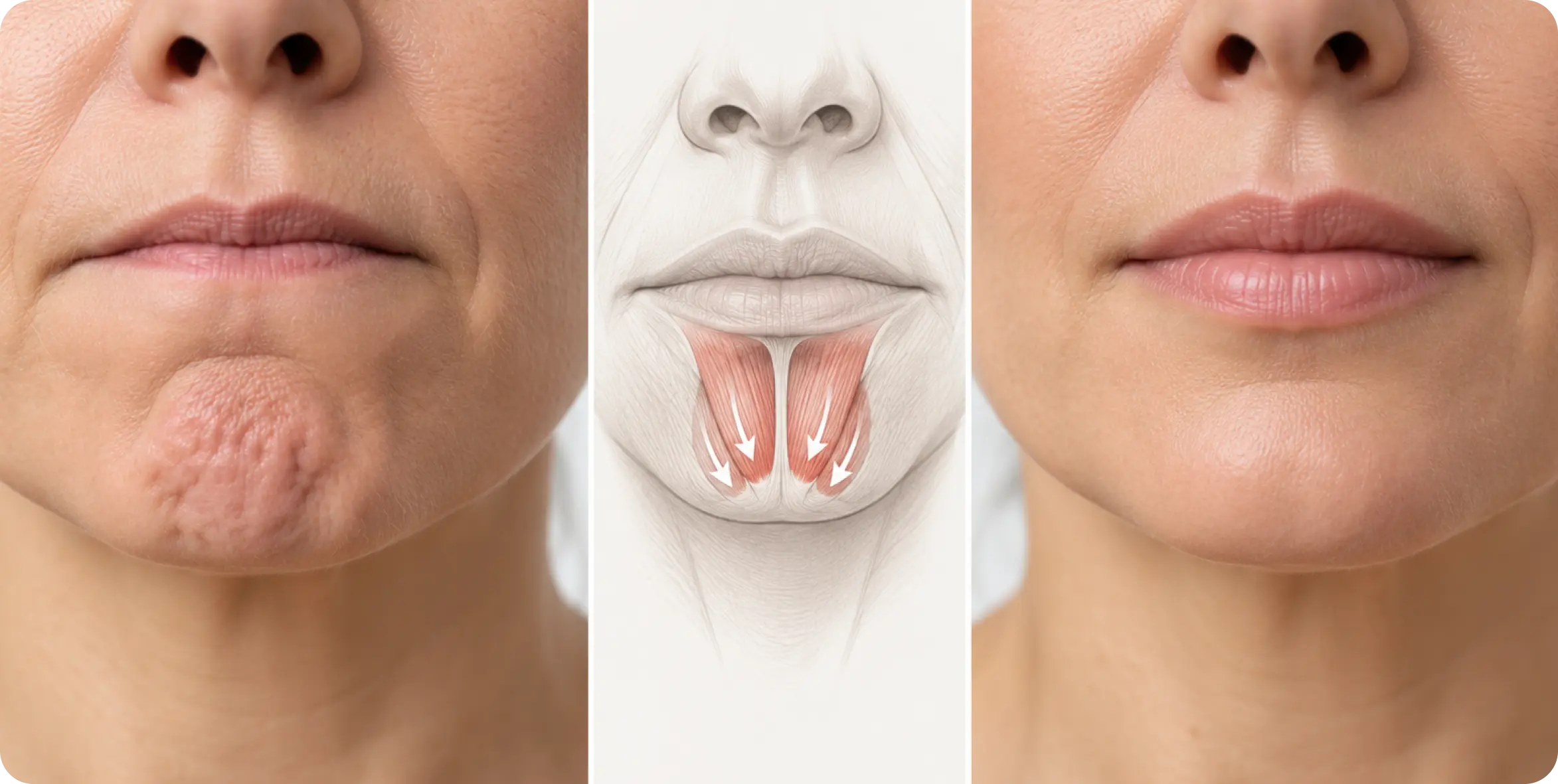
A dimpled chin can make the lower face look tense even when you are not upset. The skin may appear bumpy, gathered, or uneven when you talk, smile, concentrate, swallow, or press your lips together. For some people, this texture appears only during expression. For others, it remains visible at rest. The common reason is […]
Author:MINDBODYFACE
230

HOLLOW TEMPLES: WHY TEMPLES LOSE VOLUME AND HOW FACIAL AGING CHANGES THIS AREA
Hollow temples are the indentations that can appear at the sides of the forehead, between the outer eyebrow, hairline, and upper cheekbone. Temple hollowing can make the upper face look narrower, more angular, or more tired—even when your skin is smooth and your cheeks still have volume. This area is easy to overlook. People often […]
Author:MINDBODYFACE
290


MINDBODYFACE LLC
1021 E Lincolnway Suite 8342, Cheyenne, WY 82001
+16282892382
All services and information on this website are for educational purposes only and do not constitute medical advice or treatment -