Apr 06, 2026
•10 minutes read
•Author: MINDBODYFACE
NEGATIVE EFFECTS OF RF FACIAL LIFTING: WHAT YOU SHOULD KNOW
You’ve seen the before-and-afters. You’ve heard “no downtime, no needles, tighter skin in weeks.” RF facial lifting gets sold as the easy answer — and for a lot of women, it sounds exactly right. No scalpel, no recovery, just a machine and a promise.
Here’s what the brochures don’t tell you. The negative effects of RF lifting range from predictable short-term redness to something much harder to fix: permanent fat loss that makes your face look older, not younger. In October 2025, the FDA issued a formal safety communication specifically about RF microneedling — listing burns, scarring, disfigurement, and nerve damage among documented complications. RF lifting side effects are real, they’re underreported, and understanding them matters before you book anything.
This is not a scare piece. It’s the honest version of what radiofrequency facial treatment risks actually look like — so you can make a real decision.
Understanding RF facial lifting
RF (radiofrequency) skin tightening works by delivering electromagnetic energy into the dermis — the deeper layer of your skin. The tissue heats to roughly 38–50°C. At those temperatures, collagen fibers contract immediately, and the body triggers new collagen production over the following weeks and months. The result, when it works, is firmer skin and a slightly lifted contour.
The technology has been FDA-cleared since 2002. Devices range from simple surface-level applicators to RF microneedling systems (like Morpheus8) that drive heated needles several millimeters into the skin. The deeper the energy goes, the more it can do — and the more it can damage.
The non-invasive facelift risks here come from a specific physics problem: fat tissue has high electrical impedance, which means it generates heat faster than the dermis does. About 7 times faster, according to research published in Lasers in Surgery and Medicine. That gap between “heating collagen” and “destroying fat” is narrower than most practitioners acknowledge — and the margin changes with every patient, every device, and every operator.
Most studies on RF efficacy were funded by device manufacturers. A 2022 systematic review found 77% of published RF studies were authored by researchers with industry conflicts of interest. That’s worth knowing.

Common side effects and reactions
Skin reactions to RF treatment after a standard session are usually mild. Expect them — they’re normal.
What’s typical:
- Redness resembling mild sunburn, resolving within 1–24 hours
- Mild swelling lasting 24–48 hours
- A warm or tingling sensation during and immediately after
- Temporary skin tenderness and dryness for several days
- For RF microneedling: pinpoint bleeding at needle entry points, light bruising
These RF facial therapy complications are expected and usually resolve on their own. The body is responding to controlled thermal injury — that response is actually the mechanism.
What moves from normal into a problem:
Persistent redness beyond several days. Blistering. Severe pain during treatment that you feel the need to push through. And this part is counterintuitive: RF burns don’t start at the skin surface. They start deep in the tissue. A Korean case series found that 9 of 10 patients presenting with RF adverse events had been treated by non-dermatologists — and several cases showed surface skin that looked fine while damage was occurring underneath.
Post-inflammatory hyperpigmentation is also more common in darker skin tones (Fitzpatrick IV–VI). It can last months. One board-certified dermatologist reported seeing patients with persistent redness from RF microneedling that took a full year to resolve.
One more thing: those beautiful before-and-after photos taken immediately after treatment? They often show post-inflammatory swelling, not actual collagen improvement. The face looks temporarily “lifted” because it’s puffy.
Long-term risks and potential complications
This is the section the marketing materials skip entirely.
RF lifting long-term effects can include outcomes that are difficult or impossible to reverse. The most serious documented risk of radiofrequency skin tightening isn’t a burn or a scar — it’s facial fat atrophy.
The fat loss problem
Here’s the biology. Fat cells die when tissue temperature exceeds 45°C for more than a few minutes. Research by Franco et al. (2010) measured this precisely: fat cell viability drops from 89% to 20% when temperature rises from 45°C to 50°C over a one-minute exposure. At 45°C for three minutes, viability falls to 40%. Fat necrosis was documented 4.5–19mm beneath the skin surface.
The mechanism continues working for weeks or months after the treatment. Damage triggers a molecular cascade (involving DAMPs — Damage Associated Molecular Pattern Molecules) that drives programmed cell death long after you’ve left the clinic. You might not see the full result of what happened for 4–8 weeks.
And facial fat doesn’t regenerate. When it’s gone, it’s gone. The only fixes are fat grafting or temporary fillers.
Documented clinical cases include women in their late 40s and 50s developing visible depressions in their cheeks and temples weeks after RF treatment — exactly the hollowness that characterizes an aging face. Narins et al. documented contour irregularities from RF fat atrophy requiring surgical correction with subcision and autologous fat transfer.
Plastic surgeon Dr. Tim Neavin has stated plainly: “The unfortunate truth is that radiofrequency can cause fat loss. Fat loss when it does occur is not reversible on its own.”
Patients over 50 with thinner skin and naturally diminishing facial fat volume are especially vulnerable to this radiofrequency skin damage.
What the clinical data shows
| Complication | Reported rate | Source |
| Transient erythema | 17.6–100% | ASJ Open Forum systematic review (2025) |
| Second-degree burns | 0.36–2.7% | Fitzpatrick (2003); de Felipe (2007) |
| Edema | 5.3–26.5% | ASJ Open Forum systematic review (2025) |
| Severe pain during treatment | 11.49–23.5% | de Felipe (2007); Thai MRF study (2022) |
| Persistent erythema | 1.22% | de Felipe (2007) |
| Residual scarring | ~0.05% | Fitzpatrick safety analysis |
| Fat atrophy | Documented; frequency unknown | FDA (2025); multiple case reports |
| Nerve damage / neuralgia | Rare; reported | de Felipe (2007); FDA (2025) |

Note: these rates likely underestimate reality. The FDA explicitly stated that adverse event reporting is voluntary, meaning many complications are never recorded.
Other long-term concerns
Uneven skin tightening happens when heat distribution is inconsistent — one area contracts more than another, creating an asymmetrical result that can persist for months. Prolonged skin sensitivity and altered texture have been documented, particularly following aggressive RF microneedling at deeper needle depths. In a Thai clinical study, pulse stacking (overlapping energy passes) was responsible for 37.3% of adverse events, and high energy settings for 58.8% — meaning operator decisions drive most serious outcomes.
The risks of radiofrequency skin tightening are not fixed properties of the technology. They’re largely a function of who’s operating it and at what settings.
Safety measures and precautions
The good news is that most serious RF facial treatment complications are preventable. The bad news is that prevention requires things that are not always easy to verify when you’re sitting in a clinic that sells you a treatment.
Before treatment: who shouldn’t have RF at all
Absolute contraindications include pacemakers or any implanted electronic device, metal implants in the treatment area, pregnancy, active skin cancer, active skin infections, poorly controlled diabetes, connective tissue disorders, and isotretinoin use within the past six months.
Relative contraindications include recent dermal fillers or Botox (wait at minimum two weeks), active retinoid use, history of herpes simplex (requires antiviral prophylaxis beforehand), autoimmune skin conditions, keloid scarring history, severe heart disease, and eczema or rosacea in the treatment area.
RF lifting safety concerns also apply to thin-faced women and patients over 50 who have already lost significant facial volume. If your face doesn’t have fat to spare, the margin between effective collagen stimulation and fat destruction is dangerously narrow.
Questions to ask before booking
This is not an exhaustive list, but these four questions separate informed practice from corner-cutting:
- What device are you using, and when was it last serviced?
- What depth and energy settings will you use for my specific anatomy?
- How many passes will you do in a single session?
- What training have you completed on this specific device?
A qualified practitioner will answer these without hesitation. Evasion is a red flag.

RF facial treatment before and after risks: what to do at home
Before: Stop retinoids one week before. Avoid sun exposure for several days before treatment. Don’t arrive with sunburned skin. Disclose all medications and implants.
After: Use SPF 50+ daily — without exception. Avoid heat exposure (saunas, hot baths) for 48 hours. No chemical peels or microdermabrasion for 3–4 weeks. Keep skin moisturized and gentle.
One critical note on topical anesthetics: numbing cream is commonly applied before RF microneedling. The MDPI Cosmetics journal (2024) noted this can mask pain feedback that would otherwise signal excessive heating — potentially leading to burns or, in rare cases, facial palsy. If a practitioner insists on heavy numbing and then applies aggressive energy settings, the safety mechanism of your own pain response has been removed.
Radiofrequency facial safety depends heavily on session interval and energy accumulation. Multiple aggressive sessions in quick succession — common in some clinic protocols — dramatically increase fat atrophy risk. More is not better.
Comparing RF lifting to other facial treatments
Every non-invasive skin tightening option has a different risk profile. Understanding where RF sits in that landscape helps make the choice concrete rather than abstract.
Standard RF has the lowest overall risk profile among energy-based options. It’s color-blind — using electrical energy rather than light — which makes it safer for darker skin tones (Fitzpatrick IV–VI) than most laser treatments. This is a genuine advantage.
HIFU/Ultherapy penetrates deeper, reaching the SMAS layer at 4.5mm+. More depth means more fat atrophy risk. Pain scores average 4.2 out of 10 versus under 2 for standard RF. Documented HIFU complications include temporary facial nerve damage and ocular complications from periorbital use. Dr. Michele Green (board-certified dermatologist) notes Ultherapy carries risk of “uncontrolled fat loss that can cause the midface to look gaunt and hollow.”
Fractional CO2 laser carries the highest complication rates of the group — 4.2–6.4% in a 730-patient study. Post-inflammatory hyperpigmentation affects 44–75% of patients depending on skin type. Recovery requires 7–10 days of raw, swollen skin. Not appropriate for Fitzpatrick IV–VI.
RF microneedling (Morpheus8, Vivace, etc.) sits between standard RF and ablative laser in risk. When used correctly, it outperforms fractional CO2 for acne scarring with fewer side effects and better patient satisfaction in comparative studies. But devices like Morpheus8 penetrate up to 8mm — the FDA’s 2025 safety communication specifically addressed this category. RF facial treatment risks in the microneedling category are real and operator-dependent.
The fundamental principle across all these options: patient evaluation is not a formality. A lean-faced 58-year-old and a 35-year-old with good facial volume are not equally good candidates for the same device at the same settings. Treating them identically is how complications happen.
No energy-based device is inherently safe or dangerous. The outcome is determined by the match between the technology, the practitioner’s training, and the individual anatomy in front of them.
There’s another path
If you’ve been told “only injectables now” — or if you’re looking at RF treatment because your face has changed and you want to do something about it — it’s worth knowing that facial structure can be worked with from the inside.
The Faceplastica Rejuvenation Method works not at the skin surface, but at the level of fascia, cranial structures, and the underlying architecture of the face. No heat, no electrical current, no risk of fat destruction. The work is done with your hands — and the changes happen because you’re addressing the actual reasons the face shifts over time, not just the surface where those shifts become visible.
If you’re curious about a systematic approach — one that doesn’t require choosing between “do nothing” and “risk a procedure” — the Faceplastica Rejuvenation Method is worth a closer look. 20 minutes a day. Results from the first week. See the program.

FACIAL REJUVENATION AFTER 45: PROCEDURES THAT MAY NOT BE WORTH IT
Facial rejuvenation after 45 works best when the treatment matches the actual change you want to address. The useful question is not which option is “best,” but whether a procedure can deliver enough benefit to justify its cost, recovery, maintenance, and possible complications. Many facial rejuvenation procedures after 45 are marketed as universal solutions. Yet […]
Author:MINDBODYFACE
 6
6 0
0
ENHANCING THE NATURAL BEAUTY OF THE LIPS WITHOUT AUGMENTATION
Natural lip enhancement will not give you a new mouth. It can help your existing lips look smoother, healthier, more defined, and less compressed – without fillers, injections, or harsh “plumping” tricks. The visible difference usually comes from simple things: a stronger lip barrier, daily UV protection, less dryness, a relaxed jaw, and skin around […]
Author:MINDBODYFACE
80
FACIAL FAT GRAFTING: ARE THE POTENTIAL RISKS TOO HIGH?
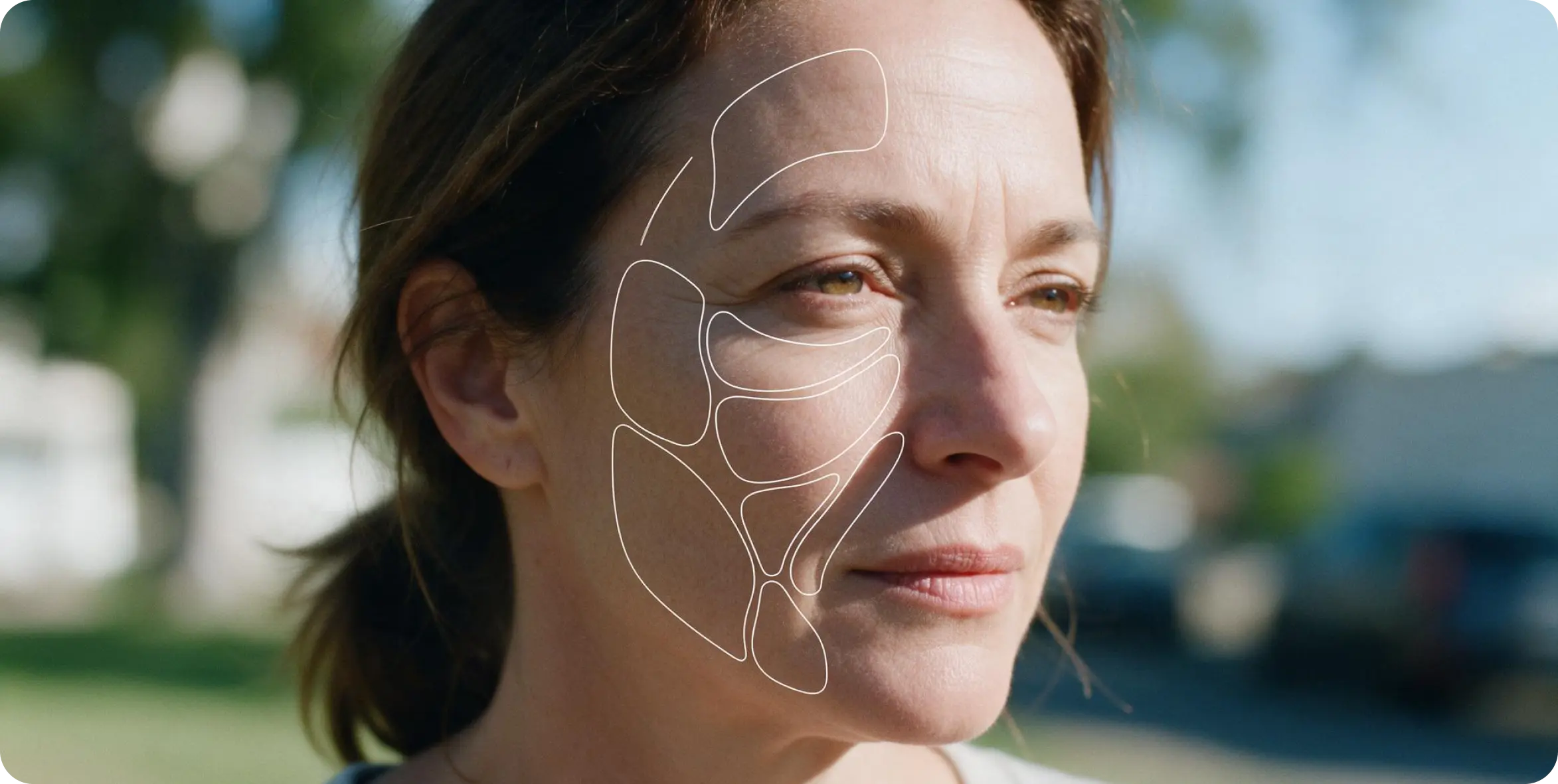
Facial fat grafting risks are not automatically “too high,” but this is a surgical procedure with an unpredictable aesthetic outcome and a small risk of severe complications. For the right patient, treated conservatively by an experienced surgeon, facial fat transfer can restore volume in hollow areas. For someone seeking a perfectly controllable result, a dramatic […]
Author:MINDBODYFACE
120

PLATYSMAL BANDS: WHY VERTICAL NECK BANDS APPEAR AND WHAT YOU CAN DO NATURALLY
Platysmal bands are the vertical cords that may appear across the front or sides of the neck when you speak, grimace, turn your head, lift your chin, or tighten your lower face. These neck bands can become obvious in photographs first: your face still looks familiar, while the neck suddenly appears more strained, heavier, or […]
Author:MINDBODYFACE
210


MINDBODYFACE LLC
1021 E Lincolnway Suite 8342, Cheyenne, WY 82001
+16282892382
All services and information on this website are for educational purposes only and do not constitute medical advice or treatment -