May 20, 2026
•8 minutes read
•Author: MINDBODYFACE
HOW TO GET RID OF HOODED EYELIDS

Your eyelid crease has slowly disappeared. The brow bone seems to fold over the lash line. Eye makeup smudges the second you try to apply it. Every photo makes you look tired, even on days when you actually slept well. Sound familiar?
Hooded eyelids show up in roughly 11.5% of people, according to facial anatomy research published by Welia Health. Some women are born with this shape. Others develop it slowly, starting around age 25, when skin firmness and elasticity begin to drop. The good news: surgery is not the only answer. Plenty of women figure out how to fix hooded eyelids without ever touching a scalpel.
Here’s what actually works, what doesn’t, and why.
Understanding hooded eyelids
A hooded eyelid is what you see when extra skin from the brow area folds down over the natural lid crease. The crease itself is still there. It’s just hidden under the fold.
The eyelid sagging causes are usually a combination of three things: genetics, aging, and accumulated wear. If your mother had hooded eyes at 50, your odds go up. If you spent decades in the sun without eye protection, the thin skin above your eye loses collagen faster than the rest of your face — eyelid skin is the thinnest on the body, and that makes it the first to give. And rubbing your eyes? It quietly stretches the levator aponeurosis, the tendon that lifts your upper lid. Over years, that habit alone changes how your lid sits, according to research summarized on EyeWiki.
But the upper eyelid drooping solution most women never hear about: in many cases, the lid itself isn’t the main problem. The brow is.
When the frontalis muscle in your forehead weakens, your eyebrow drifts down. That descended brow then pushes soft tissue onto the lid, creating the “hood” you see in the mirror. This is why some women with no real excess lid skin still look hooded — and why exercises that work on the forehead, not just the lid, often give a more visible result. The Eyelid Center of Utah explicitly points this out: a lot of what people call hooded eyes is actually the eyebrows sagging onto the eyelids.

How to improve eyelid shape, then, starts with one question: where is the actual sag coming from? The lid? The brow? The forehead fascia? Most often, all three.
Non-surgical methods to lift eyelids
A non-surgical eyelid lift is rarely one technique. It’s a layered approach. Skip the search for a single magic step.
The most accessible methods, in rough order of how much they do:
- Targeted facial exercises that strengthen the frontalis (forehead) and the levator (lid)
- Manual release of forehead, temple, and scalp fascia so the brow stops sitting in chronic downward tension
- Topical actives — retinol, peptides, and vitamin C build collagen in the upper lid skin over months
- Tape and lift devices for events (temporary, but useful for photos)
Skin-tightening procedures like radiofrequency or ultrasound are non-surgical too, but they’re a separate category that requires a clinic. For everyday eyelid tightening without surgery, the daily-practice methods above are where most women start.
Be honest with yourself: results from natural eyelid lift methods build slowly. Studies on facial exercise are still small, and researchers say you’ll need 20 to 30 minutes a day, six or seven days a week, before anything is visible. That’s the part most articles quietly skip.
Facial and eye exercises for hooded eyelids
Exercises for hooded eyelids work on two muscles: the levator palpebrae superioris, which lifts the lid, and the frontalis, which lifts the brow. The science here is thin but suggestive — one Northwestern University study had participants report real improvement in 18 of 20 facial areas after structured face yoga, as covered by WebMD.
Here’s a simple sequence to try.
1. Brow resistance lift. Place your index fingers just above your eyebrows. Press gently down. Now try to raise your eyebrows against the resistance. Hold for 10 seconds. Release. Repeat 10 times. This trains the frontalis to actually do its job again.
2. Eyelid isometric hold. Place your index fingers along the bony brow ridge. Press lightly upward to anchor the brow in place. Now close your eyes slowly against that gentle tension. Hold the squeeze for 5 seconds. Release. Repeat 8 to 10 times. This is the most direct facial exercises for eyelids work — the levator gets isolated load.
3. Wide-eye opening without brow lift. Open your eyes as wide as you can without lifting your brows (this is harder than it sounds). Hold 5 seconds. Soften. Repeat 10 times.
4. Forehead release. Press your palms flat on the forehead and slide them gently up toward the hairline. Repeat for about 60 seconds. This isn’t strengthening — it’s the opposite. You’re letting the frontalis stop holding chronic tension. A tight forehead doesn’t lift. It locks.
Frequency: once a day, ideally morning. Some women see a small visual change in 3 to 4 weeks. By 3 months, the effect is more honest. By 6, it’s hard to miss.

These eyelid lifting techniques won’t replace surgery if you have severe excess skin. For early or moderate hooding, and for women who want to delay any procedure, they’re the closest thing to free leverage you’ll find.
Lifestyle habits that support eyelid firmness
This is the part nobody wants to read, because it sounds like every other anti-aging article. But the eye area is unusually sensitive to small daily things, and ignoring them undercuts everything else you’re doing.
Stop rubbing your eyes. Mild allergies, contact lenses, dry eye, smudging mascara off — chronic rubbing stretches the lid tendons. Multiple ophthalmology sources point to it as a measurable contributor to hooding.
Sleep on your back when you can. Side and stomach sleeping creates morning eyelid swelling that, repeated nightly for years, leaves the skin slightly looser each time.
Sunscreen on the upper eyelid. Most women skip it. UV damage on already-thin skin accelerates collagen loss faster here than almost anywhere else on the face. Mineral sunscreen sticks are easier to apply close to the lash line without burning.
Hydration matters more than supplements. Dehydrated skin sits flatter and looks thinner. Eight or nine glasses of water through the day, every day. Unglamorous and effective.
Fix forward head posture. A head pushed forward over a phone or laptop drags the entire facial fascia downward. Phone at eye level. Screen height adjusted. Two minutes of neck stretching a day. Within a few months, the brow sits differently — and so does the lid above it.

This is where eye area anti-aging quietly compounds. None of it does anything dramatic on its own. All of it together does more than people expect.
Combining methods for lasting results
Single techniques disappoint. Women who genuinely reduce sagging eyelids are almost always the ones who stack things.
A reasonable weekly rhythm:
- Daily: 10 to 15 minutes of facial exercises, sunscreen on the lid, water, hands away from the eyes
- Weekly: a longer release session for forehead, temples, scalp, and neck fascia
- Ongoing: a retinol or peptide eye cream at night
- Monthly: a photo from the same angle, same light, no makeup. Compare honestly
Hooded eyes correction works on the timescale of seasons, not days. Three months in is when most women say “people are asking if I slept better.” Six months in is when the lid crease becomes visible again in photos.
One more honest note. Some hooding is structural, not soft tissue. If your brow ridge is genetically prominent, no amount of exercise reshapes the bone underneath. What you can change is everything sitting on top of that bone — the muscle tone, the fascia, the skin quality, the angle of lift. For most women, that’s enough.
A complete hooded eyelids treatment usually means working the lid, the brow, and the forehead together. That’s the order things actually sag in, and it’s the order they need to come back up.
Where this fits in a structured program
If you want to learn how to lift droopy eyelids in a guided way rather than piecing exercises together from articles, the Lifting and Rejuvenation of the Forehead and Eyes course on the MindBodyFace platform was built for exactly this area. Twelve short sessions across 7 days, with osteopathic techniques for smoothing the forehead, releasing brow tension, and lifting the upper lid through the muscles that actually control its position. The order, frequency, and corrections are done for you, so you stop guessing and start seeing change.
FACIAL REJUVENATION AFTER 45: PROCEDURES THAT MAY NOT BE WORTH IT
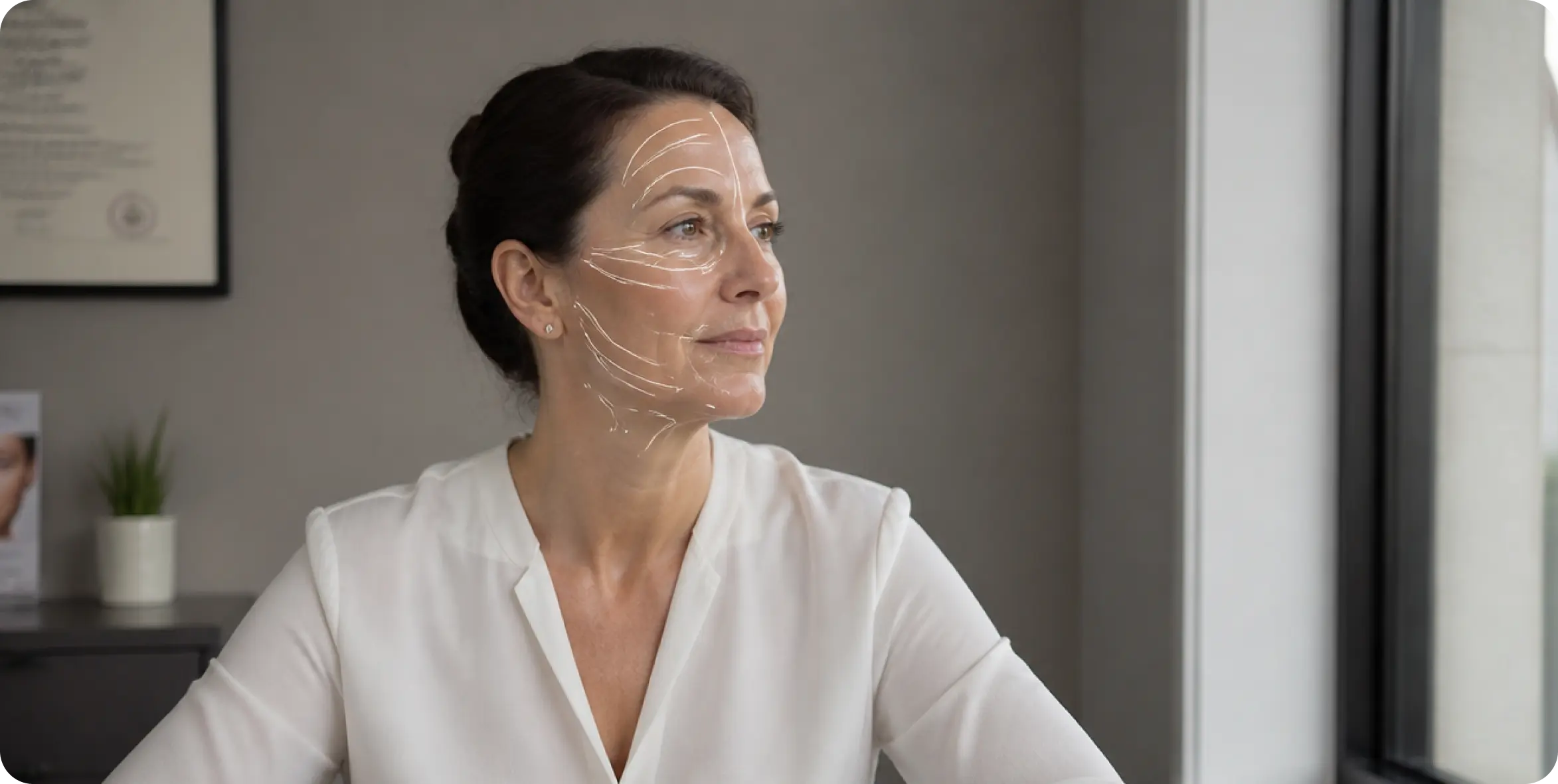
Facial rejuvenation after 45 works best when the treatment matches the actual change you want to address. The useful question is not which option is “best,” but whether a procedure can deliver enough benefit to justify its cost, recovery, maintenance, and possible complications. Many facial rejuvenation procedures after 45 are marketed as universal solutions. Yet […]
Author:MINDBODYFACE
 6
6 0
0
ENHANCING THE NATURAL BEAUTY OF THE LIPS WITHOUT AUGMENTATION
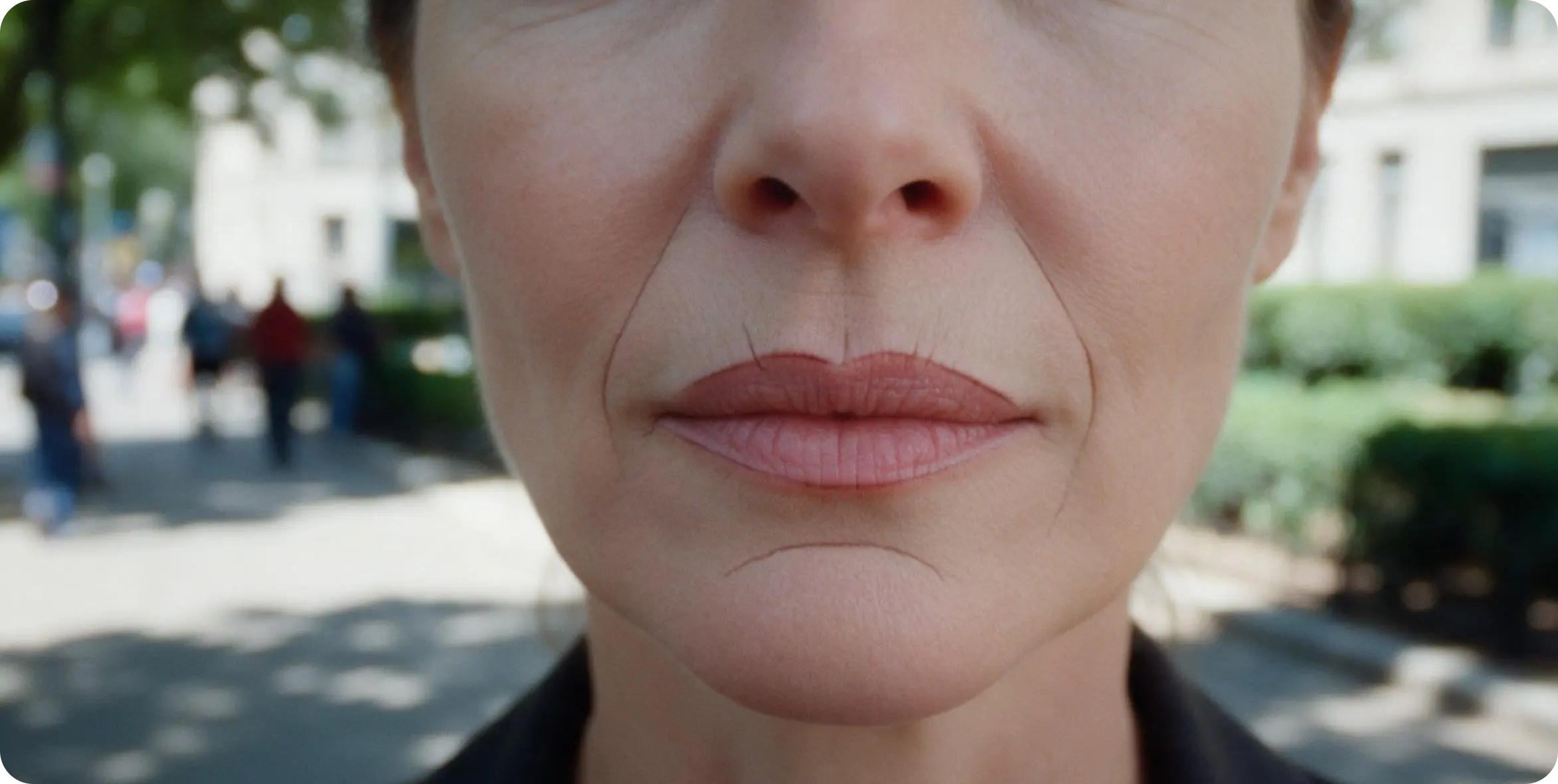
Natural lip enhancement will not give you a new mouth. It can help your existing lips look smoother, healthier, more defined, and less compressed – without fillers, injections, or harsh “plumping” tricks. The visible difference usually comes from simple things: a stronger lip barrier, daily UV protection, less dryness, a relaxed jaw, and skin around […]
Author:MINDBODYFACE
80
FACIAL FAT GRAFTING: ARE THE POTENTIAL RISKS TOO HIGH?
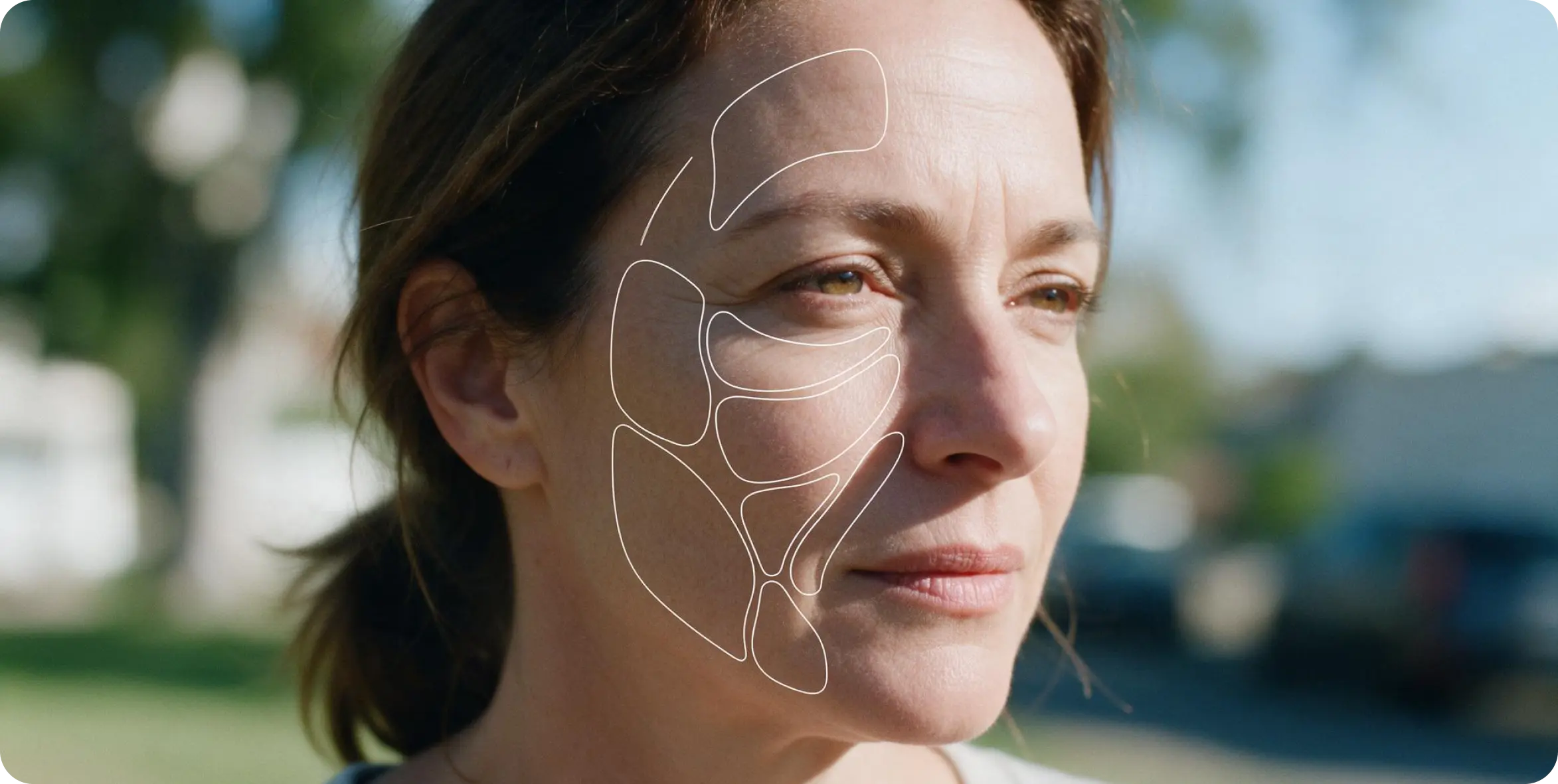
Facial fat grafting risks are not automatically “too high,” but this is a surgical procedure with an unpredictable aesthetic outcome and a small risk of severe complications. For the right patient, treated conservatively by an experienced surgeon, facial fat transfer can restore volume in hollow areas. For someone seeking a perfectly controllable result, a dramatic […]
Author:MINDBODYFACE
120

PLATYSMAL BANDS: WHY VERTICAL NECK BANDS APPEAR AND WHAT YOU CAN DO NATURALLY
Platysmal bands are the vertical cords that may appear across the front or sides of the neck when you speak, grimace, turn your head, lift your chin, or tighten your lower face. These neck bands can become obvious in photographs first: your face still looks familiar, while the neck suddenly appears more strained, heavier, or […]
Author:MINDBODYFACE
210


MINDBODYFACE LLC
1021 E Lincolnway Suite 8342, Cheyenne, WY 82001
+16282892382
All services and information on this website are for educational purposes only and do not constitute medical advice or treatment -