May 20, 2026
•7 minutes read
•Author: MINDBODYFACE
Muscular Aging Type Of The Face: Features and Natural Correction

You see women in their fifties whose jawline still looks defined, whose cheeks haven’t fallen — but the lines between their brows are deep, the crow’s feet are early, the forehead carries permanent furrows. That’s the muscular aging type face. And it’s the one most cosmetologists keep missing.
Most anti-aging advice assumes a single aging pattern: skin loosens, fat drops, oval falls. But the muscular type of facial aging works differently. The structure holds. What gives it away are tension-related wrinkles that show up earlier than expected, sometimes by the late thirties. If you’ve been told you “don’t look your age” but your mirror disagrees because of the lines, this is probably your type.
Understanding The Muscular Aging Type

The muscular aging morphotype was first systematically described by Russian dermatologist I. Kolgunenko, who proposed five facial aging types: tired, wrinkled, deformative, mixed, and muscular. The muscular aging morphotype is most common among representatives of the Asian race and sometimes Eastern Europeans. It shows up clinically when facial muscles are stronger than the fat compartments around them — a structural imbalance that determines how the face ages.
Here’s what makes this type different. Muscular morphotype presents with strong facial muscles and relatively under-developed fat compartments. Aging is presented in this morphotype mainly by early appearance of the facial folds, mimetic wrinkles, and dyschromia. No skin wrinkles are seen otherwise. Well defined jaw line and facial oval, as well as neck skin quality are preserved into the older ages.
So the oval stays. The jawline stays. But the expression lines arrive early and dig in deep.
Key Characteristics Of Muscular Facial Aging
If you’re trying to figure out whether this is your type, look for these signs.
- Early mimetic wrinkles. Frown lines between the brows. Forehead lines that stay visible even when your face is at rest. Crow’s feet that appeared in your late thirties, not your fifties. These aren’t surface wrinkles — they’re tension-related folds caused by repeated muscle contraction over years.
- Visible expression even when you’re calm. A face with hypertonic facial muscles aging tends to look “intense” or “tired” without any actual emotion behind it. The forehead muscles don’t release. The brow muscles stay slightly engaged. People keep asking if you’re upset.
- Preserved oval and minimal sagging. While women with deformative aging see jowls and double chins by their fifties, the muscular type face keeps its contour. The masseter and platysma stay strong. The neck skin holds.
- Pigmentation changes more than skin laxity. Dyschromia — uneven pigmentation, sometimes dark circles or sunspots — is often more noticeable than actual loss of firmness.
There’s a real biological mechanism behind this, and it’s worth knowing. The results of this facial electromyography study revealed that age does not significantly influence the signal of younger individuals (<30 years) vs older individuals (>50 years) in a gender- and BMI-matched statistical model. Exceptions were the zygomaticus major muscle (reduced activity), procerus muscle (increased activity), and corrugator supercilii muscle (increased activity). Translation: most facial muscles don’t change much with age. But the muscles between your brows — procerus and corrugator — become more active. They contract more. They hold more tension. And over decades, they carve those lines into the skin above them.
Causes Of Muscular Facial Aging

The cause is rarely one thing. It’s a combination.
- Genetics and ethnic muscle architecture. Strong facial musculature with relatively less subcutaneous fat is partly inherited. This is why facial aging classification types correlate so strongly with ethnic background.
- Chronic muscle tension from emotional patterns. People who frown when concentrating, squint when reading, clench when stressed — they’re training their muscles into shorter resting positions. The procerus and corrugator are particularly responsive to this. Years of frowning while staring at a screen accumulates.
- Lifestyle factors that increase muscle tone. If you’re stressed for a long period of time, your facial muscles can remain contracted or partially contracted. Eventually, tense muscles in the face can lead to discomfort. Tension — in your face or other areas of the body such as the neck and shoulders — is a natural occurrence in response to emotional or physical stress. Chronic stress turns into chronic facial tension. Chronic facial tension turns into structural lines.
- The contracture-fascia connection. Recent research from 2025 reframes this entirely. This clinical commentary explores the pivotal role of muscular contracture in facial aging, supported by anatomical observations, ethnic variations in muscle architecture, and biomechanical interactions between muscle, fat, and bone. Muscles don’t just contract during expression — they develop progressive contracture, meaning their resting tone gets higher over time. The fascia around them becomes denser. Movement becomes restricted. And that restriction shows on the surface.
This is the part most women don’t know. Your aging isn’t on your skin. It’s underneath.
Natural Correction And Rejuvenation Methods
Here’s where the conventional approach fails muscular aging type face. Filler doesn’t help — there’s no volume to restore. A facelift doesn’t help — there’s nothing to lift. Botox suppresses the symptom (the wrinkle) without addressing the cause (the chronic tension creating it). And long-term Botox use comes with its own problem: long-term and repeated administration increases the risk of muscle atrophy, which can result in muscle weakening and volume loss.
What actually works is muscle relaxation. Releasing the contracture. Restoring normal resting tone.
Research backs this up. A 2025 clinical trial measured what happens to facial muscle biomechanics when women practice targeted facial exercises. Following the face yoga program, the tonus and stiffness of the frontalis, corrugator supercilii, orbicularis oculi, and orbicularis oris muscles decreased. The corrugator — the same muscle EMG studies show becomes more active with age — relaxed. Measurably. In eight weeks.
A few approaches that work:
- Targeted release of hypertonic zones. Forehead, brows, jaw, around the eyes. Slow, intentional pressure on the muscle belly, not just the skin. This isn’t massage in the spa sense. It’s working at specific points until the tissue softens.
- Self-myofascial release for the face. The fascia surrounding facial muscles often becomes the limiting factor. Gentle traction and release, applied with knowledge of where the muscles attach, can restore mobility.
- Diaphragmatic and craniosacral work. Sounds unrelated. Isn’t. The deep state of nervous system activation that holds the face tense responds to breath work and gentle craniosacral techniques. Your face won’t release if your nervous system thinks you’re under threat.
- Postural correction for the neck and shoulders. The face doesn’t exist in isolation. A forward head posture pulls on the platysma, which pulls on the lower face. Tension below creates tension above.

Frankly, this reframing changes everything about how to approach the muscular type. You’re not fighting “aging.” You’re releasing accumulated contracture. The difference matters.
Integrating Muscular Aging Awareness Into Skincare And Wellness
Once you know your muscle type face, the whole approach to care shifts.
Topical products do less for this type than for others. Retinoids and antioxidants still matter for skin quality and dyschromia, but they won’t touch the structural lines created by hypertonic muscles. The work has to go deeper.
A daily 10-15 minute practice combining muscle release, light fascia work, and breath regulation can reduce expression lines visibly. Not “transform” them — release them, gradually, the same way they accumulated.
If you’re seeing a professional, look for someone trained in osteopathic facial work, craniosacral therapy, or buccal massage. Generic facials won’t address the muscle layer. Skin-level care can’t touch what’s happening underneath it.
And if you’re tempted by Botox: it works for the wrinkle. It doesn’t work for the underlying pattern. The tension that created the line is still there — it’s just paralyzed for three months. When the muscle wakes up, it goes right back to where it was.
There’s a more sustainable path. Not a faster one. But one that addresses the actual cause.
If you recognize yourself in this — the early lines, the preserved oval, the face that always looks slightly tense — the Faceplastica Rejuvenation Method is built specifically for what you’re describing. It works at the level of fasciae and muscle structure, not just skin and surface. 15 days, 20 lessons, 40+ techniques covering exactly the muscle release, neck-and-jaw decompression, and breath work that the muscular type needs. If you’ve tried face fitness and felt it didn’t reach the layer where your aging actually lives — this is the layer it works on. See the program here.
FACIAL REJUVENATION AFTER 45: PROCEDURES THAT MAY NOT BE WORTH IT
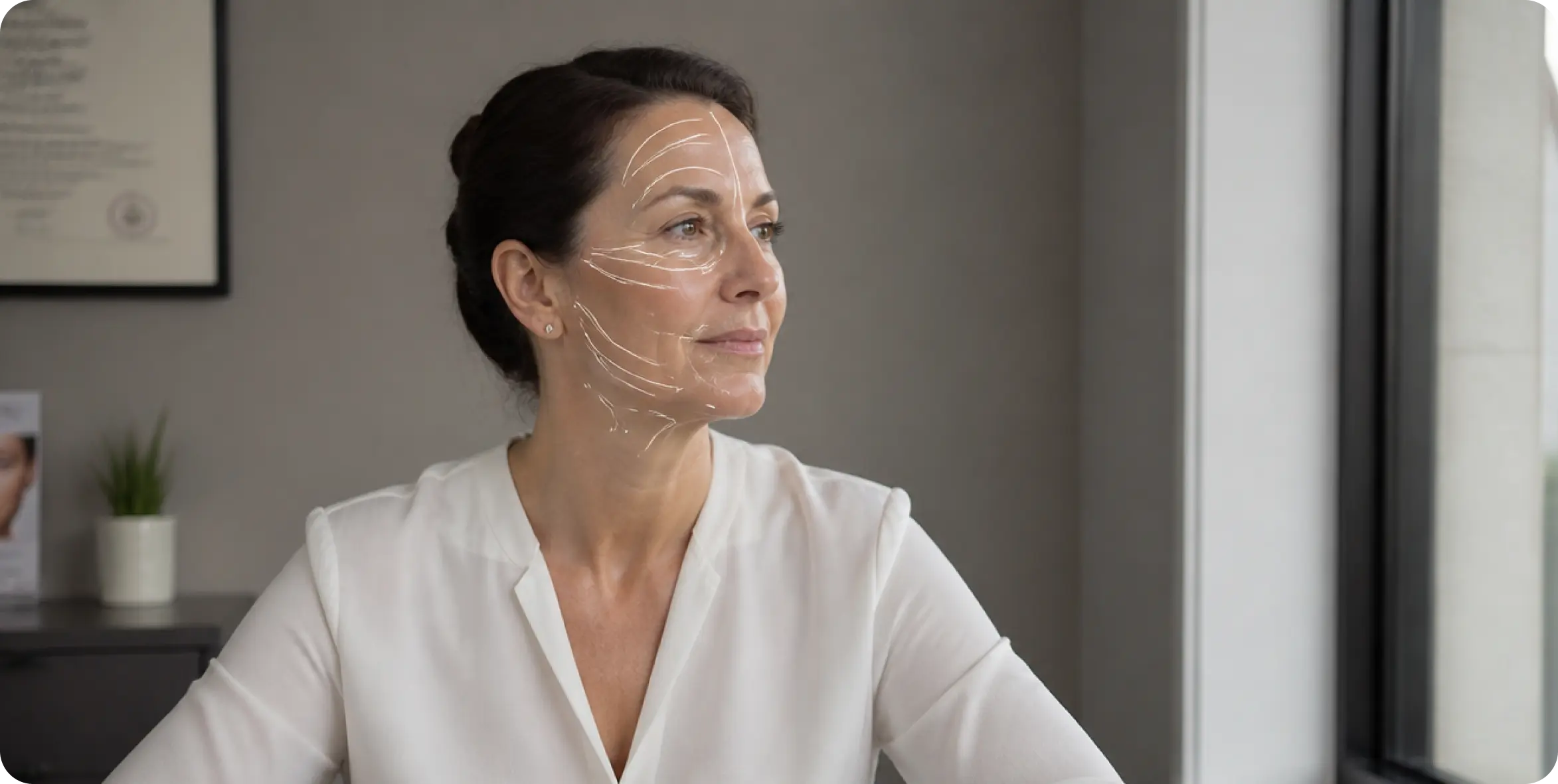
Facial rejuvenation after 45 works best when the treatment matches the actual change you want to address. The useful question is not which option is “best,” but whether a procedure can deliver enough benefit to justify its cost, recovery, maintenance, and possible complications. Many facial rejuvenation procedures after 45 are marketed as universal solutions. Yet […]
Author:MINDBODYFACE
 6
6 0
0
ENHANCING THE NATURAL BEAUTY OF THE LIPS WITHOUT AUGMENTATION
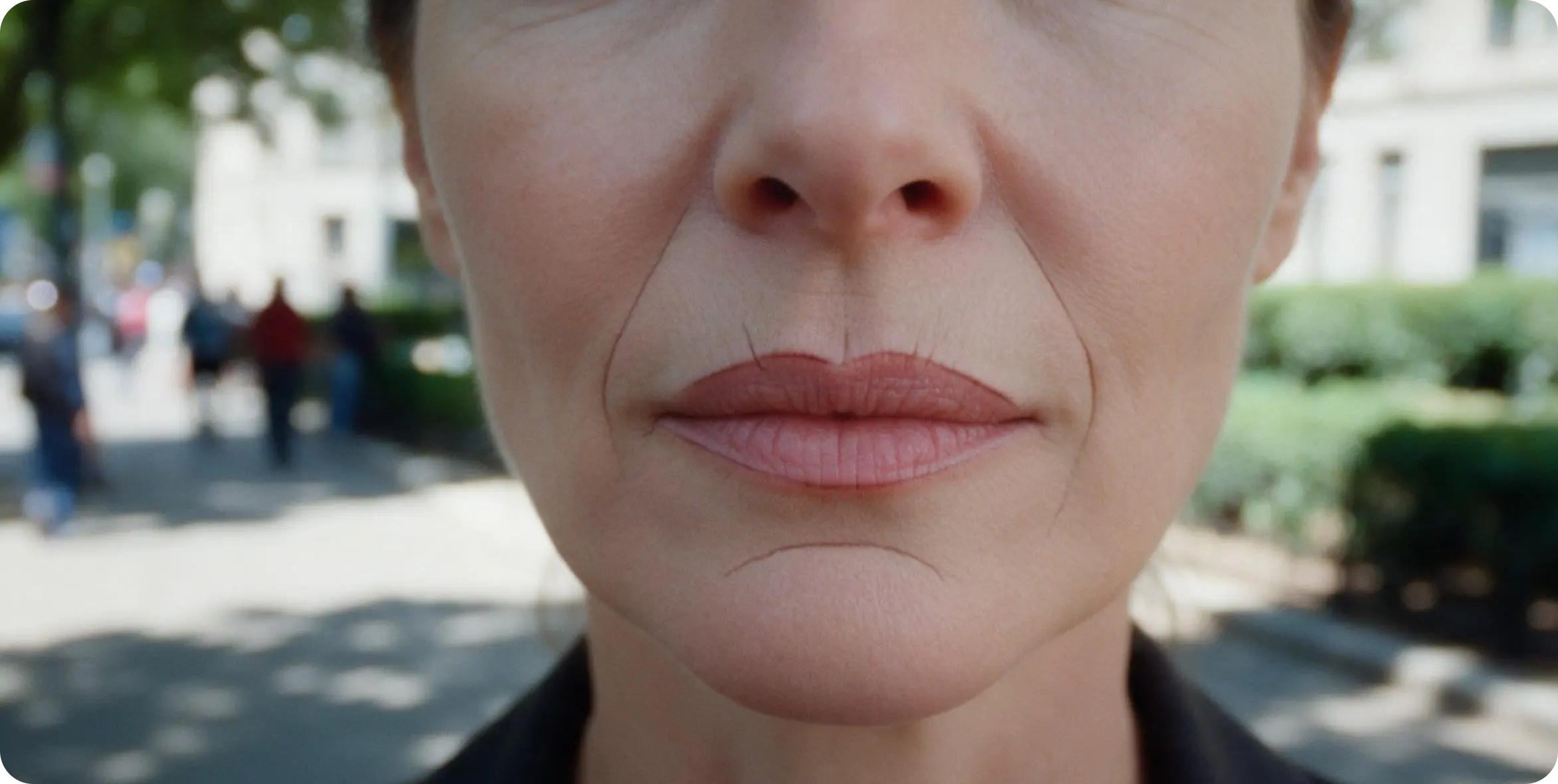
Natural lip enhancement will not give you a new mouth. It can help your existing lips look smoother, healthier, more defined, and less compressed – without fillers, injections, or harsh “plumping” tricks. The visible difference usually comes from simple things: a stronger lip barrier, daily UV protection, less dryness, a relaxed jaw, and skin around […]
Author:MINDBODYFACE
80
FACIAL FAT GRAFTING: ARE THE POTENTIAL RISKS TOO HIGH?
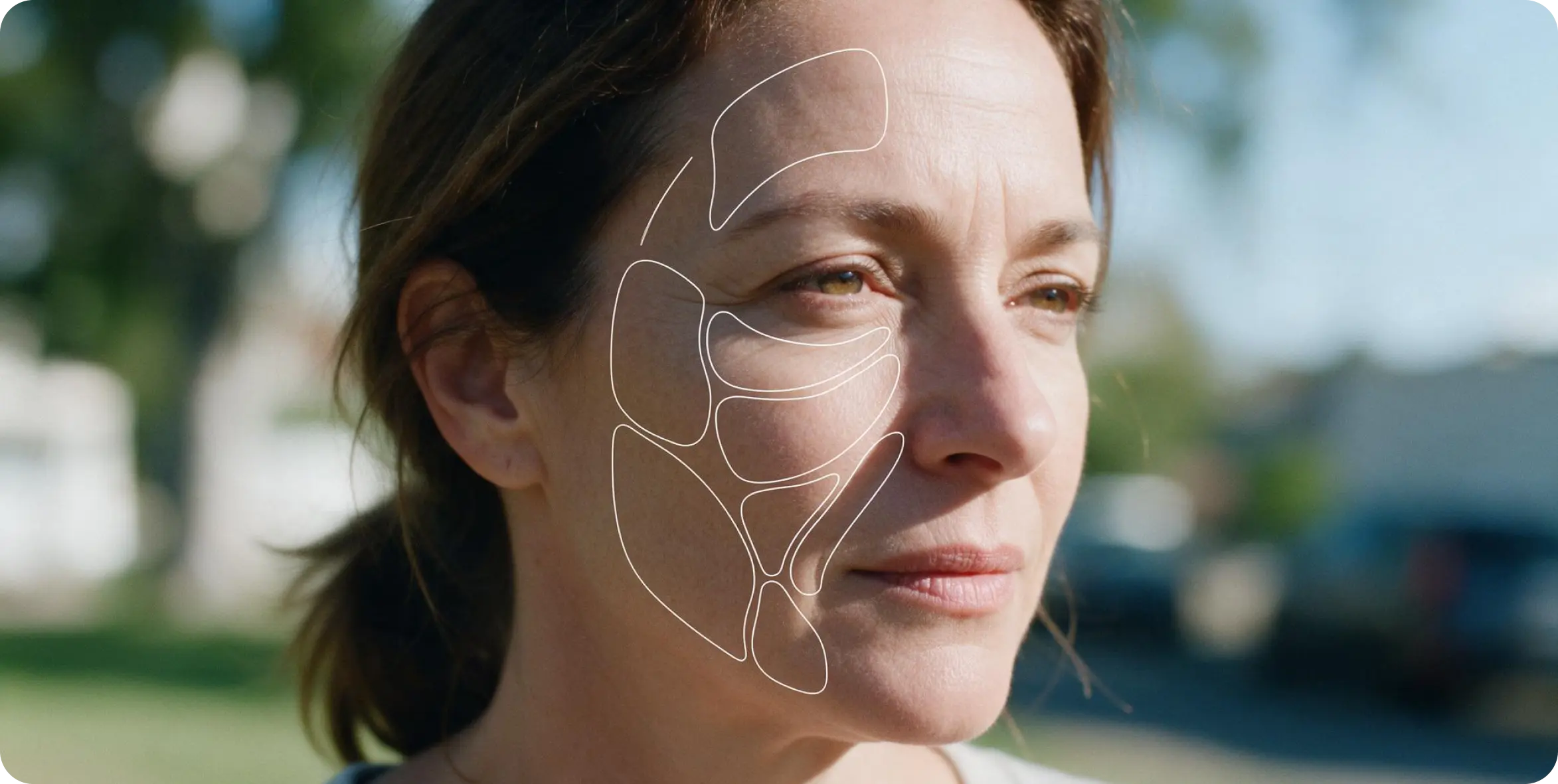
Facial fat grafting risks are not automatically “too high,” but this is a surgical procedure with an unpredictable aesthetic outcome and a small risk of severe complications. For the right patient, treated conservatively by an experienced surgeon, facial fat transfer can restore volume in hollow areas. For someone seeking a perfectly controllable result, a dramatic […]
Author:MINDBODYFACE
120

PLATYSMAL BANDS: WHY VERTICAL NECK BANDS APPEAR AND WHAT YOU CAN DO NATURALLY
Platysmal bands are the vertical cords that may appear across the front or sides of the neck when you speak, grimace, turn your head, lift your chin, or tighten your lower face. These neck bands can become obvious in photographs first: your face still looks familiar, while the neck suddenly appears more strained, heavier, or […]
Author:MINDBODYFACE
210


MINDBODYFACE LLC
1021 E Lincolnway Suite 8342, Cheyenne, WY 82001
+16282892382
All services and information on this website are for educational purposes only and do not constitute medical advice or treatment -