Apr 06, 2026
•8 minutes read
•Author: MINDBODYFACE
ATHLETIC BODY TYPE IN WOMEN
You’ve probably been told you have an athletic build your whole life. Strong shoulders, defined arms, a frame that responds to movement. And you probably know that already — you’ve lived in this body. What gets talked about less is what that structure means beyond the gym: how it ages, where it holds tension, and why even women with an athletic physique women characteristics start to notice their face and neck changing in ways that don’t match how their body feels.
This article covers what a female athletic body type actually is — structurally and physiologically — along with the real advantages it carries, the specific patterns it’s prone to, and how to work with it intelligently.
Understanding the athletic female body type
The athletic body type in women falls within what researchers call the mesomorph somatotype — a classification introduced by psychologist William Sheldon in the 1940s, still used today by fitness professionals and physiologists as a practical framework for understanding how bodies respond to training and nutrition.
What defines it structurally: broader shoulders relative to the hips, medium bone density, higher muscle-to-fat ratio, and a body that responds quickly to both physical training and dietary changes. As the National Academy of Sports Medicine describes it, the mesomorph has “developed athletic musculature” and an “efficient metabolism” where both mass gain and loss happen with relative ease.
Here’s what that means in practice. A woman with an athletic physique typically carries more muscle than the average baseline — even without consistent training. Her frame is denser, her joints are generally well-supported, and her posture tends to be more upright than in other body types. She often handles high-intensity and endurance activities without the fatigue adaptation that other body types need more time to build.
It’s worth being direct about something: the female athletic body type and the mesomorph aren’t exactly the same thing. “Athletic” in everyday use usually means visibly toned and physically capable, regardless of somatotype. A woman can have an ectomorphic build — lean, narrow-framed — and still be athletic in every meaningful sense. The term female athletic body type describes a physique cluster, not a fixed category. Most women with this build, however, land in mesomorph-dominant territory.

Key traits and features of the athletic build
Broad shoulders, a defined waist, and balanced hips — these are the silhouette markers most associated with the athletic body shape female. The bone structure tends toward medium density, which gives the frame structural integrity without the heaviness that can come with a more endomorphic build. Muscle development is visible even at rest, particularly in the shoulders, arms, and upper back.
The metabolism in athletic build women works efficiently in both directions. Muscle burns more calories at rest than fat tissue, so resting metabolic rate is generally higher. This means body composition responds visibly and relatively quickly to changes in diet or training. The same responsiveness applies in the other direction: extended periods of inactivity or poor nutrition show up sooner in the body than they might in a slower-metabolizing type.
One trait that matters beyond aesthetics: fascia. The connective tissue system that wraps every muscle, bone, and organ in the body tends to be well-developed in athletic women — especially in those who’ve trained consistently. Fascia transmits tension across the entire body. A 2019 study published in Scientific Reports found strong correlations between neck muscle stiffness and factors including posture and BMI in women across adult life — and the quality of connective tissue played a central role. This matters because the face and neck are part of this system, not separate from it.
Athletic women often carry chronic tension in the upper trapezius and neck — not from weakness, but from overuse and posture patterns that develop alongside heavy training. Broad shoulders and strong upper backs are assets. Tight ones, without compensating mobility and release work, pull on the fascial chain that connects the neck directly to the jaw and the lower face.

Advantages of the athletic body type
The real advantages aren’t just about appearance — they’re structural and functional, and they compound over time.
Strength and endurance respond well to training because the baseline muscle density is already higher. Recovery is faster. Bone mineral density is generally well-preserved, which matters enormously as women age past 40 — sarcopenia and bone loss are two of the biggest contributors to physical decline, and an athletic build starts from a more protected position.
Posture is another advantage, when the body is maintained well. Women with an athletic physique tend to have stronger stabilizer muscles in the core and back, which supports upright alignment. And this matters for the face. Research consistently links forward head posture to increased tension in the sternocleidomastoid and upper trapezius muscles — structures that connect directly to the jaw, chin, and lower face. Better posture, maintained throughout life, is one of the quieter anti-aging tools available.
Athletic women also tend to maintain facial volume longer than women with lower baseline muscle mass. The face ages partly through fat pad displacement and muscle thinning — but a body that carries and maintains muscle has a systemic advantage in how it holds structure. This isn’t a guarantee, but it’s a meaningful factor.
One more thing: the athletic frame responds well to targeted tissue work. Whether that’s deep fascia release, osteopathic technique, or structured movement practices — the body has the capacity to change quickly. That same responsiveness that shows training results fast also means that deliberate work at the structural level — posture, fascia, breath — produces visible shifts.
Training and fitness tips for athletic women
The female athletic body type generally doesn’t need to be convinced that training matters. The question is usually about what kind of training serves the whole body — not just the parts that are already strong.
Strength training remains important. Three to five sessions per week with compound movements — squats, deadlifts, pull-ups — builds on the natural muscle-building capacity of the mesomorph frame. The mistake many athletic women make is neglecting mobility and recovery, because the body handles intensity well and doesn’t complain immediately.
Cardiovascular work for the athletic build in women doesn’t need to be excessive. The American College of Sports Medicine recommends 150 minutes of moderate-intensity aerobic activity per week as a baseline for health. For athletic women, mixing HIIT sessions with lower-intensity steady-state work maintains metabolic efficiency without chronically elevating cortisol — and elevated cortisol directly accelerates collagen breakdown in connective tissue.
The area most athletic women underinvest in: the neck, jaw, and fascial system connecting the upper body to the face. Tight shoulders and a habit of bracing through the neck accumulates over years. The platysma muscle — which runs from the chest up to the lower face — responds directly to posture and neck tension. Research on forward head posture shows consistently that women with poor cervical alignment show earlier and more significant changes in neck muscle elasticity, which affects the entire lower third of the face over time.
Ten to fifteen minutes daily of deliberate decompression work for the neck and jaw isn’t supplementary. For athletic women who train hard, it’s the structural maintenance work that holds everything else in place.
Common misconceptions about female athletic bodies
The most persistent one: that an athletic body type means you’re protected from the visible changes that come with aging. It doesn’t. What it means is that you’re starting from a stronger structural position — which gives you more to work with, not an exemption from the work itself.
Second myth: that more training means better outcomes across the board. Athletic women often over-train the muscles they can see and under-address the connective tissue, fascial system, and postural patterns that determine how the face and neck age. A 2025 study in BMC Musculoskeletal Disorders found that women with chronic forward head posture showed significantly lower neck extensor endurance — regardless of overall fitness level. Strength at the gym doesn’t automatically transfer to postural health.
Third: that the athletic build is resistant to emotional and stress-related holding patterns. It isn’t. Women with athletic bodies often carry stress in the upper trapezius, jaw, and occipital muscles — and these patterns accumulate fascially over time. Chronic tension compresses blood and lymphatic flow. That’s visible in the face: puffiness, asymmetry, deepening of nasolabial folds, and loss of jawline definition often trace back to structural holding, not just skin changes.
The characteristics of the athletic body type include structural advantages that are real and worth understanding — and they include vulnerabilities that are just as real. Both deserve attention.

Where to go from here
If you have an athletic build and you’re noticing changes in your face, neck, or the way your posture feels — it’s not about doing more of what you’re already doing. It’s about working at the level where the changes are actually happening: fascia, bone structure, craniosacral system.
The Faceplastica Rejuvenation Method by Dr. Ales Ulishchenko is designed exactly for this. It works deeper than face fitness and surface-level exercises — at the level of the fascial and structural systems that connect the body to the face. Twenty minutes a day, and most women notice changes in the first week: less puffiness, more defined oval, neck tension that starts to release.
If you’ve done face fitness, face yoga, or massage and the effects haven’t held — this is a different starting point. See the program.
FACIAL REJUVENATION AFTER 45: PROCEDURES THAT MAY NOT BE WORTH IT
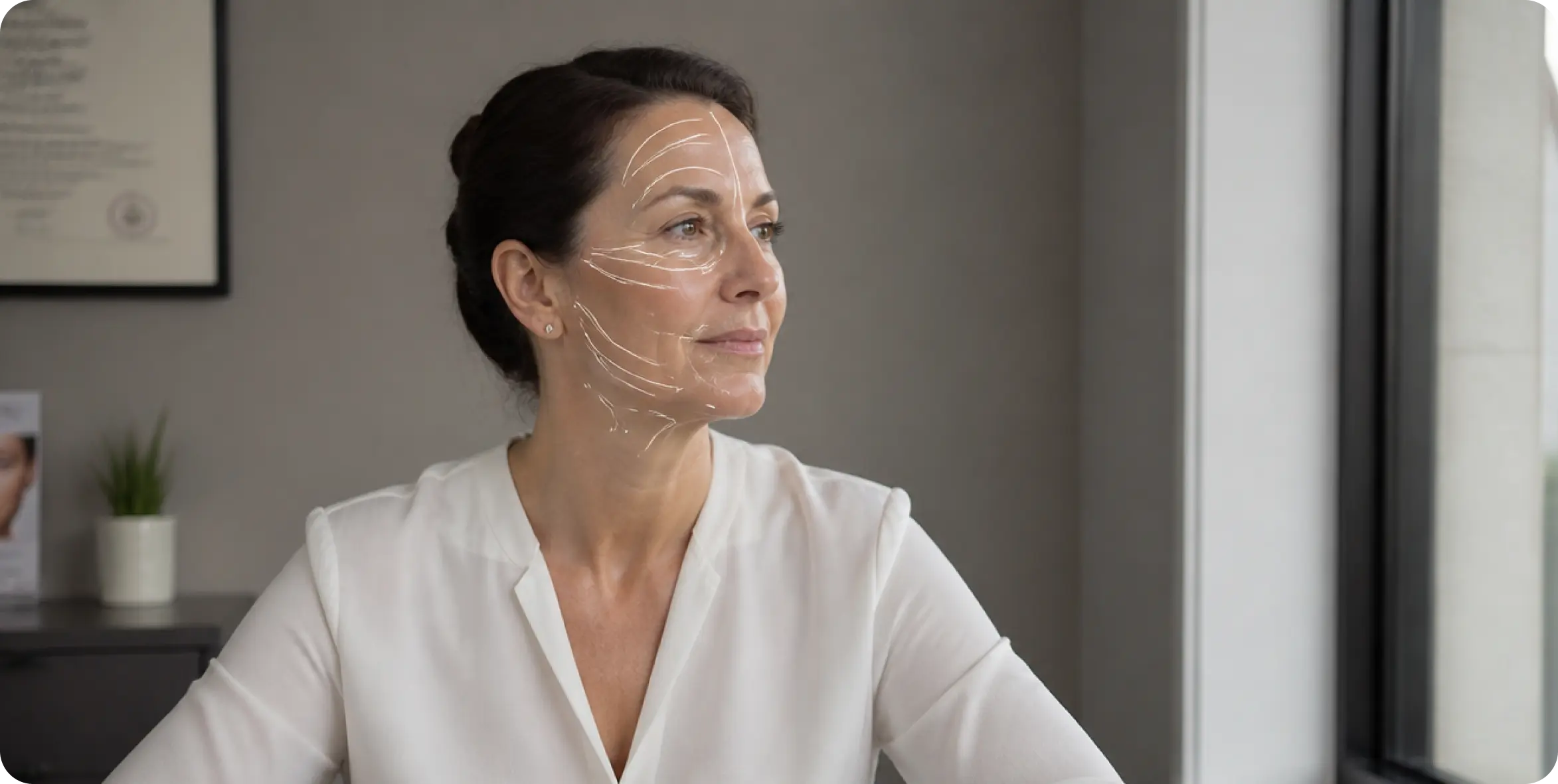
Facial rejuvenation after 45 works best when the treatment matches the actual change you want to address. The useful question is not which option is “best,” but whether a procedure can deliver enough benefit to justify its cost, recovery, maintenance, and possible complications. Many facial rejuvenation procedures after 45 are marketed as universal solutions. Yet […]
Author:MINDBODYFACE
 6
6 0
0
ENHANCING THE NATURAL BEAUTY OF THE LIPS WITHOUT AUGMENTATION
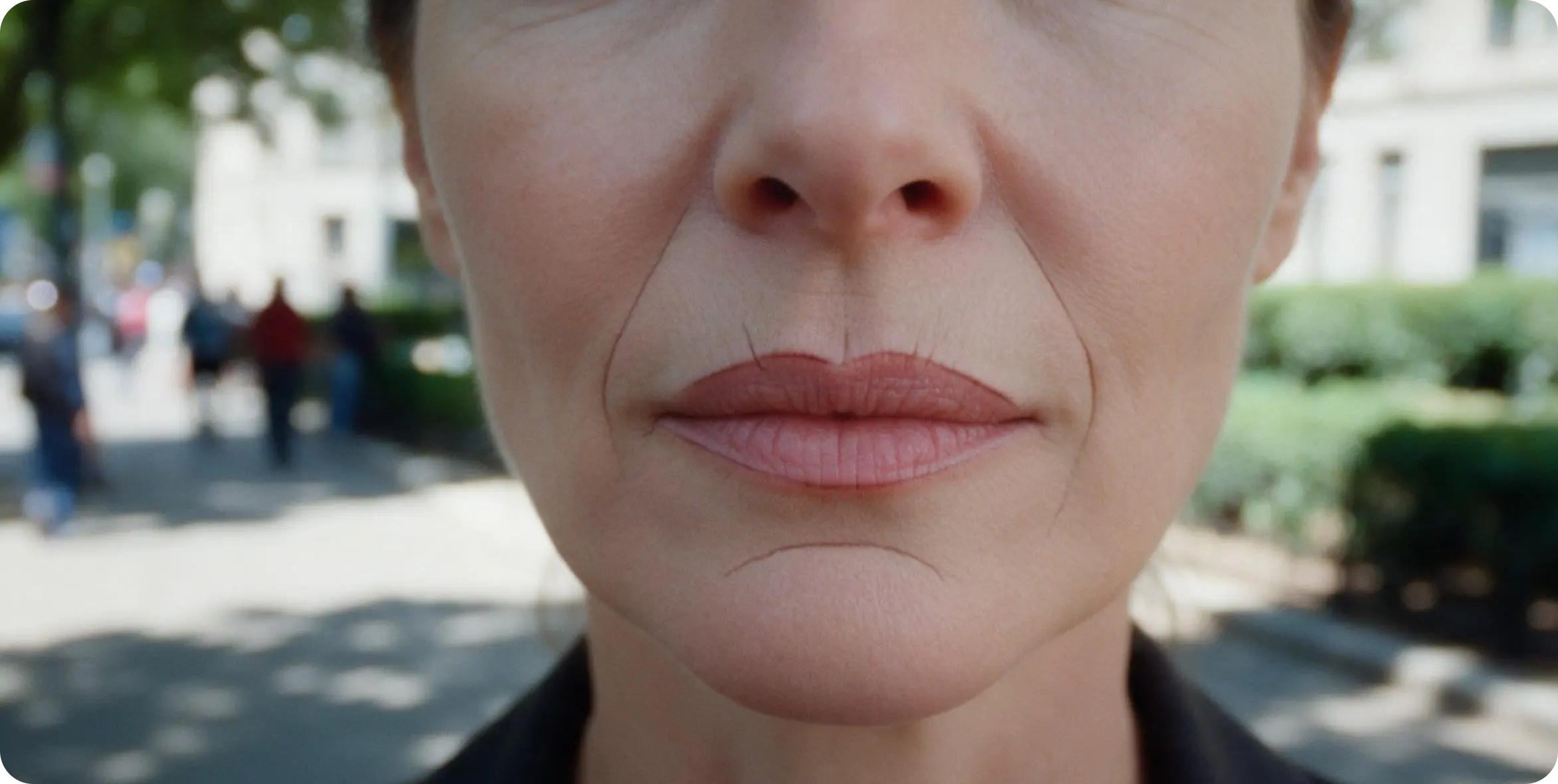
Natural lip enhancement will not give you a new mouth. It can help your existing lips look smoother, healthier, more defined, and less compressed – without fillers, injections, or harsh “plumping” tricks. The visible difference usually comes from simple things: a stronger lip barrier, daily UV protection, less dryness, a relaxed jaw, and skin around […]
Author:MINDBODYFACE
80
FACIAL FAT GRAFTING: ARE THE POTENTIAL RISKS TOO HIGH?
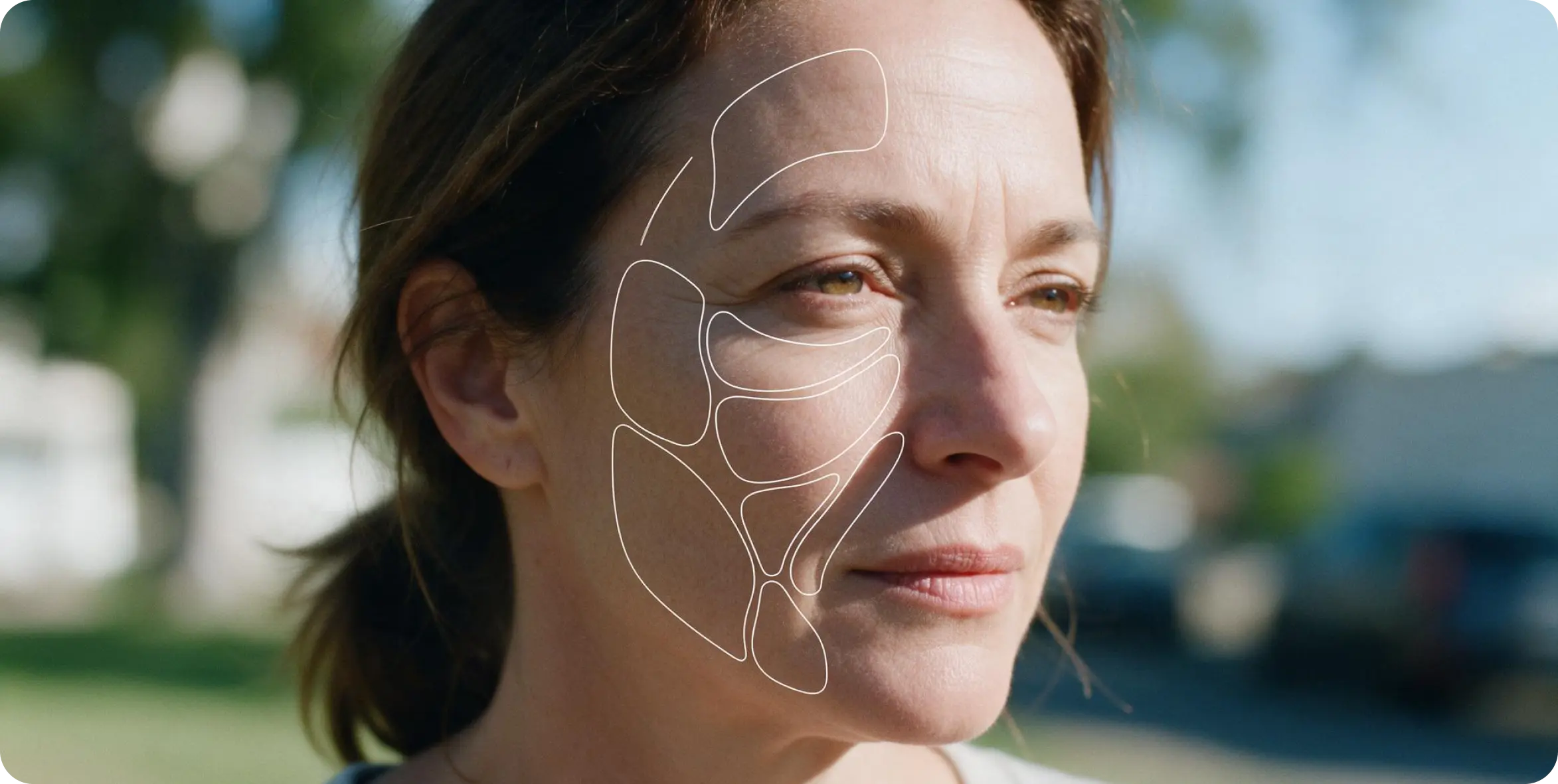
Facial fat grafting risks are not automatically “too high,” but this is a surgical procedure with an unpredictable aesthetic outcome and a small risk of severe complications. For the right patient, treated conservatively by an experienced surgeon, facial fat transfer can restore volume in hollow areas. For someone seeking a perfectly controllable result, a dramatic […]
Author:MINDBODYFACE
120

PLATYSMAL BANDS: WHY VERTICAL NECK BANDS APPEAR AND WHAT YOU CAN DO NATURALLY
Platysmal bands are the vertical cords that may appear across the front or sides of the neck when you speak, grimace, turn your head, lift your chin, or tighten your lower face. These neck bands can become obvious in photographs first: your face still looks familiar, while the neck suddenly appears more strained, heavier, or […]
Author:MINDBODYFACE
210


MINDBODYFACE LLC
1021 E Lincolnway Suite 8342, Cheyenne, WY 82001
+16282892382
All services and information on this website are for educational purposes only and do not constitute medical advice or treatment -