Sep 11, 2026
•7 minutes read
•Author: MINDBODYFACE
MOUTH BREATHING AND FACIAL CHANGES: HOW BREATHING HABITS AFFECT THE JAWLINE, LIPS, AND FACIAL BALANCE

What Is Mouth Breathing and Why Does It Affect the Face?
Regular mouth breathing can be linked to differences in facial and dental development during childhood and adolescence, when the jaws are still growing. In adults, it is very unlikely to remodel facial bones or produce a dramatically different jawline.
What it can change is the way the face sits at rest. An open-mouth posture can affect lip position, tongue placement, jaw and neck tension, sleep quality, and the definition of the lower face in certain angles or photographs.
Mouth breathing is not a fixed “face type.” More often, it signals that breathing through the nose is difficult, uncomfortable, or interrupted — especially during sleep.
If you regularly breathe through your mouth, the useful question is not “How is this changing my face?” but “Why isn’t nasal breathing easy?”
How Mouth Breathing Can Change the Jawline and Facial Structure
Mouth breathing means that you take in air through your mouth more often than through your nose.
It is normal in specific situations: during hard exercise, while recovering from a cold, or when temporary congestion blocks the nose. It becomes worth investigating when it happens often during the day, most nights, or both.
Common causes include:
- Allergies or long-term nasal congestion
- A deviated septum
- Chronic sinus inflammation
- Enlarged nasal turbinates or nasal polyps
- Enlarged tonsils or adenoids
- Sleep-disordered breathing, including obstructive sleep apnea
- A learned open-mouth posture that began during a long period of nasal blockage

When nasal airflow feels restricted, the body uses the mouth as an alternative route. Over time, that can become the default resting pattern: the lips stay apart, the jaw drops slightly, the tongue sits lower in the mouth, and the head shifts forward or tilts upward in an attempt to make airflow easier.
Mouth Breathing, Lips, and Facial Balance
Mouth breathing jawline changes are most relevant before growth is complete. In a growing child, long-term nasal obstruction and habitual open-mouth posture may be associated with a narrower upper jaw, a high palate, bite changes, and a jaw that rotates down and back rather than developing forward in the same pattern as a nasal breather.
Research has linked mouth breathing in children and adolescents with a higher tendency toward narrower dental arches, posterior crossbite, open bite, greater lower facial height, and a more retruded maxilla or mandible. Yet association does not equal destiny. Children who breathe through the mouth may already have airway obstruction, genetic facial patterns, allergies, enlarged adenoids, or orthodontic problems that influence both breathing and facial growth.pubmed.ncbi.nlm.nih+1
So, can mouth breathing change your jawline? In a child or teenager, chronic mouth breathing is a reason for proper assessment because growth is still happening. Early help from an ENT specialist, pediatrician, dentist, orthodontist, or qualified myofunctional therapist may address the cause before the pattern becomes more established.
In adults, mouth breathing will not suddenly move the jawbone backward or create a new facial skeleton. What it can do is change the way the jaw is held. A lower jaw that hangs open, a tongue that sits low, and a head that moves forward can make the lower face appear longer, softer, or less defined in photos.
A weak-looking jawline is not always a bone problem. Sometimes it is posture, tension in the jaw and neck, fluid retention, body-fat distribution, or an open-mouth resting habit. That is where gentle work with breathing, posture, and muscle balance may help—after you know that nasal breathing is actually possible.
A comfortable resting posture usually looks like this:
| Area | Comfortable resting position |
| Lips | Lightly closed, without pressing |
| Teeth | Slightly apart, not clenched |
| Jaw | Relaxed |
| Tongue | Resting lightly on the palate, without force |
| Breathing | Quiet and comfortable through the nose |
This is not a rigid rule to monitor every minute. It is simply a useful reference: nasal breathing and lip closure should feel easy, not forced.
Mouth Breathing and Facial Asymmetry or Double Chin
Mouth breathing does not automatically cause facial asymmetry.
Almost every face has some natural asymmetry. Genetics, bite patterns, chewing habits, injuries, muscle tension, nerve function, and normal growth all influence how the two sides of the face develop and move.
Still, a nose that feels consistently blocked on one side can encourage compensations: turning the head, lifting the chin, shifting the jaw, or sleeping in one position to find a clearer airway. Those habits can reinforce uneven muscle tension over time. They do not prove that mouth breathing caused asymmetry, but they can contribute to the overall pattern.
The same distinction applies to a double chin. Mouth breathing does not create fat beneath the chin. Genetics, body-fat distribution, skin elasticity, age, jaw structure, and facial anatomy matter much more.

However, forward-head posture can make the area look fuller. When the chin moves toward the neck and the mouth falls open, soft tissue under the jaw compresses and becomes more visible in photos. Often, the difference is one of angle and posture rather than anatomy.
Nasal Breathing vs. Mouth Breathing: What Is the Difference for the Face?
The nose filters, warms, and humidifies incoming air. The mouth is useful when you need a rapid increase in airflow or when the nose is temporarily blocked. At rest, though, nasal breathing is generally kinder to the mouth and throat.
| At rest | Nasal breathing | Habitual mouth breathing |
| Lips | Can meet without strain | Often remain apart or need effort to close |
| Tongue | Usually rests lightly against the palate | Often sits lower in the mouth |
| Jaw | Relaxed, with teeth slightly apart | Can remain open or shift to maintain airflow |
| Head and neck | More likely to stay neutral | May move forward or tilt upward |
| Overnight comfort | Less likely to dry the mouth | Dry mouth, sore throat, and morning bad breath are more common |
How to Stop Mouth Breathing at Night
Do not begin by trying to keep your mouth shut. Start by working out why nasal breathing becomes difficult at night.
Notice the pattern for a week or two:
- Is your nose more blocked in the evening or after lying down?
- Do symptoms worsen during allergy season?
- Is one nostril regularly more obstructed than the other?
- Do you snore, gasp, choke, or wake abruptly?
- Do you wake with a dry mouth, sore throat, headache, or low energy?
- Do alcohol, dust, pets, or sleeping on your back make symptoms worse?
While arranging an assessment, some measures may improve comfort:
- Discuss persistent allergy symptoms with a clinician or pharmacist.
- Use saline spray or nasal rinses correctly if they are appropriate for you.
- Avoid alcohol close to bedtime if it worsens snoring or congestion.
- Try side sleeping instead of sleeping on your back.
- Keep bedroom air comfortably humid if dryness aggravates nasal irritation.
- Book an ENT appointment if congestion or blocked nasal breathing is frequent.

Avoid using mouth tape as a DIY response to snoring, suspected sleep apnea, or nasal blockage. Taping the mouth does not treat the cause of disrupted breathing and can be unsafe when nasal airflow is restricted.
When to See a Clinician
Arrange a medical assessment if you experience:
- Loud or frequent snoring
- Gasping, choking, or pauses in breathing during sleep
- Severe daytime sleepiness
- Morning headaches
- Persistent dry mouth or sore throat after sleep
- Ongoing nasal congestion
- Difficulty breathing through one or both nostrils
- Waking exhausted despite spending enough time in bed
For children, seek advice if they regularly sleep with an open mouth, snore, grind their teeth, sleep restlessly, seem unusually tired during the day, or show noticeable changes in concentration, mood, or behaviour.
Depending on the suspected cause, the right clinician may be an ENT specialist, pediatrician, sleep specialist, dentist, or orthodontist. First, rule out nasal obstruction and sleep-related breathing problems. Work on oral posture only after the airway has been properly assessed.
Orofacial myofunctional therapy can be useful in selected cases. It may help with lip closure, tongue posture, swallowing, chewing, and oral-muscle habits. It does not replace treatment for allergies, nasal obstruction, enlarged tonsils or adenoids, or sleep apnea. Its effectiveness also varies by condition, so it should be treated as part of a broader plan rather than a universal fix.
CAN SLEEPING ON ONE SIDE CHANGE YOUR FACE? SLEEP LINES, ASYMMETRY, AND FACIAL COMPRESSION
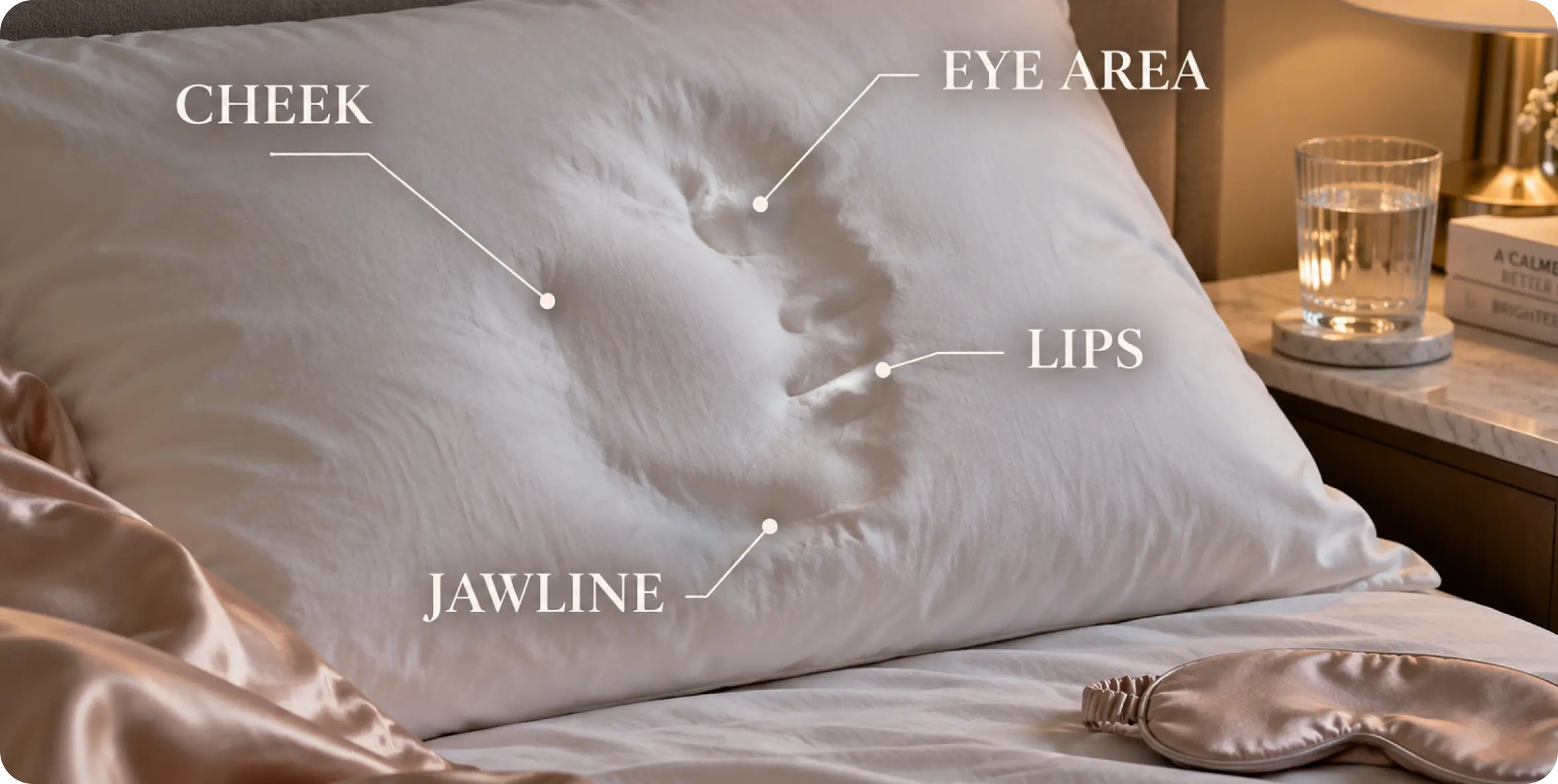
Can sleeping on one side change your face? It can temporarily change how your face looks in the morning. One cheek may seem puffier, one eye more swollen, and one side may show deeper pillow marks. Over many years, repeated pressure may contribute to sleep lines in aging skin, but side sleeping alone does not […]
Author:MINDBODYFACE
 13
13 0
0
UNEVEN SMILE: WHY ONE SIDE OF THE MOUTH SITS HIGHER AND WHAT FACIAL TENSION HAS TO DO WITH IT
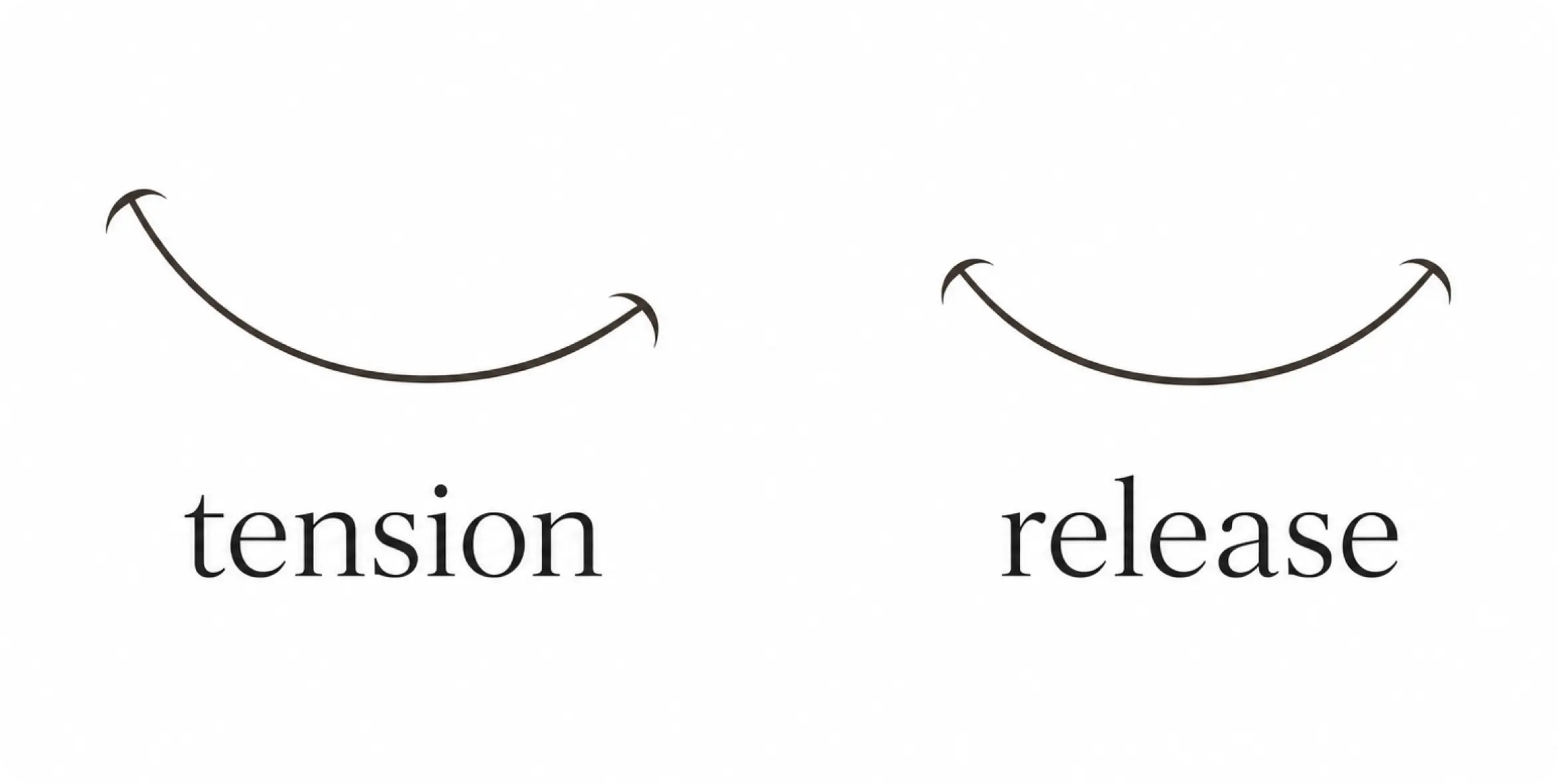
An uneven smile can be one of those details you only notice in photos or videos. One corner of the mouth lifts more. One side of the upper lip looks higher. One cheek seems to move first, while the other appears quieter or tighter. A little facial asymmetry is normal. Almost no one has a […]
Author:MINDBODYFACE
230
DIMPLED CHIN AND MENTALIS TENSION: WHY THE CHIN LOOKS UNEVEN AND HOW TO RELAX IT
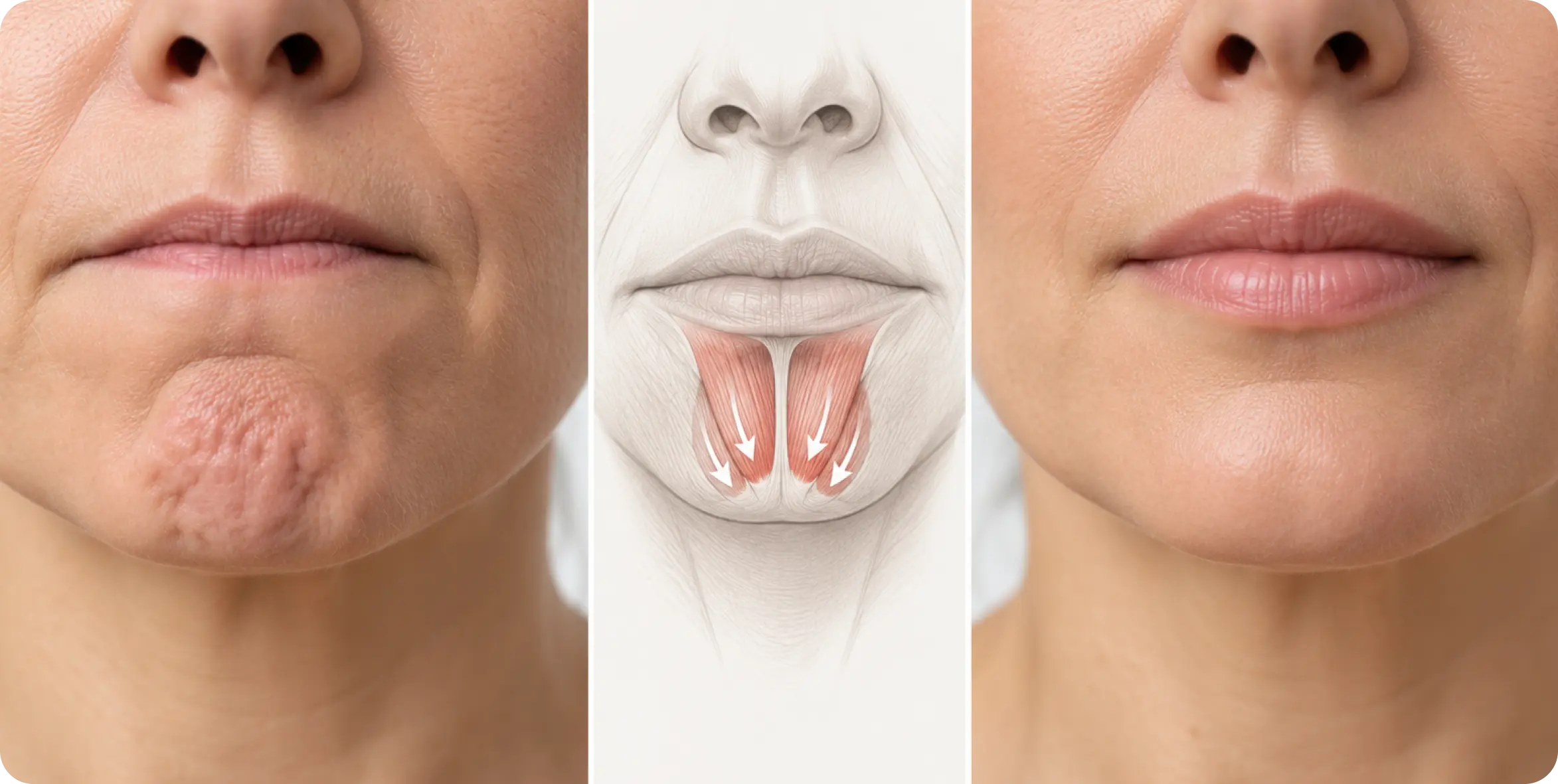
A dimpled chin can make the lower face look tense even when you are not upset. The skin may appear bumpy, gathered, or uneven when you talk, smile, concentrate, swallow, or press your lips together. For some people, this texture appears only during expression. For others, it remains visible at rest. The common reason is […]
Author:MINDBODYFACE
220
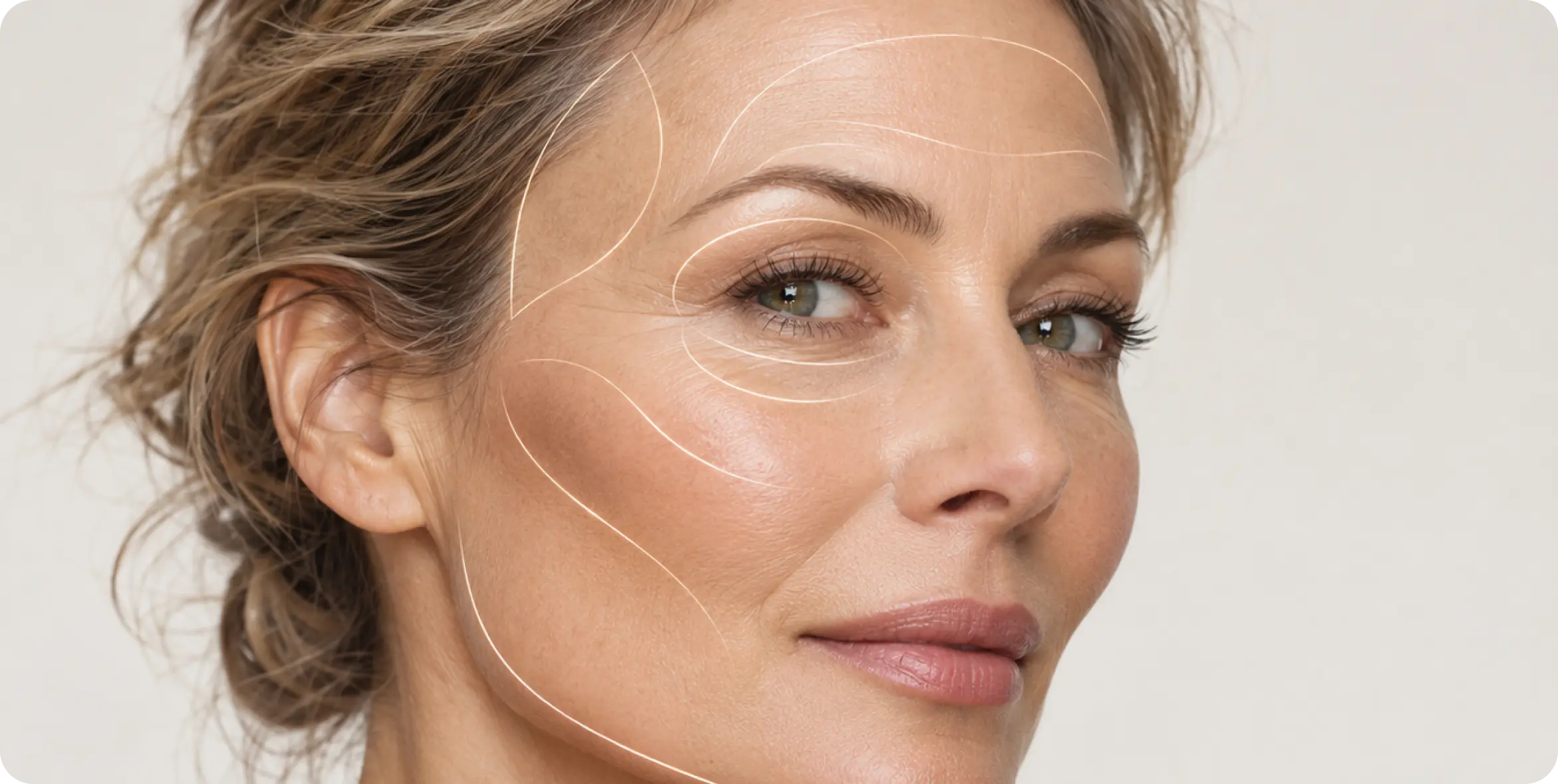
HOLLOW TEMPLES: WHY TEMPLES LOSE VOLUME AND HOW FACIAL AGING CHANGES THIS AREA
Hollow temples are the indentations that can appear at the sides of the forehead, between the outer eyebrow, hairline, and upper cheekbone. Temple hollowing can make the upper face look narrower, more angular, or more tired—even when your skin is smooth and your cheeks still have volume. This area is easy to overlook. People often […]
Author:MINDBODYFACE
290


MINDBODYFACE LLC
1021 E Lincolnway Suite 8342, Cheyenne, WY 82001
+16282892382
All services and information on this website are for educational purposes only and do not constitute medical advice or treatment -