Sep 02, 2026
•9 minutes read
•Author: MINDBODYFACE
FACIAL EXPRESSION MUSCLES: THEIR ROLE IN FACIAL FUNCTION AND REJUVENATION

Your face moves before you say a word. A raised eyebrow signals surprise, a tight jaw shows stress, and a real smile changes the cheeks, eyes, mouth, and neck at once. These movements come from the muscles of facial expression—a network that lets us communicate, eat, blink, speak, breathe, and show emotion.
But facial movement has another side. The expressions you repeat thousands of times can shape how your face looks at rest. A tense forehead, habitual squinting, jaw clenching, or a mouth that always pulls downward may gradually become part of your resting expression.
That does not mean you should stop smiling or try to keep your face frozen. It means that facial function, muscle tone, and movement habits deserve the same attention as posture and body movement.
What Are the Facial Expression Muscles?
The facial mimetic muscles are the muscles that move the skin of the face to create expression. Unlike many skeletal muscles, which attach bone to bone and move a joint, many facial muscles connect bone or fascia to the skin. When they contract, they pull the skin and soft tissue with them.
This is why the face can make such small, specific movements: lift the eyebrows, close the eyes, wrinkle the nose, purse the lips, flare the nostrils, smile, frown, or pull the corners of the mouth down. The facial muscles are supplied by the facial nerve, cranial nerve VII. Muscles of mastication, such as the masseter and temporalis, have different nerve supply and are commonly discussed separately.
There are around 30 facial muscles on each side of the face, depending on how they are counted. They work in overlapping groups rather than as isolated buttons. A smile, for example, may involve the zygomatic muscles that lift the corners of the mouth, muscles around the eyes, the cheeks, and the neck.
Several facial muscles matter in everyday facial expression biomechanics:
- Frontalis: raises the eyebrows and creates horizontal forehead lines
- Corrugator supercilii and procerus: draw the brows inward and downward, creating the “frown” pattern between the eyebrows
- Orbicularis oculi: closes the eyelids and contributes to squinting and “crow’s feet”
- Zygomaticus major and minor: help lift the corners of the mouth during smiling
- Orbicularis oris: shapes and closes the lips
- Buccinator: supports cheek control during chewing, speaking, and blowing
- Mentalis and depressor muscles: influence the chin and lower lip
- Platysma: spans the neck and can contribute to downward pull in the lower face

The frontalis, corrugator, procerus, and muscles around the eyes have insertions into the skin and meet around the brow and eye area. Their combined pull influences brow position and can create visible forehead, frown, and smile lines.
How Facial Muscles Influence Aging
Facial movement and aging are connected, but aging is never caused by expression alone. Skin quality, sun exposure, genetics, fat distribution, bone structure, hormones, sleep, smoking, stress, and body weight all play a role.
Still, repeated facial movement patterns can leave a mark over time. Dynamic wrinkles appear during movement: when you laugh, frown, squint, or raise your brows. With repeated contraction and changes in skin elasticity, some of these lines can become visible even when your face is at rest.
Research describes expression lines as forming in areas exposed to repeated facial muscle contraction. They often appear perpendicular to the direction of muscle pull, including the forehead, glabella, outer eye area, lips, nasolabial folds, and marionette lines. In a 2025 study, repeated frowning created temporary lines between the eyebrows through cumulative corrugator activation; the researchers also linked habitual contraction and declining tissue elasticity with wrinkle formation.
But stronger muscles are not always the answer. The face needs balance.
An overactive corrugator may keep the brow pulled together. Overactive masseters may make the jaw feel tight and can contribute to headaches, tooth wear, or a square-looking lower face. A constantly lifted forehead may create horizontal lines while trying to compensate for heavy eyelids.

At the same time, reduced muscle use, altered coordination, or changes in facial nerve function can affect facial symmetry, expression, and support in specific areas. The goal is not to make every muscle work harder. It is to notice which areas are gripping, which are underused, and how the whole face moves together.
Facial Muscle Tone, Control, and Coordination
Facial muscle tone is the low-level activity that helps your face stay responsive at rest. It is not the same as a frozen, tense expression. Healthy tone allows you to smile, speak, blink, chew, and react without feeling as if one area has to do all the work.
Facial muscle control means you can activate a movement on purpose and release it when it is no longer needed. For example, you may learn to lift the cheeks without sharply narrowing the eyes, or relax the jaw without letting the head drift forward.
Facial muscle coordination is what makes expression look natural. Think about a genuine smile: the cheeks rise, the mouth changes shape, and the muscles around the eyes may soften. If the forehead lifts, the jaw clenches, and the shoulders rise at the same time, the face can look strained instead of alive.
This is why dynamic facial movement matters more than a single “perfect” pose. Your face is designed to change. The aim of practice is not to remove movement but to make it freer and less repetitive where tension has taken over.
A simple example: when you look at a phone, you may squint, push the chin forward, purse the lips, and hold your breath. None of these movements is dramatic alone. Repeated for hours, they become a familiar pattern. Awareness helps you interrupt it.
Facial Muscle Activation Through Targeted Exercises
Facial muscle activation can be useful when it is gentle, precise, and paired with relaxation. Targeted exercises may help you notice weak or poorly coordinated movements, explore facial mobility, and reduce the habit of letting one tense area dominate every expression.
For example, a cheek-focused exercise may involve a soft closed-mouth smile while keeping the forehead and jaw relaxed. A brow-control exercise may teach you to raise the eyebrows without tightening the muscles between them. A neck-and-jaw release may come before any work on the lower face.
The rule is simple: do not train your face as if it were a bicep.
Use low effort. Watch for compensation. If your eyes squint, your neck tightens, or your jaw clenches during every repetition, reduce the intensity or stop. More repetitions are not automatically better.
Research on facial exercises for rejuvenation is promising in places but remains limited. Reviews have reported possible improvements in cheek fullness, skin properties, facial muscle thickness, and selected signs of aging. Yet the available studies are small and use different methods, so researchers still cannot make firm conclusions about effectiveness for facial rejuvenation.

Facial exercise therapy is different when it is prescribed for facial nerve paralysis, such as Bell’s palsy. In that medical setting, studies support specialist-led facial exercise therapy for recovery of facial function. Do not use beauty-focused online exercises as a substitute for medical assessment if you have new weakness, facial drooping, trouble closing an eye, altered speech, or sudden asymmetry.
Facial Rejuvenation Techniques That Support Natural Movement
The most sensible facial rejuvenation techniques support a face that can move, rest, and communicate naturally. That may include facial exercises, self-massage, posture work, neck mobility, stress reduction, sleep, sun protection, and skincare suited to your skin.
Exercise-based methods ask you to participate. You learn to feel the difference between a relaxed masseter and a clenched one; between lifting the cheeks and pulling the forehead; between an open chest and a neck that has shortened toward the screen.
Passive cosmetic approaches can address selected concerns in other ways. Some focus on skin texture, others on volume, muscle activity, or tissue positioning. They may be appropriate choices for some people, but they do not automatically change the movement patterns that make the face feel tense every day.
The question is not which path is “better.” It is what you want to change and what you are willing to practise. If your main problem is a jaw that never relaxes, a treatment aimed only at the surface may not teach your body how to release that habit. If you have substantial skin laxity or volume loss, exercises alone may not create the change you expect.
Natural approaches work best when expectations are honest. They can support comfort, awareness, mobility, and small visible shifts. They cannot stop aging or guarantee a surgical-looking result without procedures.
Integrating Facial Muscle Training into a Long-Term Rejuvenation Routine
A long-term routine does not need to take an hour. Five to 15 minutes of consistent practice can be more useful than an intense session once a month.
Begin by choosing one pattern you want to understand:
- Brow tension and forehead lifting
- Squinting around the eyes
- Jaw clenching or teeth grinding
- Tight lips and a downward mouth expression
- A head-forward position that shortens the neck
- Uneven facial movement when smiling or speaking
Then build a short sequence: one minute of breathing, two minutes of neck and jaw release, a few controlled movements for the cheeks or brow, and a final moment to notice how your face feels at rest. Take photos only in the same lighting and expression if you want to track changes; otherwise, you may be measuring angles rather than progress.
MindBodyFace’s Faceplastica Rejuvenation Method is designed for people who want a fuller routine than isolated facial exercises. The program combines work with the face, neck, body, posture, breathing, and self-massage through 15 daily practices of 5–15 minutes and more than 40 techniques. It gives you a structure for working with facial muscle coordination while paying attention to the neck and body that influence how the face holds tension.md
Your face does not need to be still to look youthful. It needs movement that feels like yours: a forehead that can soften, a jaw that can let go, cheeks that rise without strain, and an expression that looks alive rather than held in place.
UNEVEN SMILE: WHY ONE SIDE OF THE MOUTH SITS HIGHER AND WHAT FACIAL TENSION HAS TO DO WITH IT
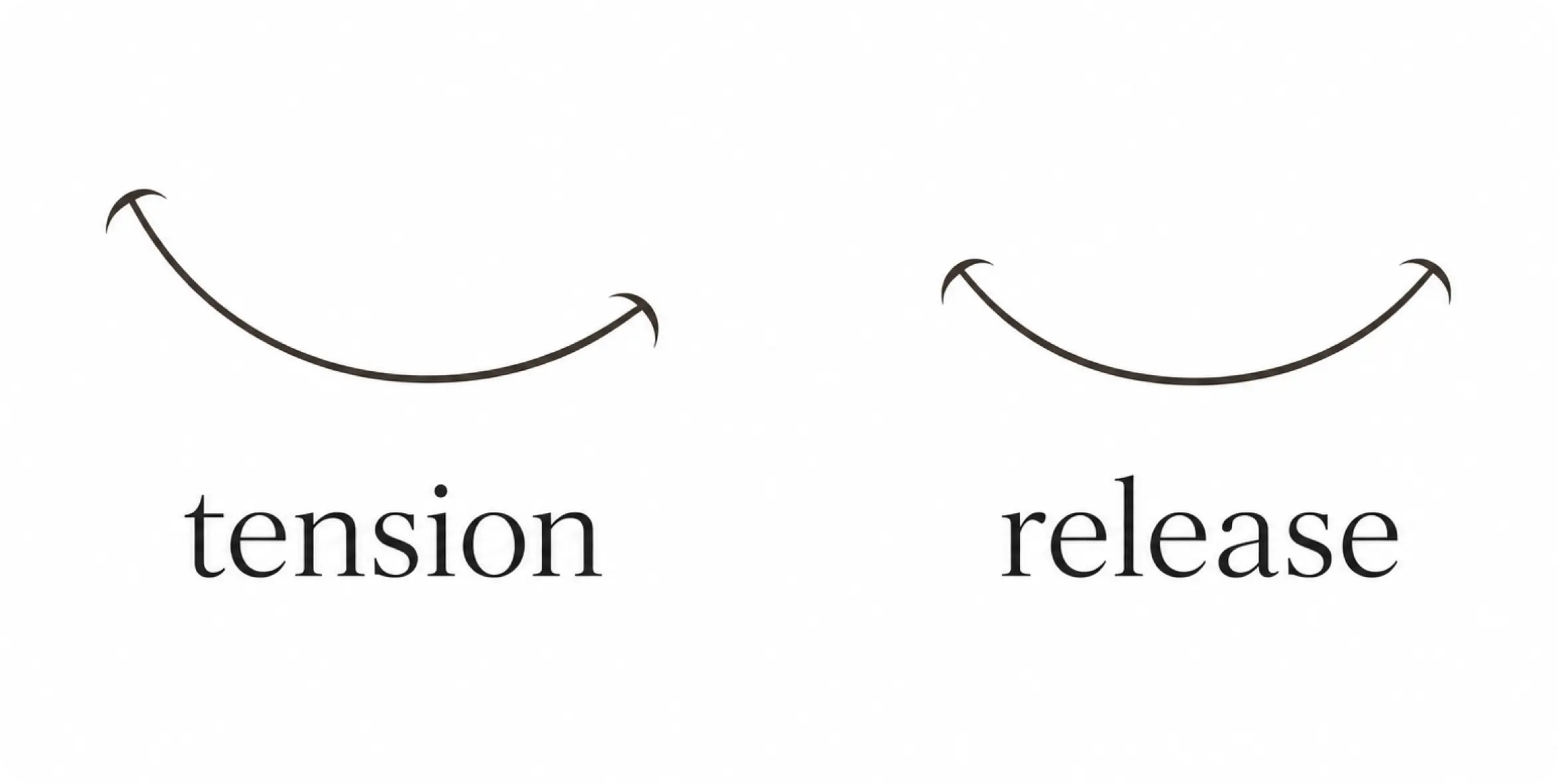
An uneven smile can be one of those details you only notice in photos or videos. One corner of the mouth lifts more. One side of the upper lip looks higher. One cheek seems to move first, while the other appears quieter or tighter. A little facial asymmetry is normal. Almost no one has a […]
Author:MINDBODYFACE
 3
3 0
0
DIMPLED CHIN AND MENTALIS TENSION: WHY THE CHIN LOOKS UNEVEN AND HOW TO RELAX IT
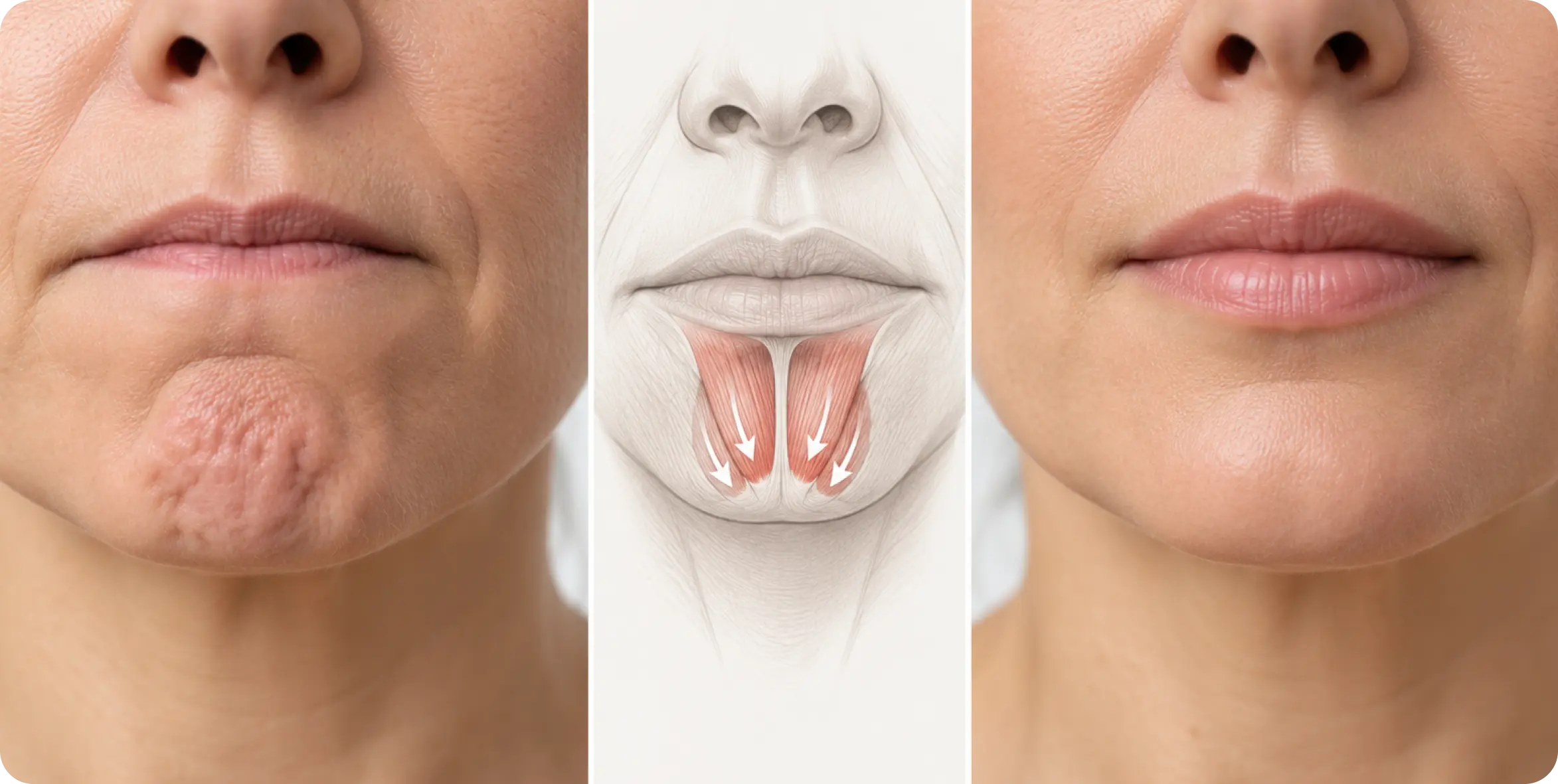
A dimpled chin can make the lower face look tense even when you are not upset. The skin may appear bumpy, gathered, or uneven when you talk, smile, concentrate, swallow, or press your lips together. For some people, this texture appears only during expression. For others, it remains visible at rest. The common reason is […]
Author:MINDBODYFACE
30
HOLLOW TEMPLES: WHY TEMPLES LOSE VOLUME AND HOW FACIAL AGING CHANGES THIS AREA
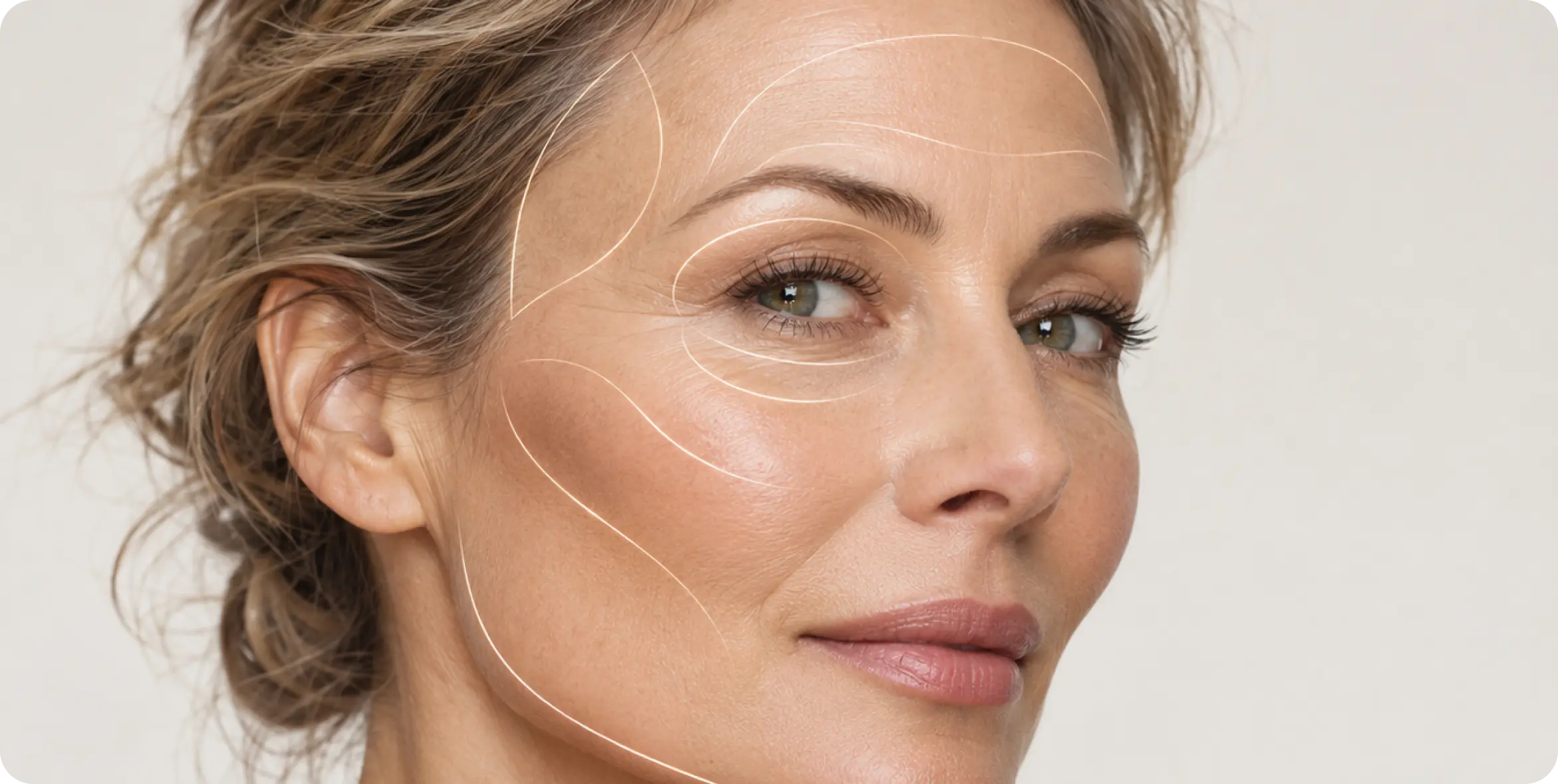
Hollow temples are the indentations that can appear at the sides of the forehead, between the outer eyebrow, hairline, and upper cheekbone. Temple hollowing can make the upper face look narrower, more angular, or more tired—even when your skin is smooth and your cheeks still have volume. This area is easy to overlook. People often […]
Author:MINDBODYFACE
160
LIP LINES AND SMOKER’S LINES: CAUSES AND NATURAL WAYS TO SOFTEN THEM
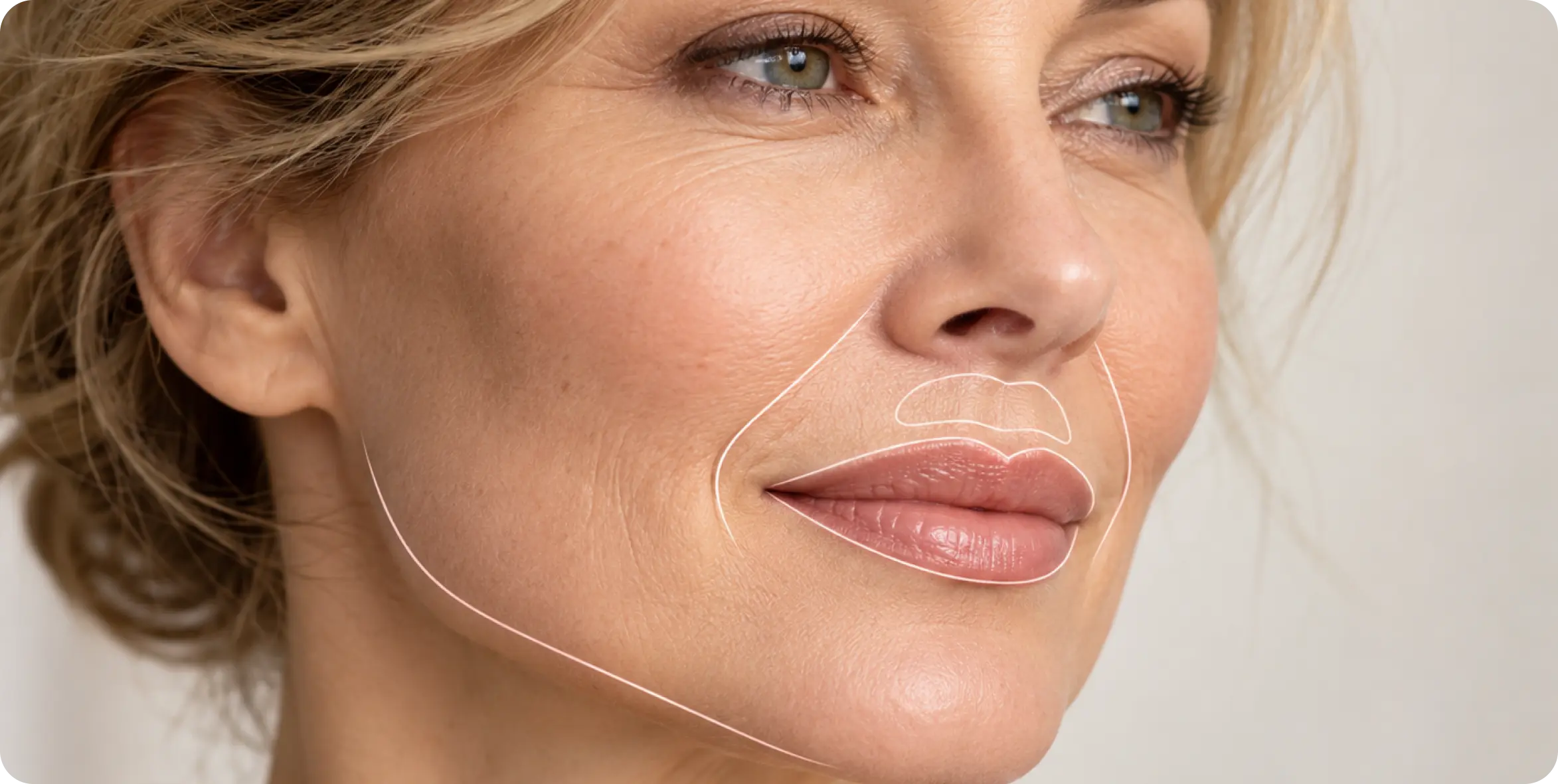
Lip lines are the fine vertical creases that appear on and above the upper lip. They are often called smoker’s lines, but smoking is only one possible cause. Sun exposure, natural skin aging, repeated mouth movements, dryness, genetics, and changes in the tissues around the mouth can all make vertical lip lines more visible. These […]
Author:MINDBODYFACE
100


MINDBODYFACE LLC
1021 E Lincolnway Suite 8342, Cheyenne, WY 82001
+16282892382
All services and information on this website are for educational purposes only and do not constitute medical advice or treatment -