Jun 10, 2026
•6 minutes read
•Author: MINDBODYFACE
HORIZONTAL WRINKLES ON NOSE BRIDGE: WHY THEY APPEAR AND HOW TO WORK WITH THEM

You’ve noticed it. A line — or two — cutting across the top of your nose. Not deep yet, but there. And somehow harder to ignore than the rest.
These are horizontal wrinkles on the nose bridge, and they’re more common than most people realise. They’re also more specific in their origin than a vague “you’re getting older” explanation. There’s an exact muscle responsible, an exact pattern that deepens it, and practical ways to work with both.
WHAT ACTUALLY CAUSES NOSE BRIDGE LINES
The short answer: a muscle called the procerus.
It sits at the very bridge of your nose, running from the nasal bone up into the skin between your eyebrows. Every time you squint at a screen, frown in concentration, or shield your eyes from bright light — this muscle contracts.wikipedia+1
When the procerus contracts, it pulls the inner edges of the brows downward and creates a horizontal crease across the nasal root. Do that thousands of times over years, and the crease stops being temporary. It stays.
A second player is the corrugator supercilii — the muscle responsible for the “11 lines” between the brows. It works in tandem with the procerus, and when both are chronically tight, frown lines on the nose bridge deepen faster.

The honest version of this: wrinkles on the bridge of the nose are not a skin problem. They’re a muscle problem.
WHY SKIN CREASES ON THE NOSE BRIDGE DEEPEN WITH AGE
Muscle tension alone doesn’t explain everything. After 25, collagen production drops by roughly 1–1.5% per year. Collagen gives the skin its ability to bounce back after each expression. Less collagen means the crease from a frown takes longer to smooth out — and eventually, it doesn’t smooth out at all.sciencedirect+1
There’s also the fascia layer to consider. Fascia is the connective tissue that wraps every muscle in the face. Chronic stress and repeated tension cause fascial layers to tighten and adhere to surrounding structures. When fascia locks up around the nose bridge and glabellar area, the skin stops moving freely — and stays creased even at rest.
This is why anti-aging nose wrinkle strategies that only address the skin surface (creams, patches, hydration) tend to produce underwhelming results. The tension underneath remains untouched.
THE ROLE OF FACIAL TENSION AND DAILY HABITS
Most horizontal nose wrinkles don’t come from dramatic moments. They come from small, invisible, repeated habits:
- Screen time — squinting at a laptop or phone triggers the procerus dozens of times per hour
- Concentration frowning — the face “thinks out loud” through micro-expressions you don’t notice
- Bright light exposure — the procerus originally evolved as a sun shield; it engages automatically
- Chronic stress — anxiety and tension consistently show up in the glabellar zone firstinstagram+1
The face is neurologically wired to express emotional states. Stress that lives in the nervous system tends to surface in specific facial muscles — and the nose bridge is one of the first places it appears.
Recognising your own patterns is the first practical step. Notice when you frown. Notice what triggers it. That awareness alone begins to interrupt the reflex.
HOW TO REDUCE NOSE WRINKLES NATURALLY: WHAT WORKS AT THE MUSCLE LEVEL
Topical products can support skin quality, but reducing wrinkles between eyes and nose over time requires working directly with the muscles that create them.
Here’s what actually addresses the source:
- Procerus release massage — take a vertical fold of skin at the nose bridge and gently stretch it side to side. This improves blood circulation in the area and helps the muscle return to its natural resting length. Performed on dry skin, without cream, so the fingers don’t slip.
- Upward smoothing strokes — with two fingers, stroke firmly from the nose bridge upward toward the forehead. This lifts soft tissue and works against the habitual downward pull of the muscle.
- Horizontal fold release — take the line itself between two fingers and gently pull the fold upward, holding for a few seconds. Repeat above each crease.
- Corrugator release — pinch the skin between the brows and move your fingers slowly outward from centre to sides. This addresses the tandem muscle that worsens nose bridge lines.
- Conscious relaxation — several times a day, actively soften the space between your eyebrows. Let the procerus release. This interrupts the tension loop at the neurological level.

None of these require tools or products. They require about 5 minutes and consistent practice.
NOSE BRIDGE AGING SIGNS VS. SKIN CREASES: UNDERSTANDING THE DIFFERENCE
Not all lines at the nose bridge are the same. There are two distinct types:
Dynamic lines form from repeated muscle movement — they appear when you frown and fade when you relax. These are the ones most responsive to muscle work and early to address.
Static lines are visible even when the face is completely at rest. They indicate the crease has become structural — collagen has reorganised around the fold. These take longer to shift, but they do shift with consistent deep-tissue work.
There’s also a third type — the transverse nasal crease — a horizontal line lower on the nose, near the junction between the bridge and tip. This one is often genetic or linked to habitual nose-rubbing (common in people with allergies). This type responds less to muscle techniques and more to structural approaches.

If the line you’re seeing sits at the top of the nose, between the brows — that’s the procerus crease. That’s the one this work is designed for.
WHAT DEEP WORK LOOKS LIKE — BEYOND SURFACE TECHNIQUES
Standard facial massage reaches the skin and the surface muscle layer. But horizontal nose wrinkles that are already static — that don’t fully soften between expressions — often involve the fascial and deeper structural layers.
The Faceplastica method, developed by Dr. Ales Ulishchenko (osteopath, PhD, 20 years in bodywork practice), works at the level of fascia, muscle origins, and cranial bone mechanics. The Lifting and Rejuvenation of the Forehead and Eyes course includes direct work with the glabellar complex — procerus, corrugator, frontalis — through techniques that release chronic tension patterns, not just surface creases.
If you’ve tried face massage and seen limited results, it’s usually because the tension hasn’t been addressed at its origin point. This course gives you a 12-day protocol you can do at home, without tools or appointments.
CAN SLEEPING ON ONE SIDE CHANGE YOUR FACE? SLEEP LINES, ASYMMETRY, AND FACIAL COMPRESSION
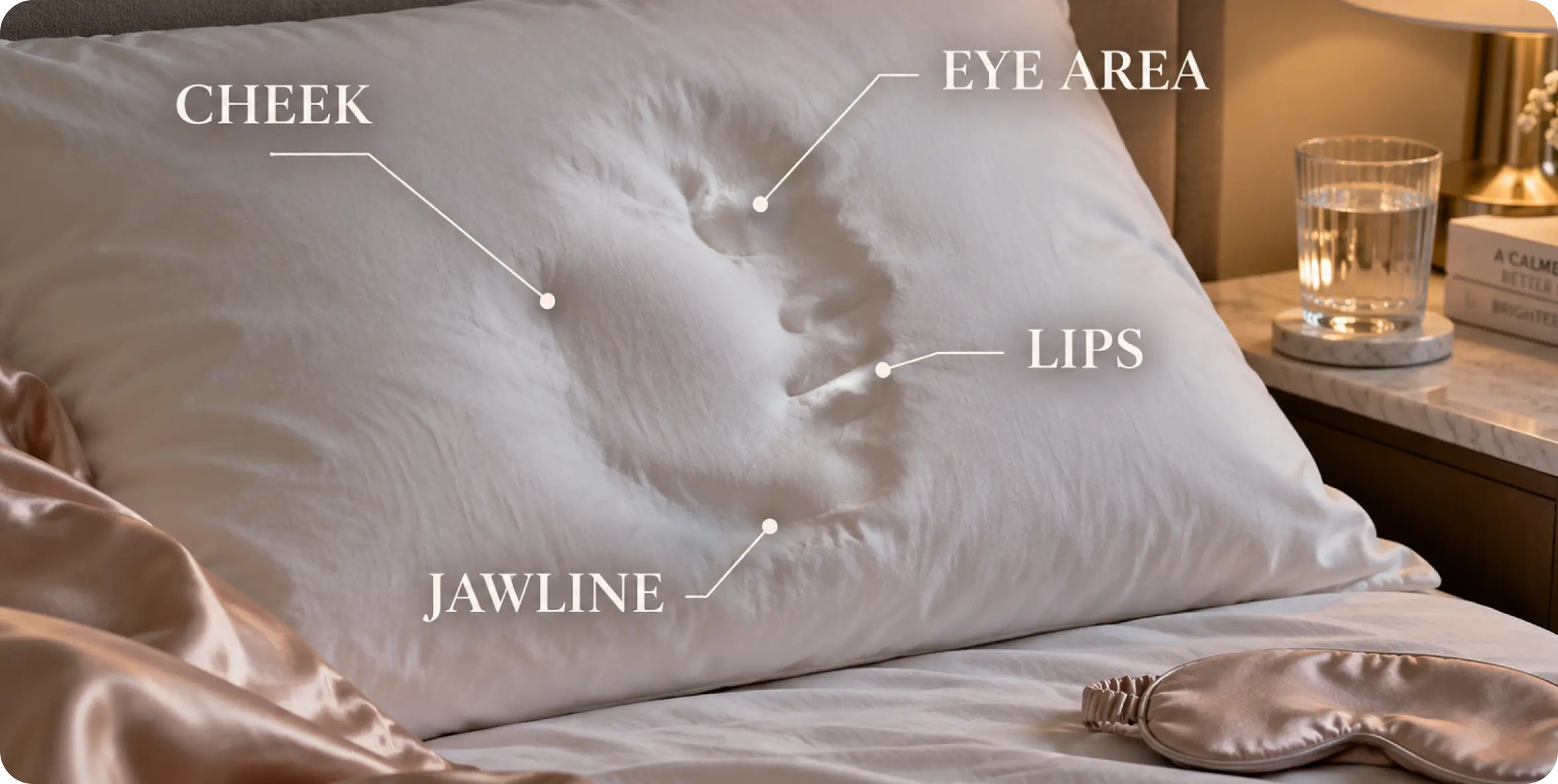
Can sleeping on one side change your face? It can temporarily change how your face looks in the morning. One cheek may seem puffier, one eye more swollen, and one side may show deeper pillow marks. Over many years, repeated pressure may contribute to sleep lines in aging skin, but side sleeping alone does not […]
Author:MINDBODYFACE
 8
8 0
0
UNEVEN SMILE: WHY ONE SIDE OF THE MOUTH SITS HIGHER AND WHAT FACIAL TENSION HAS TO DO WITH IT
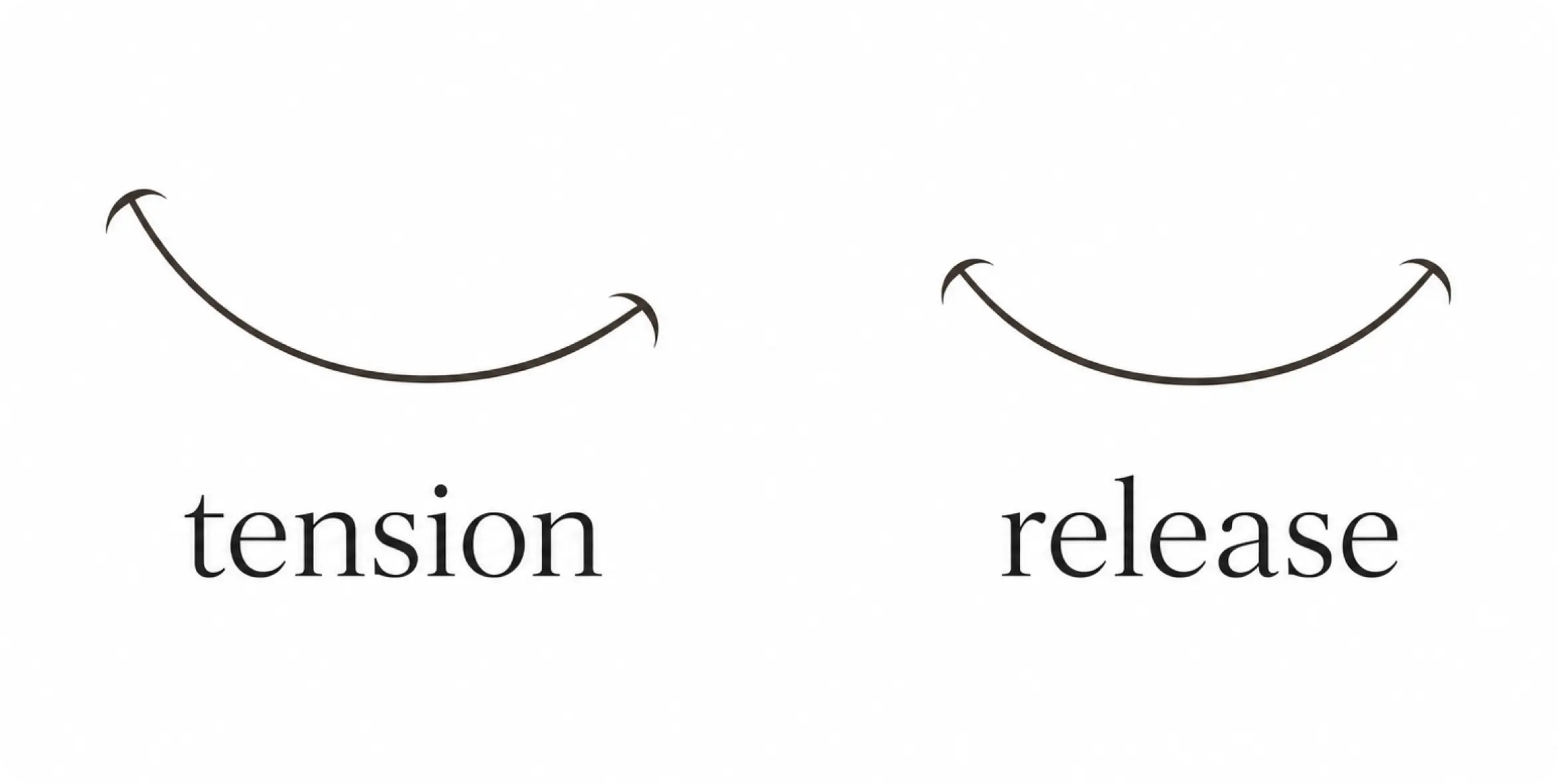
An uneven smile can be one of those details you only notice in photos or videos. One corner of the mouth lifts more. One side of the upper lip looks higher. One cheek seems to move first, while the other appears quieter or tighter. A little facial asymmetry is normal. Almost no one has a […]
Author:MINDBODYFACE
160
DIMPLED CHIN AND MENTALIS TENSION: WHY THE CHIN LOOKS UNEVEN AND HOW TO RELAX IT
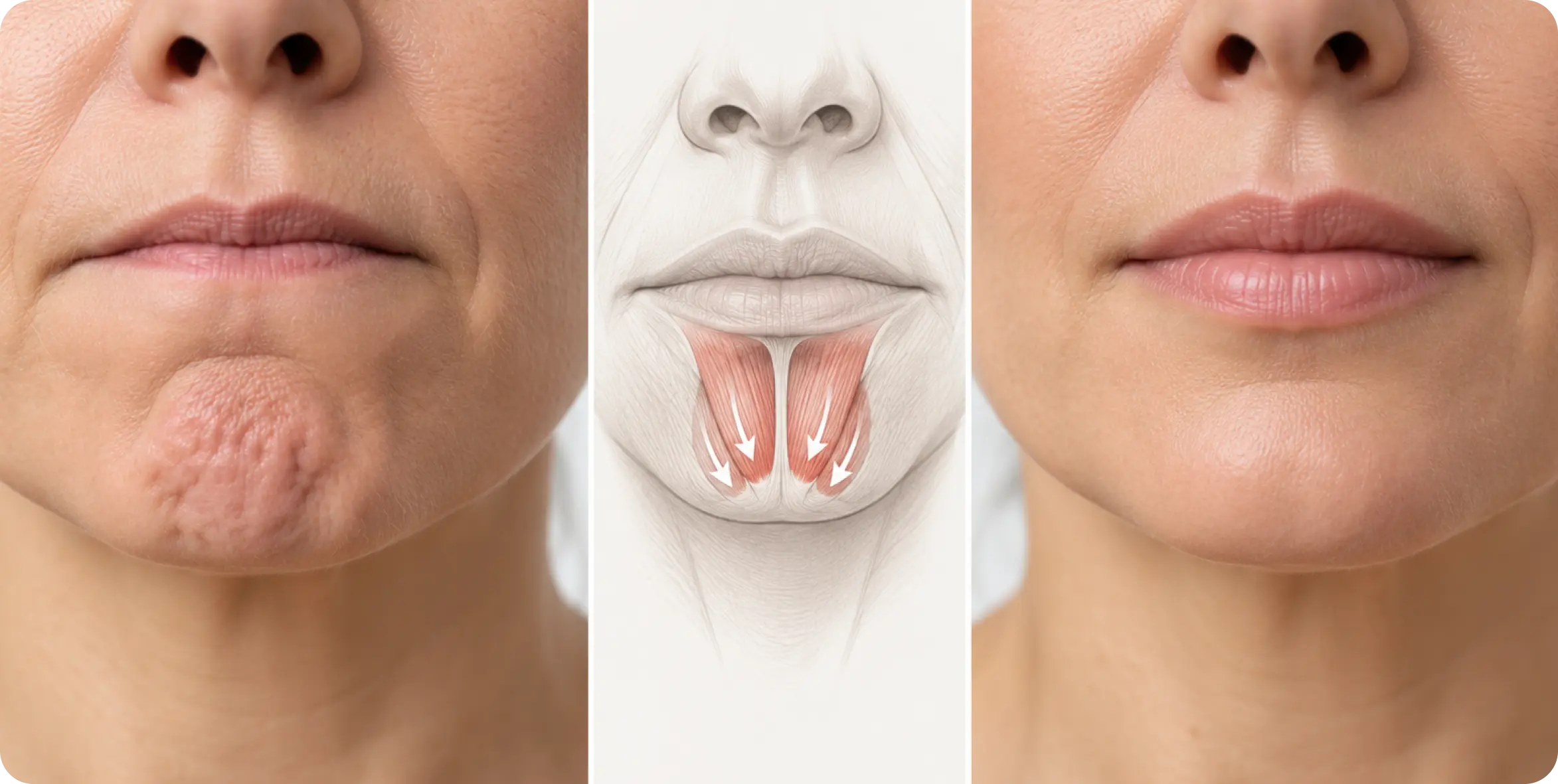
A dimpled chin can make the lower face look tense even when you are not upset. The skin may appear bumpy, gathered, or uneven when you talk, smile, concentrate, swallow, or press your lips together. For some people, this texture appears only during expression. For others, it remains visible at rest. The common reason is […]
Author:MINDBODYFACE
140
HOLLOW TEMPLES: WHY TEMPLES LOSE VOLUME AND HOW FACIAL AGING CHANGES THIS AREA
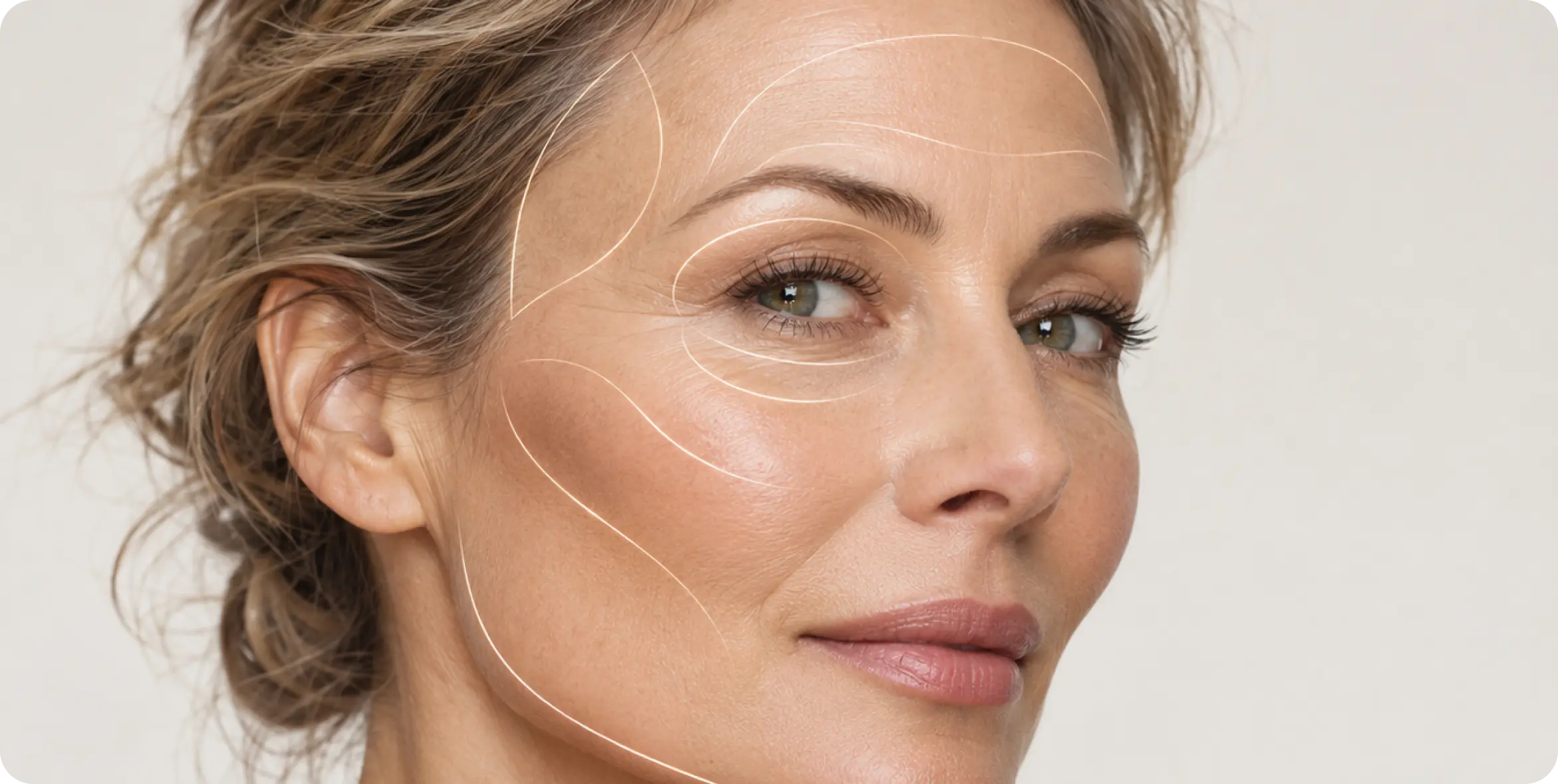
Hollow temples are the indentations that can appear at the sides of the forehead, between the outer eyebrow, hairline, and upper cheekbone. Temple hollowing can make the upper face look narrower, more angular, or more tired—even when your skin is smooth and your cheeks still have volume. This area is easy to overlook. People often […]
Author:MINDBODYFACE
260


MINDBODYFACE LLC
1021 E Lincolnway Suite 8342, Cheyenne, WY 82001
+16282892382
All services and information on this website are for educational purposes only and do not constitute medical advice or treatment -